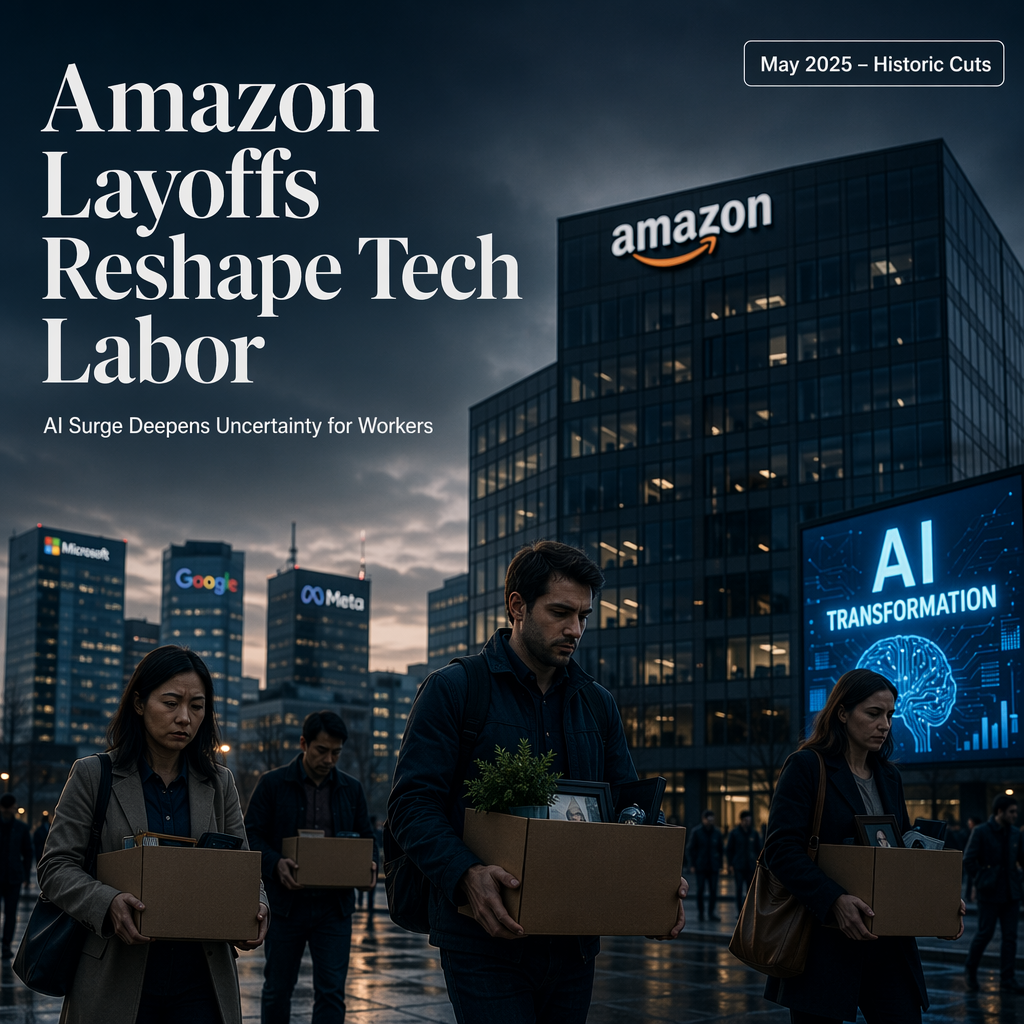
Amazon has undertaken its most expansive job cuts ever, laying off roughly 16,000 employees in late January 2025, following more than 14,000 layoffs three months earlier, marking the steepest cuts in the company's history [1]. These layoffs are part of a broader trend in the tech sector, with companies like Cisco, Meta, Microsoft, and Oracle also announcing major cuts. May 2025 represented the sharpest month for tech layoffs since 2024, with the tech sector laying off approximately 140,000 employees in the U.S. so far this year, more than any other industry, according to Challenger, Gray & Christmas [1]. AI was cited as the main reason for these cuts for the fourth consecutive month, with about 23% of all job cut announcements in 2026 referencing AI as a factor [1]. Amazon has been downsizing more aggressively than many of its peers, laying off more than 57,000 staffers since 2022, which accounts for roughly 16% of its corporate workforce and about 13% of the tech industry's cuts this year, according to Layoffs.fyi [1]. The layoffs have thrust former Amazon employees into a saturated labor market, with many struggling to find new roles as companies restructure around AI, automate positions, and reallocate budgets toward new capabilities [1]. CEO Andy Jassy has warned employees that AI should change the way work is approached, signaling ongoing transformation within the company [1].
CONCLUSION
Amazon's aggressive layoffs, driven by a shift toward AI investment, have significantly impacted both its workforce and the broader tech labor market. The sector remains volatile, with restructuring and automation leading to continued job losses. Market sentiment is negative, reflecting uncertainty and challenges for displaced workers.