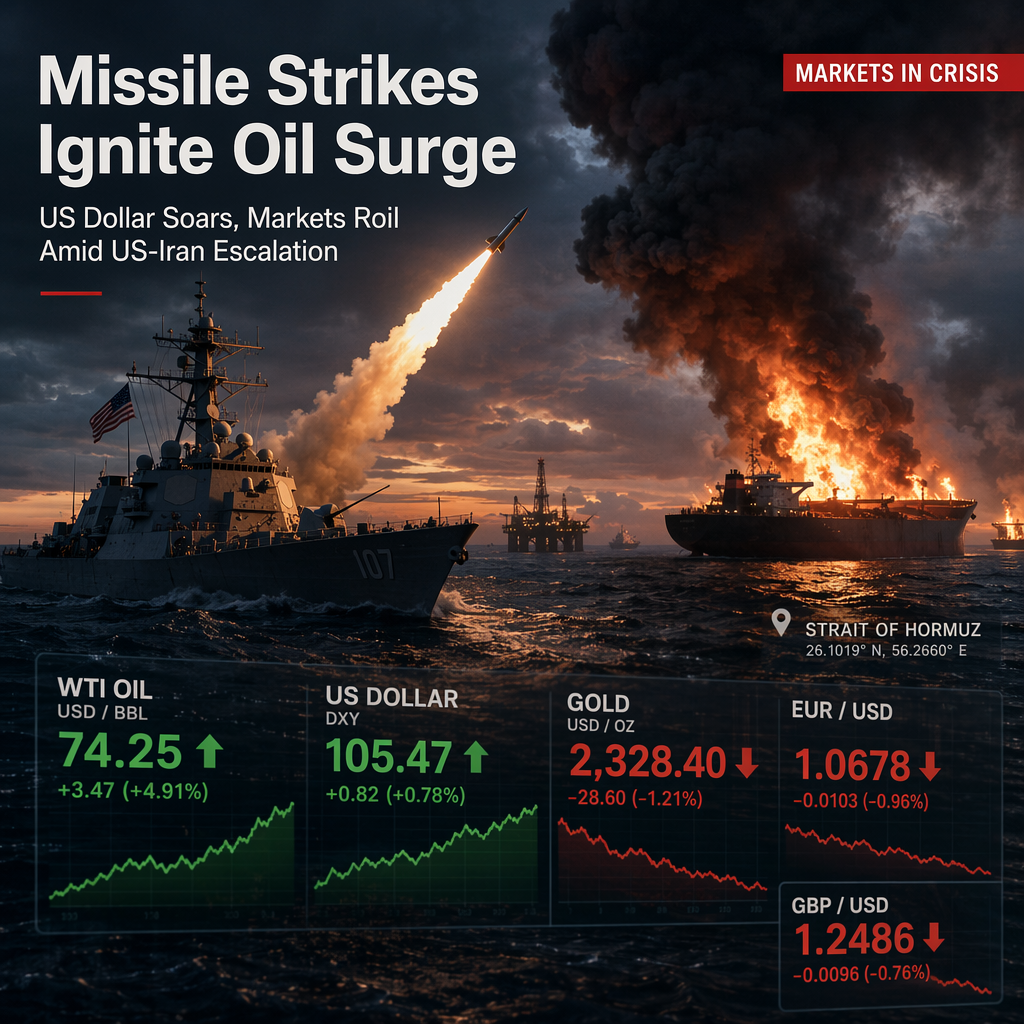
Over the weekend, escalating military tensions between the United States and Iran led to a series of missile strikes, with the US Central Command (CENTCOM) launching additional attacks aimed at weakening Iran's ability to target civilian vessels in the Strait of Hormuz [1][3][4]. According to Bloomberg and Reuters, US forces struck more than 300 Iranian targets over three nights, including 140 on Saturday alone [3]. Tehran responded with retaliatory drone and missile assaults on US allies across the Middle East, including Kuwait, Jordan, and Qatar, and insisted that Washington must honor previous commitments regarding shipping transit and normalization of Iranian oil exports before further negotiations can resume [3][4]. The Iranian Foreign Ministry condemned the US actions, warning neighboring countries against assisting military operations [4].
The immediate market reaction was pronounced. West Texas Intermediate (WTI) crude oil surged above $74.00, reversing losses from the prior week and reigniting fears over the safety of commercial shipping through the strategic Strait of Hormuz [3]. Rising oil prices have revived inflationary concerns, bolstering expectations for a higher-for-longer US Federal Reserve (Fed) rate stance [1][2]. Gold (XAU/USD), typically seen as a safe haven during geopolitical uncertainty, declined below $4,100, trading near $4,070, as higher interest rates make non-yielding assets less attractive [1].
The US Dollar (USD) strengthened across major currency pairs, with the British Pound (GBP/USD) remaining depressed below 1.3400 and the Euro (EUR/USD) edging lower to around 1.1400 [2][4]. The safe-haven appeal of the USD was underpinned by the ongoing hostilities and revived inflation expectations, which further benefited the currency and capped upside for GBP and EUR [2][4]. Market participants are closely watching the upcoming US Consumer Price Index (CPI) inflation data, due Tuesday, with analysts expecting a headline CPI decline of 0.1% MoM and a core CPI rise of 0.3% MoM for June [1][4]. A softer-than-expected inflation report could weigh on the USD and support USD-denominated commodities like gold in the near term [1][4].
In Europe, traders have ramped up bets on additional European Central Bank (ECB) rate hikes, expecting two more increases over the next year to contain the fallout from the Iran war on energy prices [4]. In the UK, political stability following Andy Burnham's support among Labour MPs and expectations for at least one 25-basis-point Bank of England rate hike by the end of 2026 lent some support to the GBP, but escalating US-Iran tensions and rising oil prices kept the currency under pressure [2].
Forward-looking statements from analysts indicate that the market focus remains on US inflation figures and central bank policy paths, which will provide meaningful impetus to currency pairs and commodities during the latter half of the week [1][2][4].
CONCLUSION
The US-Iran military escalation has triggered a surge in oil prices, strengthened the US Dollar, and pressured gold and major currencies. Inflation concerns and central bank policy expectations are now at the forefront, with upcoming US CPI data likely to drive further market moves. Overall, the event has had a high impact across commodities and FX markets, with traders awaiting further developments and policy signals.