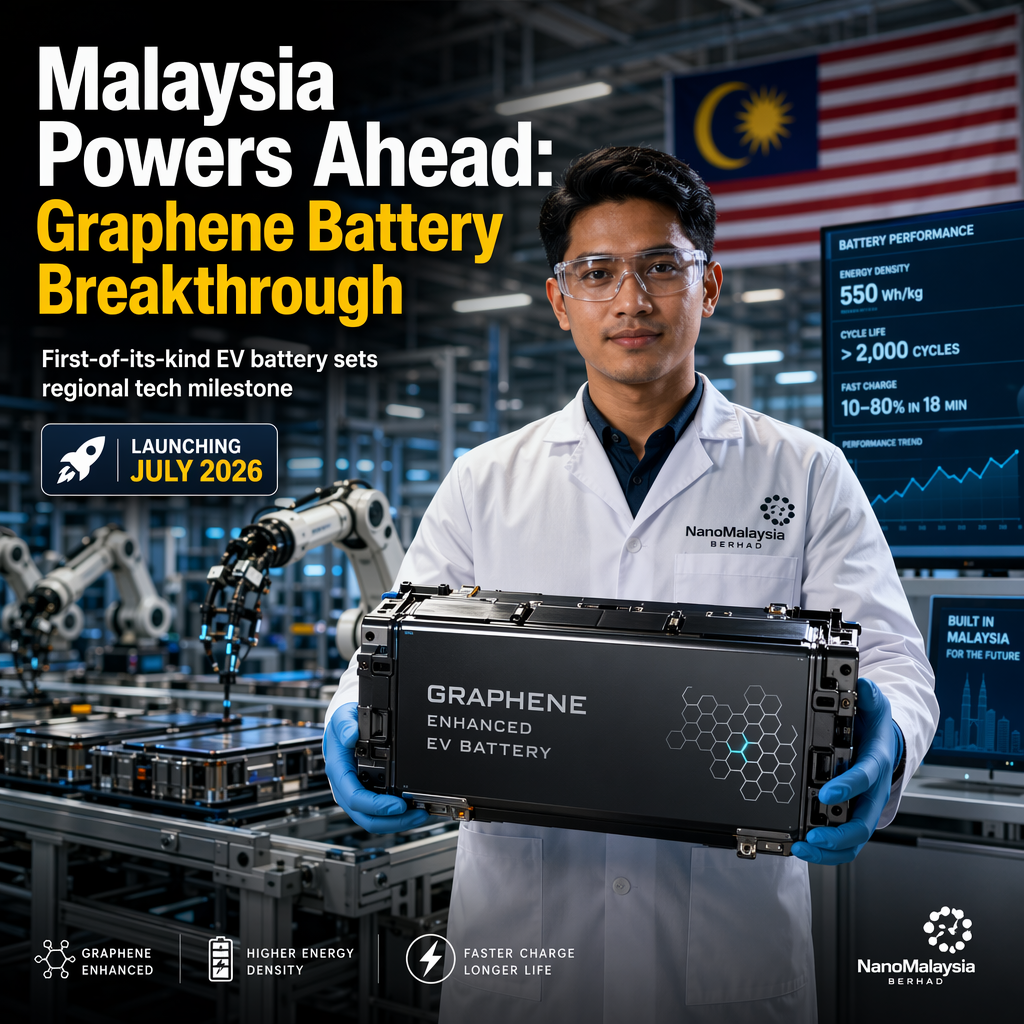
Malaysia is set to commence small-scale production of its first homegrown graphene-enhanced lithium-ion battery for electric vehicles in July 2026, marking a significant milestone in the nation's technological advancement efforts [1]. NanoMalaysia CEO Rezal Khairi Ahmad stated that this battery project is 'likely the first of its kind in ASEAN,' highlighting Malaysia's ambition to become a key player in the regional electric vehicle (EV) market [1]. The initial production phase is expected to pave the way for exports to several countries, including Indonesia, South Korea, India, and Pakistan [1].
The graphene-enhanced batteries are anticipated to deliver improved performance compared to conventional lithium-ion batteries, which could provide Malaysia with a competitive advantage in the EV sector [1]. This initiative is part of a broader strategy to reduce dependence on imported battery technologies and to strengthen Malaysia's position in the tech manufacturing value chain [1].
Although the article does not provide specific financial figures or production volume details, the announcement indicates increased activity within Malaysia's tech manufacturing and EV supply chain. This development may have implications for regional trade and investment flows, as Malaysia seeks to expand its footprint in the fast-growing EV market [1].
CONCLUSION
Malaysia's move to begin initial production of graphene-enhanced EV batteries represents a strategic step toward technological self-reliance and regional market leadership. While concrete financial or production data are not available, the initiative signals potential growth in Malaysia's tech manufacturing sector and could influence regional trade dynamics.