
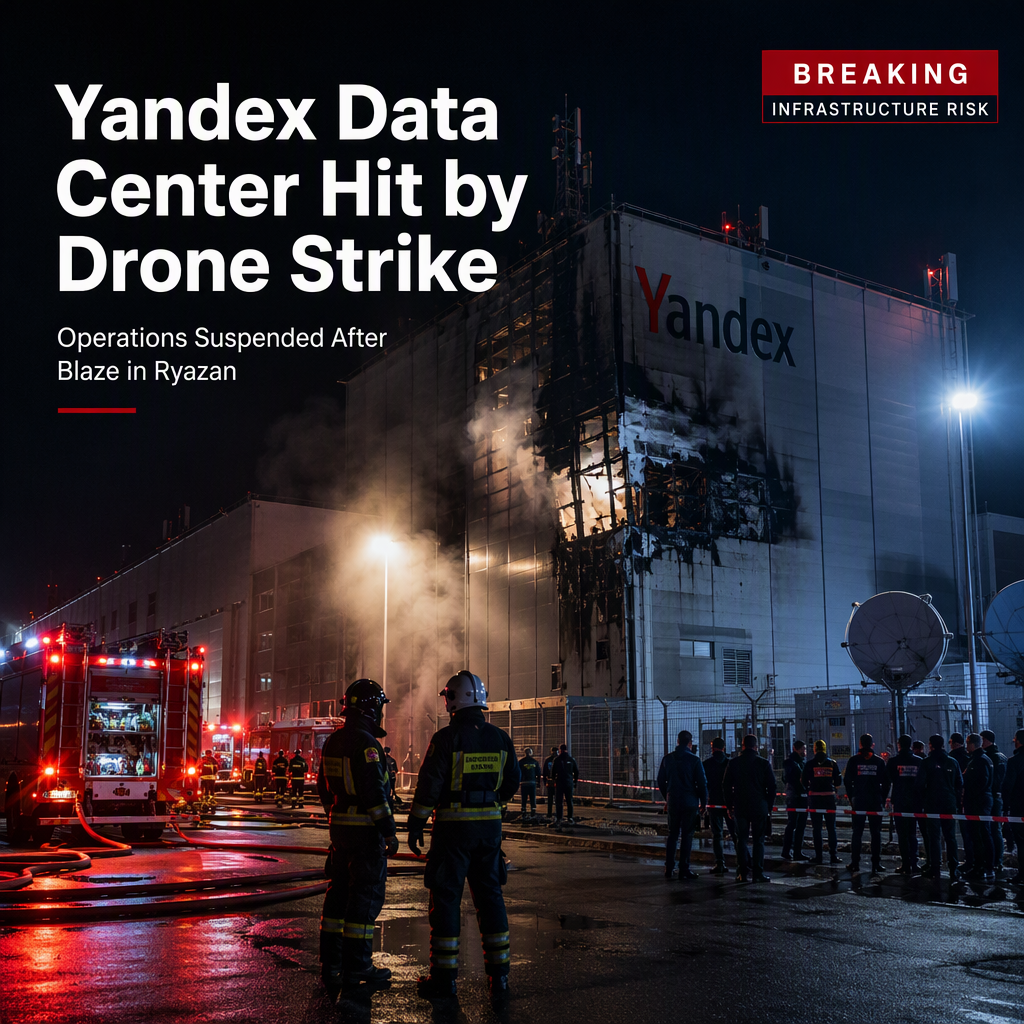
Russia's leading internet company, Yandex, suspended operations at one of its key data centers in Sasovo, Ryazan, following a drone strike on Thursday, as Ukraine continues to target Russian infrastructure [1]. The attack resulted in a fire at the data center, causing it to cease operations entirely and potentially rendering some Yandex services unavailable to users [1]. Yandex confirmed that there were no casualties and that emergency services were responding to the incident [1].
Yandex, often referred to as the 'Google of Russia', operates the country's most widely used search engine and has developed YandexGPT, the region's leading generative AI model [1]. While Ukraine has not officially claimed responsibility for the attack, the incident is part of a broader pattern of increased Ukrainian strikes on Russian infrastructure, including energy facilities and retail companies such as Wildberries [1]. Ukrainian President Volodymyr Zelenskyy recently stated that Ukraine would intensify attacks on Russian oil refineries in response to Moscow's airstrikes targeting Ukrainian cities [1].
The financial implications of these attacks include potential disruptions to Russia's consumer and technology sectors, increased risks to critical infrastructure, and possible volatility in Russian equities due to operational uncertainties [1]. Although Yandex's core services remain unaffected, the outage raises concerns about business continuity and market reliability [1]. No specific financial data regarding losses or insurance claims have been disclosed, but ongoing attacks may impact future earnings and operational costs for Russian technology and retail firms [1].
CONCLUSION
Yandex's suspension of operations at a major data center following a drone strike highlights the growing risks to Russian infrastructure amid escalating attacks. While core services remain operational, the incident underscores potential disruptions and increased uncertainty for Russian technology and consumer sectors. The market is likely to react to these heightened risks and operational challenges.