
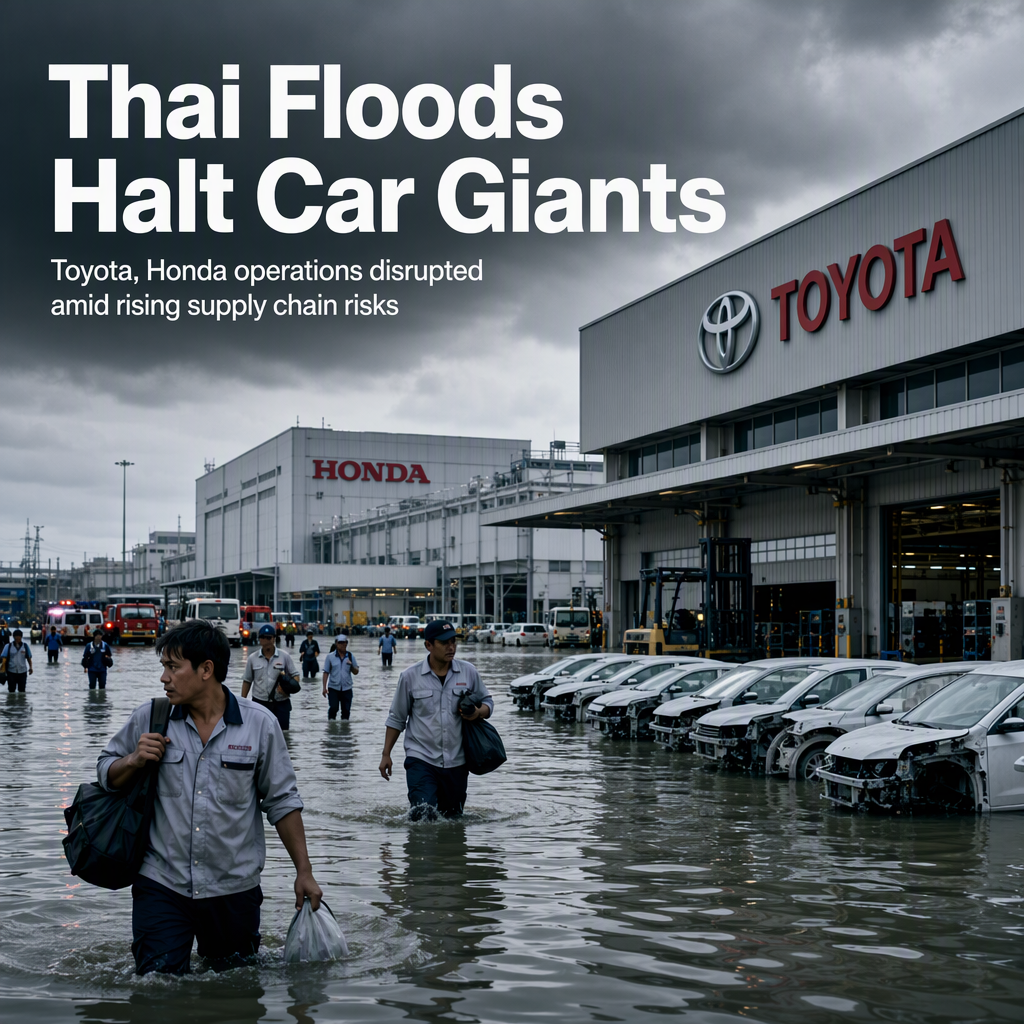
Torrential rains in Thailand have led to significant flooding, forcing major automakers such as Toyota and Honda to suspend operations in the region as of October 7, 2026 [1]. An industrial park in Chonburi remained flooded, directly impacting factory activity and causing supply disruptions and commute issues for workers [1]. These disruptions are threatening production goals for both Toyota and Honda, highlighting the increasing frequency of such events as a 'new normal' for the automotive industry in Thailand [1].
In response to the heightened risk, automakers are reassessing their production schedules and implementing contingency plans, which include temporarily shutting down plants and reviewing logistics and supply chain strategies to mitigate further disruptions [1]. The ongoing flooding underscores the vulnerability of the automotive sector in Thailand, which serves as a key production hub for Japanese carmakers and plays a significant role in their global supply chains [1].
The repeated floods are raising concerns about long-term investment and operational stability in the region, as manufacturers face mounting challenges in maintaining consistent output and meeting production targets [1]. No specific analyst opinions or forward-looking statements were provided, but the article emphasizes the need for automakers to adapt to the increasing risk of natural disasters in Thailand [1].
CONCLUSION
The persistent flooding in Thailand is causing major operational disruptions for Toyota and Honda, threatening production goals and prompting a reassessment of supply chain strategies. The situation highlights the growing risks facing automakers in the region and raises concerns about the long-term stability of Thailand as a manufacturing hub.