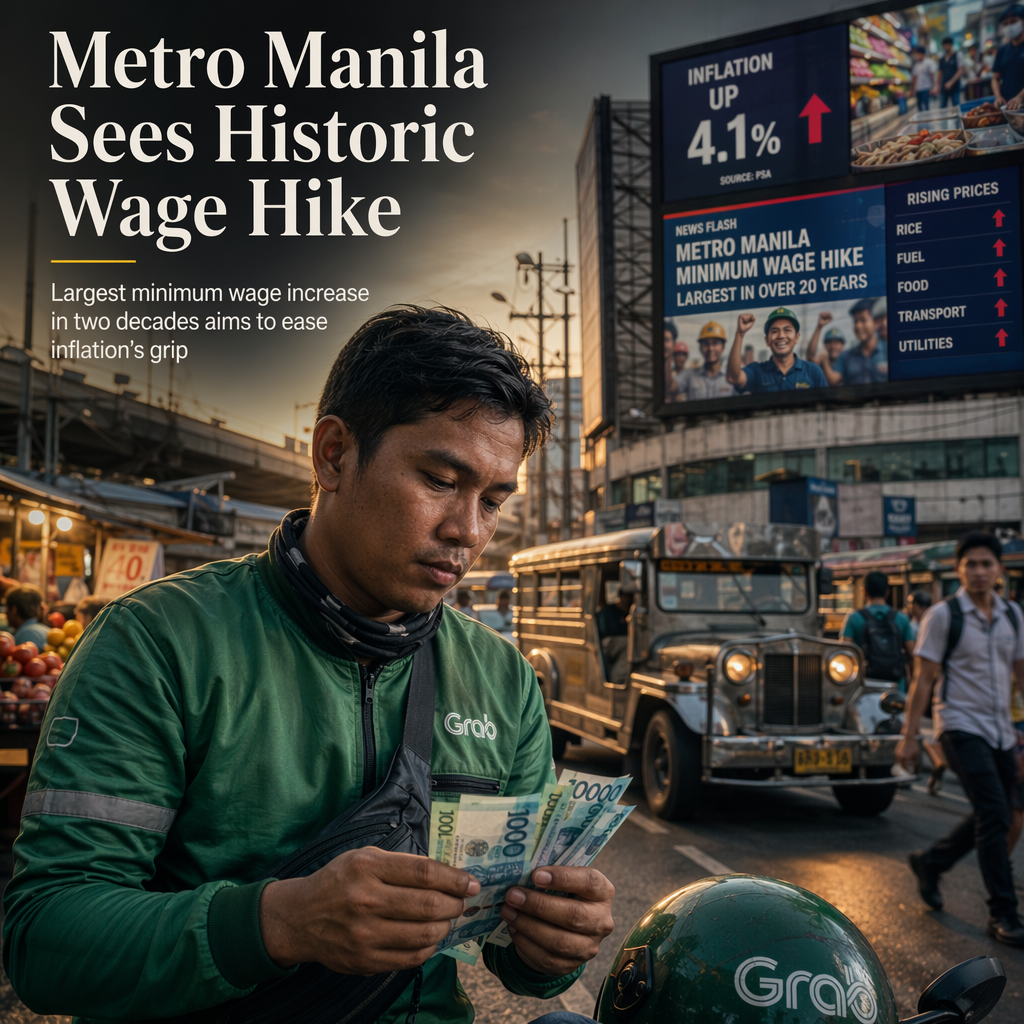
The Philippine government has approved a substantial increase in the daily minimum wage for Metro Manila, raising it from 695 pesos to 780 pesos, which represents a 12% hike and the largest adjustment in more than two decades [1]. This decision was announced on Tuesday and is intended to support low-income earners who have been struggling with persistent high inflation. Inflation in the Philippines is forecast to average 5.1% in 2026, and although it eased slightly in May, it remained elevated at 6.8% [1].
Despite the magnitude of the wage hike, critics argue that the new minimum wage still does not adequately cover the basic needs of many families in Metro Manila. An analyst familiar with the labor sector commented, "While this is the biggest hike in over two decades, it does not fully address the gap between wages and the rising cost of basic goods and services" [1]. The wage board's decision reflects ongoing efforts to balance the needs of workers with the broader economic environment, as household budgets continue to be pressured by elevated prices [1].
The increase is seen as a response to the erosion of workers' purchasing power due to inflation, but some observers believe it may not be sufficient to fully mitigate the impact of rising prices on household budgets [1].
CONCLUSION
The Philippine government's approval of Metro Manila's largest minimum wage hike in over 20 years aims to alleviate the effects of persistent inflation on workers. While the increase is significant, analysts and critics note that it may not fully bridge the gap between wages and the cost of living, suggesting continued challenges for low-income earners.