
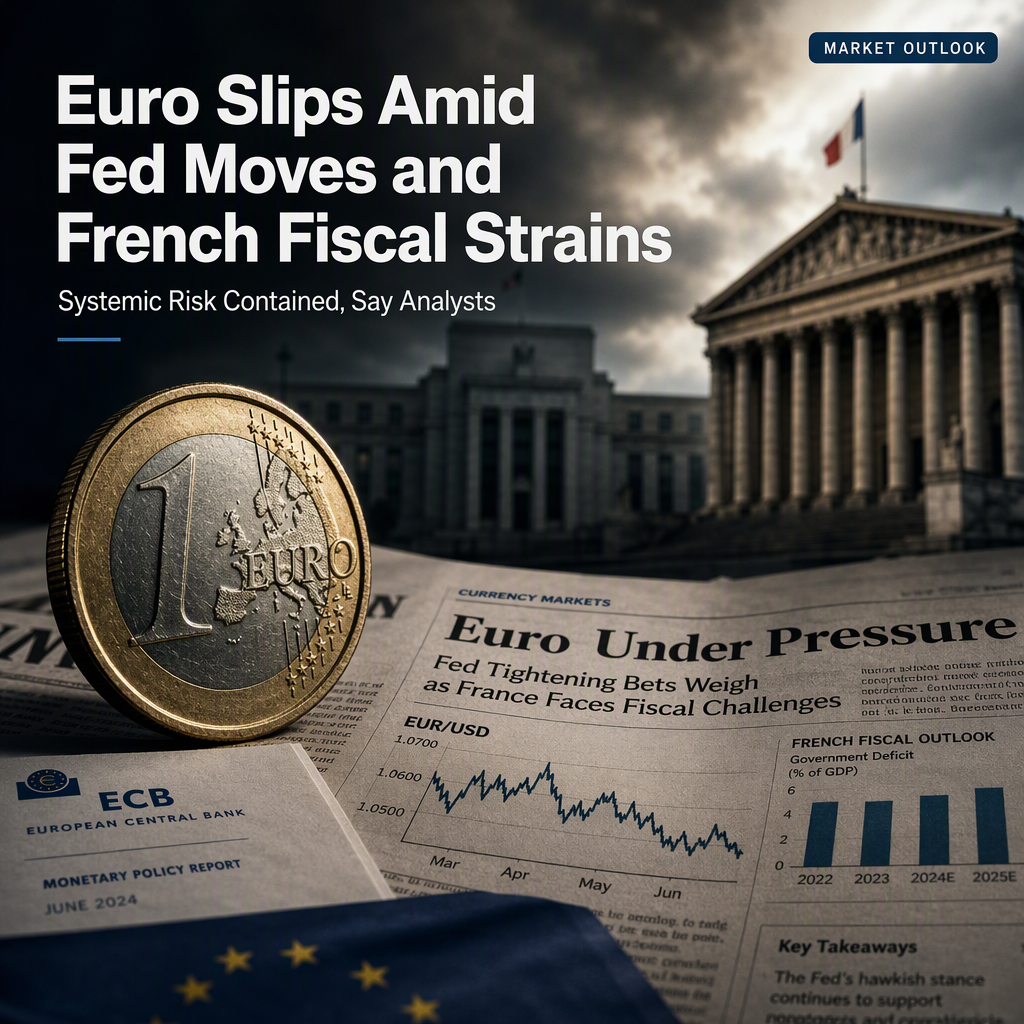
The euro has experienced a four-week decline against the US dollar, a move attributed to shifting risk perceptions between the US and Europe, according to DBS strategist Philip Wee. The renewed focus on Federal Reserve tightening and market expectations for further Fed rate hikes have overshadowed the European Central Bank's (ECB) own tightening measures, contributing to the euro's weakness [1].
French fiscal issues have also come to the forefront, with rising US Treasury yields causing French OAT yields to increase more rapidly than German Bund yields. This has led to a widening of the OAT-Bund spread, reflecting market repricing of France's well-known fiscal challenges. However, Wee emphasizes that this situation should not be interpreted as the onset of another euro-area sovereign debt crisis. He notes that the current repricing is based on recognized problems that require a credible response from the French government, rather than the type of surprise fiscal revelations that triggered the 2012 crisis in Greece [1].
Importantly, the ECB is seen as better equipped to handle country-specific stress today, with stronger institutional firewalls such as the Transmission Protection Instrument (TPI) designed to address risks that could threaten monetary policy transmission. As a result, while the euro remains under pressure, systemic risk within the eurozone is considered contained at this time [1].
CONCLUSION
The euro's recent decline is driven by renewed Fed tightening and concerns over France's fiscal position, but analysts do not see this as a precursor to a broader eurozone crisis. The ECB's enhanced tools and institutional safeguards are expected to help contain systemic risks, even as markets await a credible fiscal response from France.