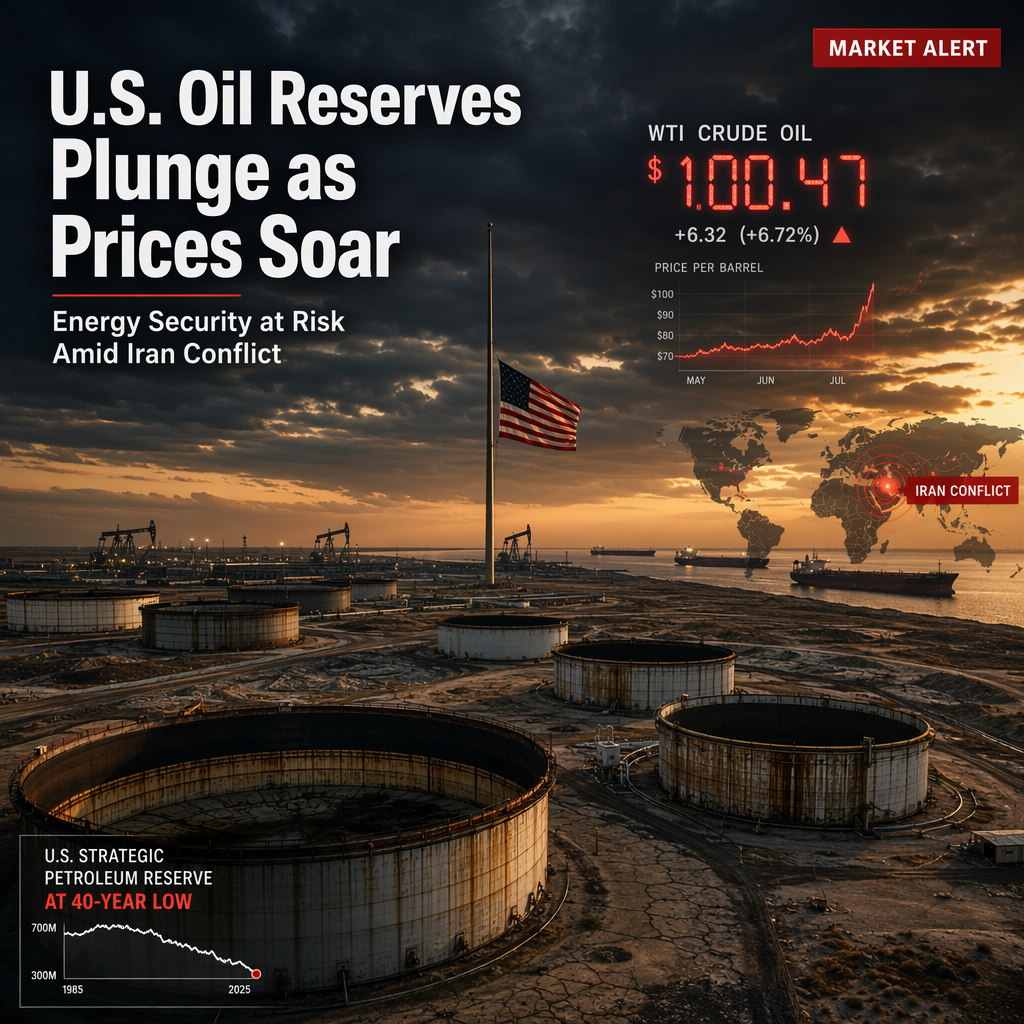
The U.S. Strategic Petroleum Reserve (SPR) has fallen to its lowest level since 1983, coinciding with a surge in crude oil prices above $100 per barrel as the war in Iran intensifies [1]. The U.S. government has been drawing down the SPR in an effort to stabilize energy prices amid escalating geopolitical tensions and supply disruptions caused by the conflict [1]. This depletion raises concerns about the nation's energy security and its ability to respond to future emergencies [1].
Market analysts attribute the rapid rise in oil prices to supply shortages across Asia triggered by the ongoing war in Iran, which has amplified volatility in global energy markets [1]. Technical analysis shows oil trading above key resistance levels at $100 per barrel, with strong upward momentum. Analysts suggest that if the geopolitical situation deteriorates further, prices could test the next resistance at $110, while support remains at $95 [1]. Traders are advised to closely monitor developments in the region and U.S. government actions regarding energy reserves [1].
Market sentiment is predominantly bullish, driven by supply constraints and robust demand. However, experts caution that volatility may increase, and any signs of easing tensions could lead to a sharp reversal in prices [1]. The ongoing reliance on the SPR to cushion economic impacts leaves the long-term effects on domestic energy security and global oil markets uncertain [1].
CONCLUSION
The depletion of the U.S. Strategic Petroleum Reserve to its lowest level in four decades, combined with surging oil prices due to the Iran conflict, has created a highly volatile and bullish energy market. While the SPR drawdown aims to stabilize prices, it raises concerns about future energy security and market resilience. Analysts recommend vigilance as geopolitical developments continue to drive market direction.