
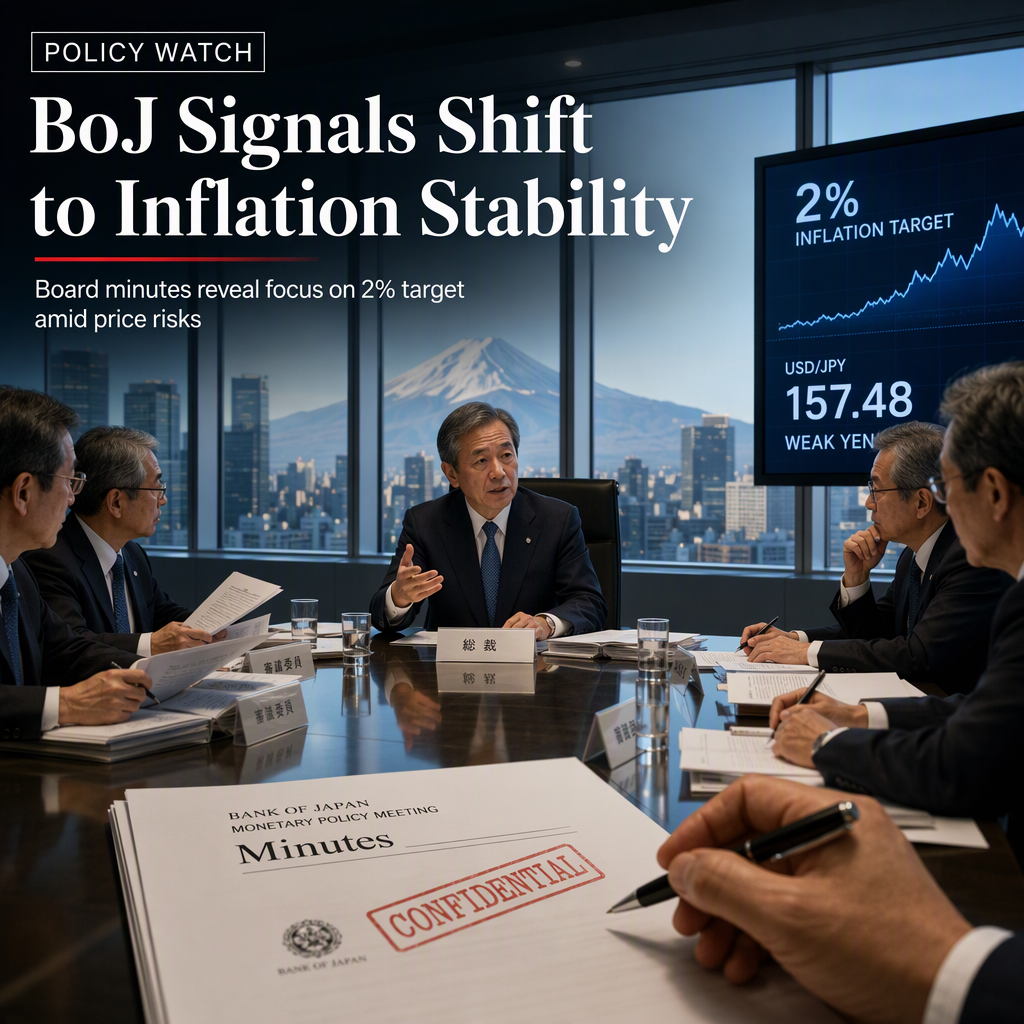
The Bank of Japan (BoJ) board members discussed the monetary policy outlook during their July meeting, as detailed in the released minutes. Members unanimously agreed that financial conditions in Japan remain accommodative, with several noting that consumer prices are rising due to increased import costs. Companies are steadily passing on higher raw material costs, which has sustained elevated wholesale inflation levels. Many members observed that medium- and long-term inflation expectations are rising among households and companies, and several expect consumer goods price increases to expand from summer onward [1].
Underlying inflation is nearing the BoJ's 2% target, prompting many members to emphasize the need to focus on stabilizing price growth around this level rather than pushing inflation higher. The minutes highlighted that foreign exchange volatility is having a greater impact on the economy and prices, especially as firms increase the pass-through of rising import costs. One member warned of rising upside price risks, citing the recent weak yen and Middle East events as potential drivers of higher inflation expectations [1].
Regarding policy actions, one member noted that it typically takes 1 to 1.5 years for a rate hike to affect inflation and the broader economy. Another member advocated for the BoJ to gradually taper monetary support to avoid delays in interest-rate increases, while others stressed the importance of nimble policy decisions, including raising the policy rate, which remains below the estimated neutral rate range. There was also mention that markets expect the BoJ to raise rates about once every six months, but some members believe hikes could occur more quickly if inflation risks intensify [1].
The market reaction to the BoJ Minutes was modest, with USD/JPY rising 0.11% to 157.48 at the time of reporting, reflecting a cautious optimism and heightened attention to potential policy shifts [1].
CONCLUSION
The BoJ Minutes indicate a growing consensus among board members to shift focus toward stabilizing inflation around the 2% target, amid rising price risks and increased FX volatility. While accommodative financial conditions persist, the possibility of more frequent rate hikes and gradual tapering of monetary support is being considered. The market response was moderate, signaling anticipation of future policy adjustments.