
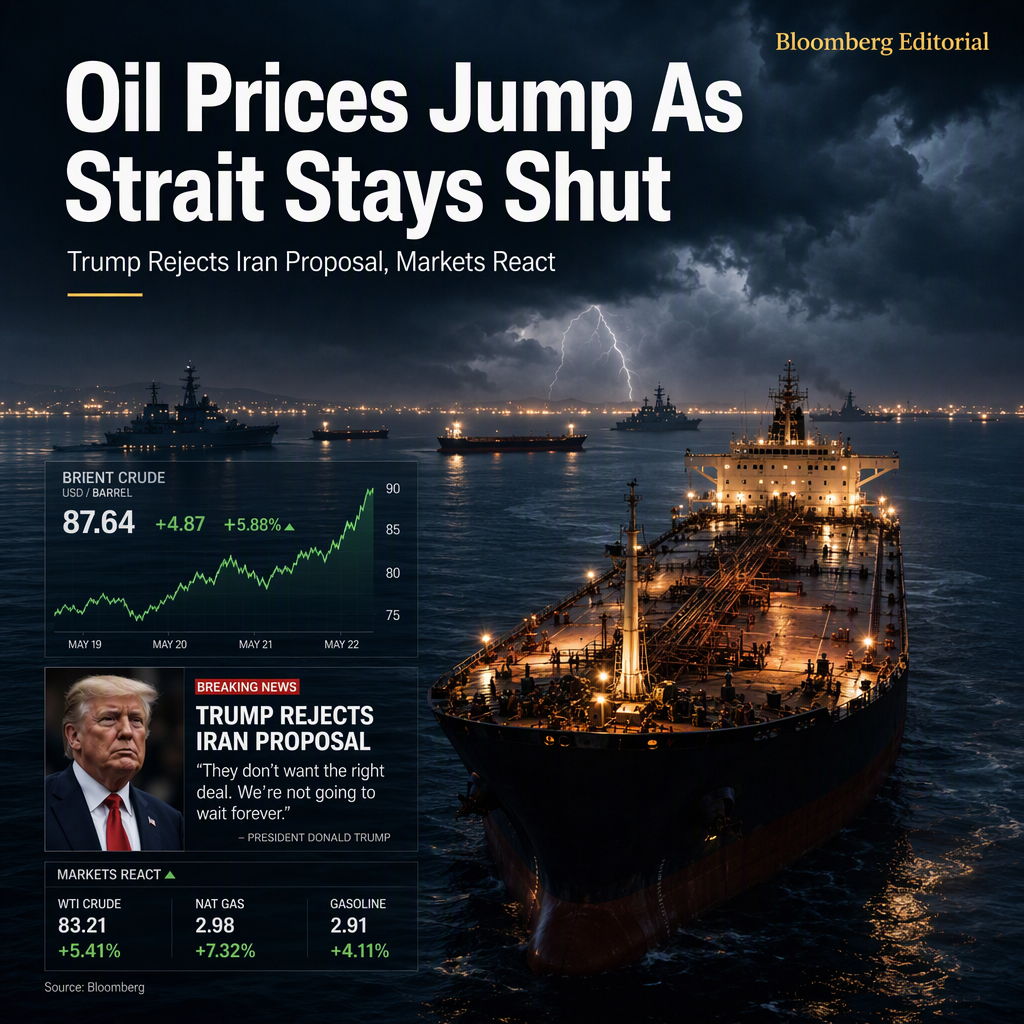
Oil prices rose sharply on Monday following U.S. President Donald Trump's rejection of an Iranian peace proposal intended to end the ongoing Middle East conflict and reopen the critical Strait of Hormuz shipping route. U.S. crude futures for November delivery increased by 1.3% to $93.62 per barrel, while international benchmark Brent climbed 1.8% to $106.31 per barrel in early Asia trading [1].
According to a Wall Street Journal report cited by CNBC, Trump told aides he expects U.S. strikes on Iran to resume after the November midterm elections. Trump later confirmed to reporters that he had rejected Tehran's latest proposal, stating, "They made a proposal but I rejected it" [1]. The Iranian proposal, delivered by Foreign Minister Abbas Araghchi at the United Nations General Assembly, offered to reopen the Strait of Hormuz and restart nuclear negotiations with Washington within seven days if the U.S. met certain conditions. These conditions included ending what Iran describes as U.S. "acts of aggression," lifting the naval blockade and economic warfare, and releasing Iranian assets, as outlined by Iranian foreign ministry spokesman Esmaeil Baghaei [1].
In a related development, Yemen's Saudi-led coalition reported intercepting projectiles launched by Iran-backed Houthi rebels on Saturday [1]. Trump previously stated that he expected the conflict, which began with U.S. and Israeli airstrikes on Iran on February 28, to conclude soon after the midterm elections, with oil prices subsequently declining [1].
The market reaction to these developments was immediate, with oil prices jumping over 1% as traders responded to the heightened geopolitical tensions and the continued closure of the Strait of Hormuz, a key global oil transit route [1].
CONCLUSION
The rejection of Iran's peace proposal by President Trump has fueled a notable rise in oil prices, reflecting market concerns over ongoing geopolitical risks and the potential for renewed military action. The situation remains fluid, with further developments likely to impact oil markets in the lead-up to and following the U.S. midterm elections.