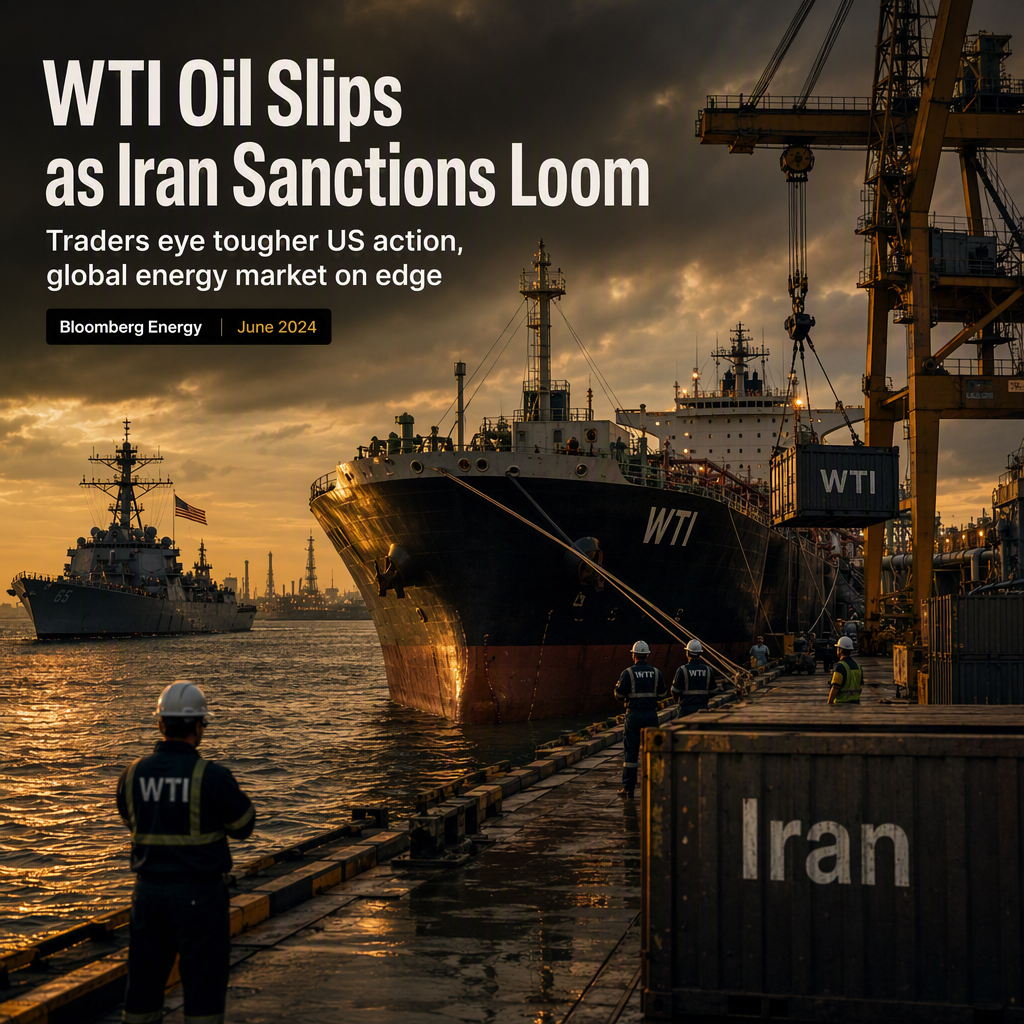
West Texas Intermediate (WTI) crude oil prices fell below $85.00 per barrel, trading around $84.80 during Asian hours on Monday, following two days of gains. The decline was attributed to traders taking profits ahead of an anticipated US announcement regarding stricter sanctions on Iran, which are expected to be the 'toughest' in history according to US Treasury Secretary Scott Bessent. The new measures aim to further isolate Iran economically and disrupt its oil shipments, particularly affecting offers to Chinese buyers amid an ongoing US naval blockade [1].
Iranian officials dismissed the impending sanctions as ineffective, citing their experience in navigating blockades and maintaining international trade relationships. Meanwhile, geopolitical tensions around the Strait of Hormuz remain elevated, with vessel traffic through this critical oil transit corridor significantly below historical averages [1].
Commodity strategists at Commerzbank highlighted that developments surrounding the Strait of Hormuz are central to energy market sentiment, with geopolitical risks dominating the near-term outlook. They also noted that diesel inventories are particularly tight, reinforcing a supportive backdrop for Brent crude prices. Technical analysis indicates that WTI maintains a bullish bias, trading above both the nine-period and 50-period Exponential Moving Averages (EMAs), with the 14-day Relative Strength Index (RSI) at 56.06 suggesting steady upside momentum. Initial support levels are identified at $83.91 and $81.62, with dips likely to attract buyers rather than signal a trend reversal [1].
CONCLUSION
WTI oil prices have retreated as traders anticipate stricter US sanctions on Iran, raising concerns about further disruptions to global energy markets. Despite the pullback, technical indicators suggest underlying demand remains strong, and any dips may be viewed as buying opportunities. Geopolitical risks and tight diesel inventories continue to keep energy markets on edge.