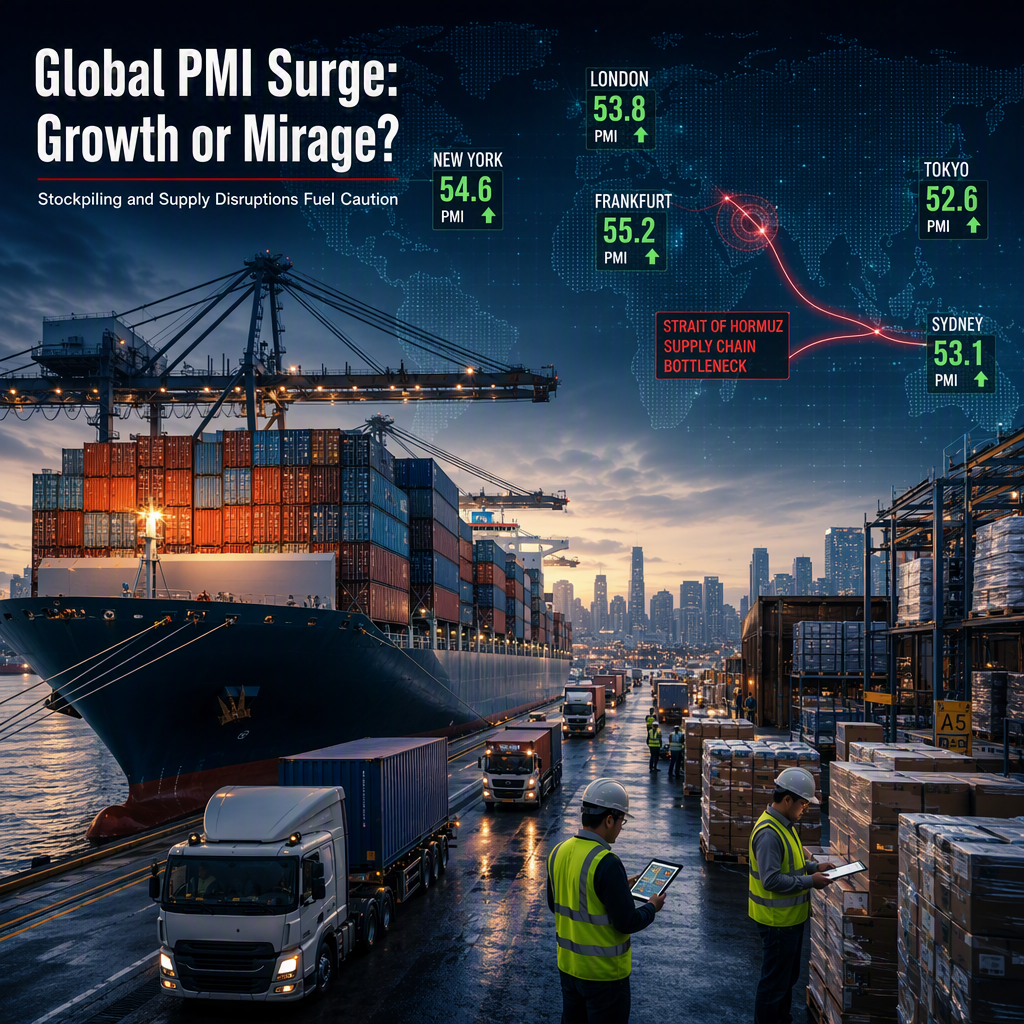
Flash PMI reports for August from seven major economies revealed robust headline numbers, signaling growth across the board, though underlying factors suggest caution is warranted [1]. The United States led with a composite PMI of 56.0, its highest in 52 months, driven primarily by the services sector at 56.8, while manufacturing eased to a five-month low of 53.2 [1]. The Euro Area reached a nine-month high of 52.1, with manufacturing at its strongest in 51 months and the first net employment increase in 2026 [1]. Germany's factory output hit a 55-month high, but its services sector remained in contraction at 48.5 [1]. France was the only major economy in outright decline, with its composite PMI falling to 48.8 [1]. The United Kingdom posted a four-month high of 52.5, though input cost inflation rose for the first time in four months [1]. Japan's PMI climbed to a six-month high of 53.4, with manufacturers reporting their strongest new orders since January 2018 [1]. Australia cooled slightly to 52.5 from 53.2 [1].
Despite these impressive numbers, all reports pointed to stockpiling and supply chain disruptions—particularly those stemming from the Strait of Hormuz conflict—as key drivers behind the elevated PMIs [1]. This phenomenon has led to longer supplier delivery times, which historically signal strong demand but are currently inflating headline PMI figures due to supply constraints rather than genuine demand growth [1].
Market participants, including central banks and currency traders, closely monitor PMI data as it often provides early signals about economic direction ahead of official GDP releases [1]. However, the reliance on stockpiling and supply chain issues as primary drivers raises questions about the sustainability of the current manufacturing boom [1].
While the headline PMIs suggest broad-based expansion, the underlying data and cited drivers indicate that the growth may be less robust than it appears, with some economies—such as France and Germany's services sector—still facing contraction or inflationary pressures [1].
CONCLUSION
Global PMI readings for August show widespread growth, but much of the surge is attributed to stockpiling and supply chain disruptions rather than sustained demand. Investors and policymakers should interpret the headline numbers with caution, as underlying conditions remain uneven across major economies.