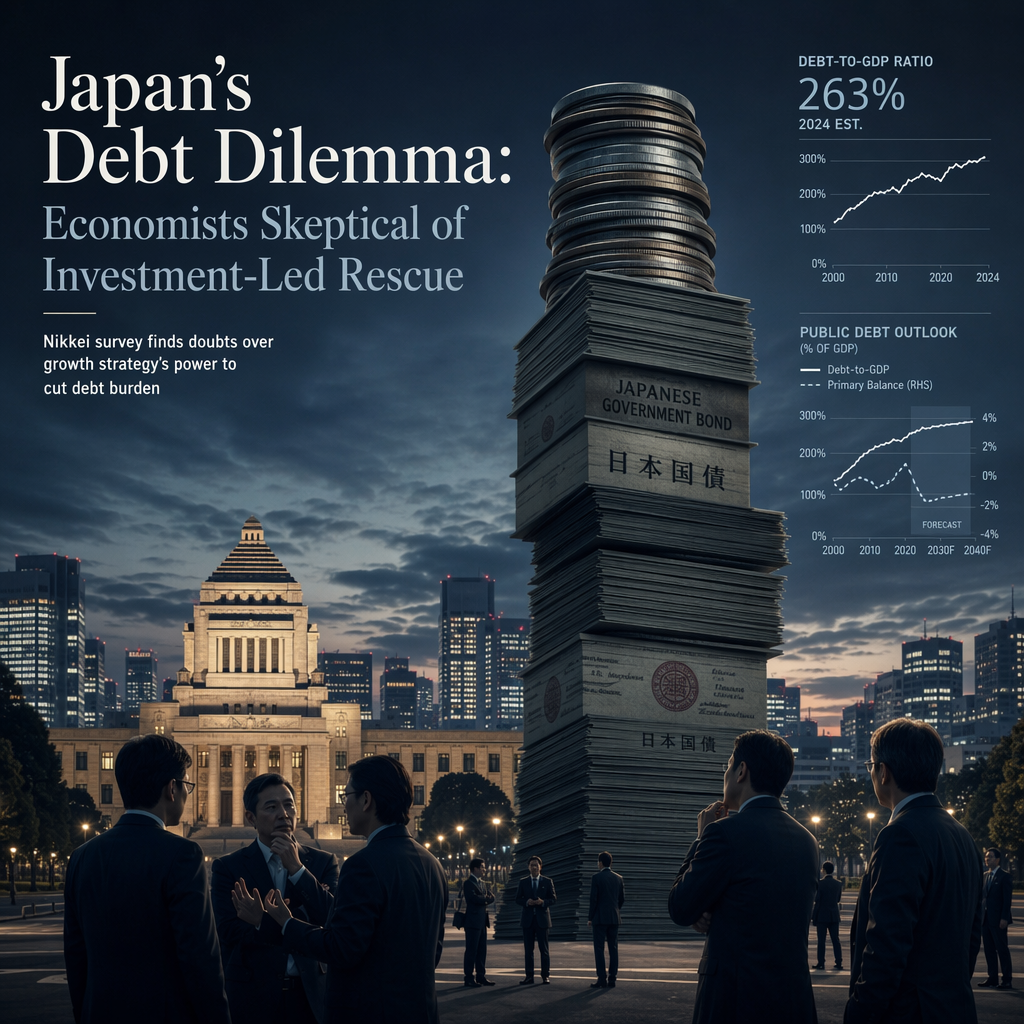
A recent Nikkei survey reveals that economists are largely skeptical about the Japanese government's ability to lower the country's debt-to-GDP ratio through its current investment-driven growth strategy [1]. The government's fiscal plan centers on boosting growth by increasing public-private investment across various sectors, aiming to steadily reduce the high debt burden relative to GDP [1].
However, survey respondents expressed doubts about the adequacy of this approach, noting that the debt-to-GDP ratio remains persistently high and that investment alone is unlikely to achieve meaningful reductions [1]. One economist commented, 'Japan's fiscal plan depends on optimistic growth projections, but past performance suggests these targets are unlikely to be met,' while another emphasized the necessity of structural reforms and sustainable productivity improvements in addition to investment [1].
The market analysis reflected in the survey indicates a cautious sentiment among economists, with concerns that the planned investments may not generate sufficient tax revenue to offset rising debt levels [1]. The article did not include specific trading advice or technical analysis, but the overall tone suggests skepticism regarding the effectiveness of the government's policy mix [1].
Economists highlighted the need for a more comprehensive approach, suggesting that without broader reforms, Japan's fiscal challenges are likely to persist [1].
CONCLUSION
Economists surveyed by Nikkei express significant skepticism about Japan's ability to reduce its debt burden through investment-led growth alone. The prevailing market takeaway is that a more comprehensive strategy, including structural reforms, is necessary to address Japan's persistent fiscal challenges.