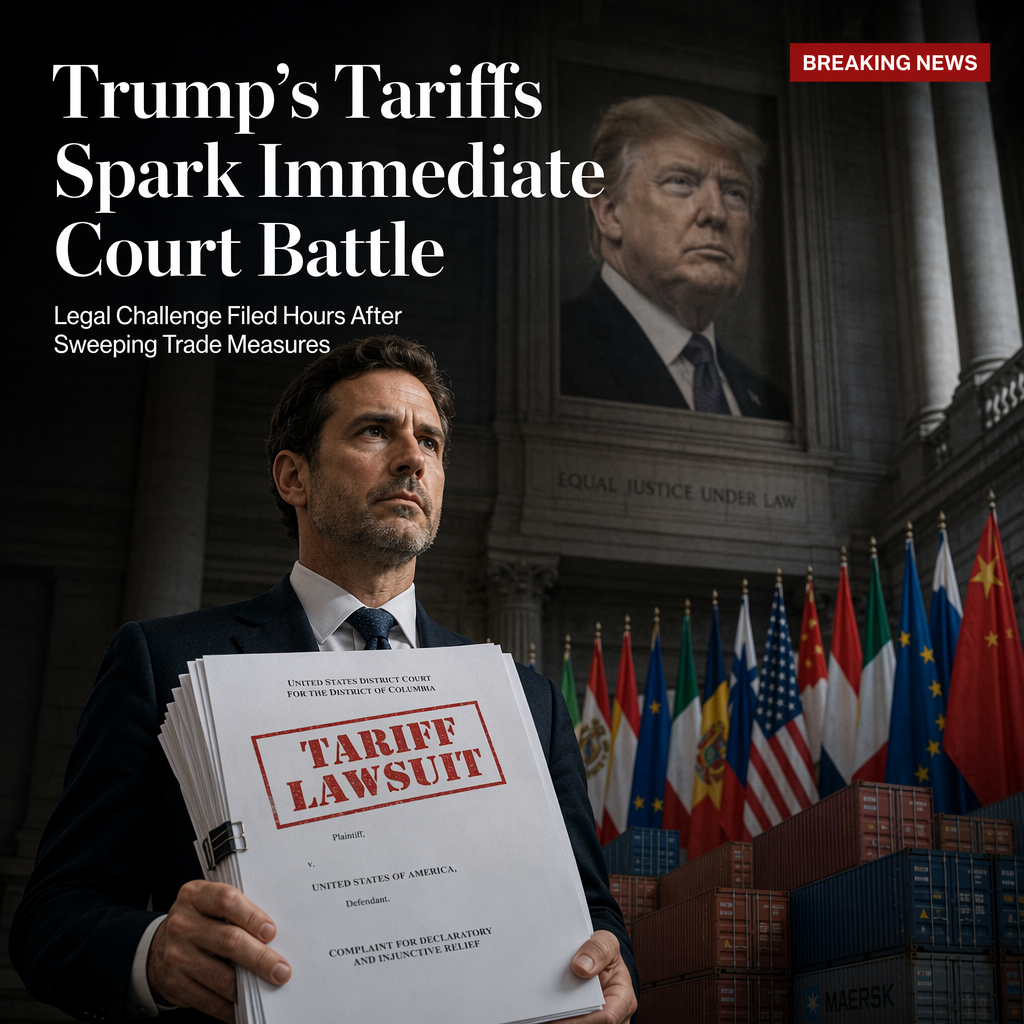
President Donald Trump's administration imposed new tariffs on goods from more than 80 countries, citing allegations that these nations have failed to effectively prohibit the use of forced labor practices. These tariffs, which took effect on Friday, were enacted under Section 301 of the Trade Act of 1974 and apply to trade partners that account for 99.4% of U.S. trade [1].
The tariffs were immediately met with legal opposition, as two small businesses filed a lawsuit against Trump and his administration just hours after the measures took effect. The lawsuit, filed in the U.S. Court of International Trade, argues that the government is using Section 301 as a pretext to re-create a global tariff regime similar to one that the Supreme Court struck down five months earlier [1]. The previous tariffs, implemented under Section 122 of the same law, had a set expiration date and were announced shortly after the Supreme Court invalidated Trump's earlier global tariffs on February 20 [1].
Trade experts have expressed skepticism about the durability of these new tariffs. Peter Harrell, a visiting scholar at Georgetown University Law Center's Institute of International Economic Law, stated that Trump's use of Section 301 is fundamentally different from past applications and could "for sure" be struck down in court. Harrell emphasized that Section 301 was "never intended for the president to just wholesale rewrite the tariff schedule" or impose "permanent" duties [1].
In addition to these broad tariffs, Trump announced plans to "immediately" start a Section 301 investigation into the European Union in retaliation for fines imposed on U.S. tech giants. He also recently imposed 25% duties on Brazilian imports and vowed to implement 50% tariffs on some goods from Canada, all under Section 301 authority [1].
CONCLUSION
The Trump administration's sweeping new tariffs have triggered swift legal challenges and skepticism from trade experts regarding their legal standing. With the tariffs affecting the vast majority of U.S. trade partners and immediate lawsuits underway, the market faces significant uncertainty over the future of U.S. trade policy.