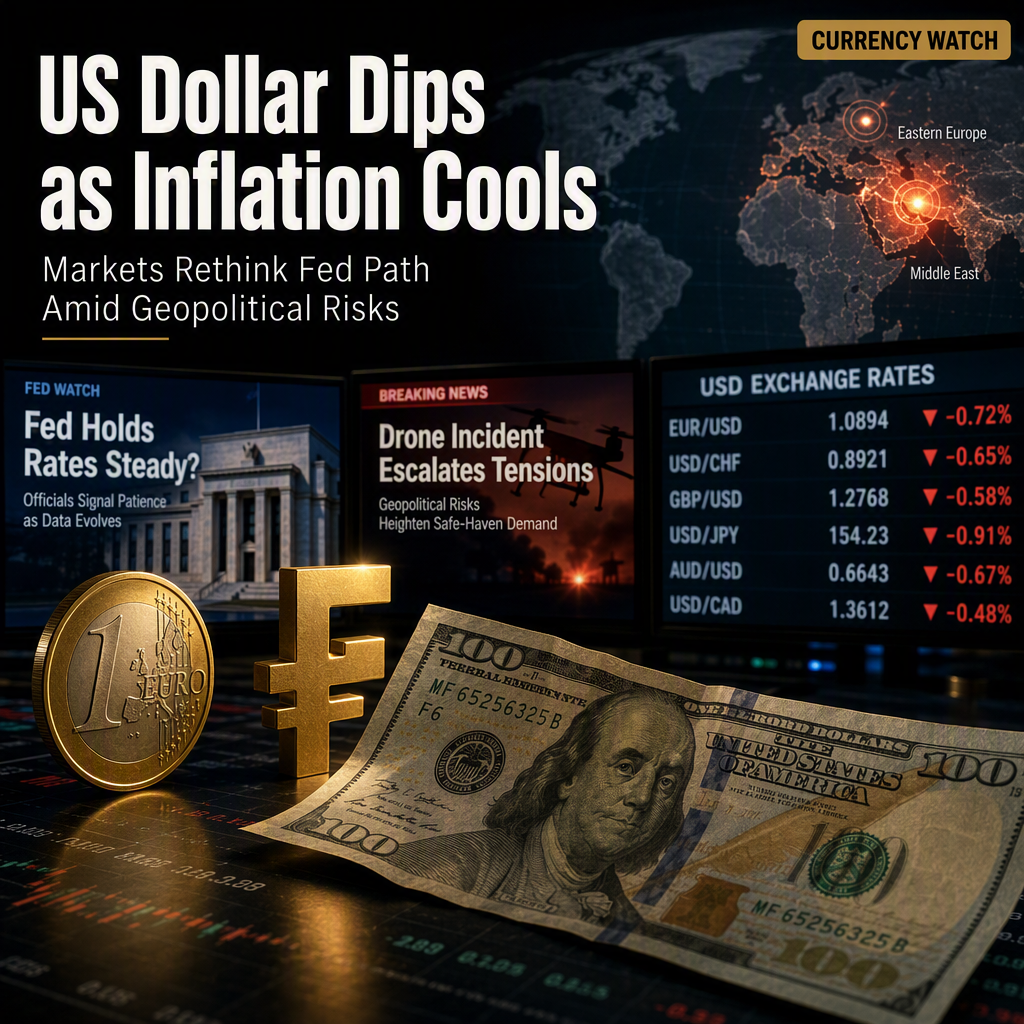
A series of softer-than-expected US inflation reports, including the Producer Price Index (PPI) and Consumer Price Index (CPI), have led to a reassessment of Federal Reserve policy expectations across global markets. The US PPI was unchanged in July, missing the anticipated 0.2% rise, while the annual rate decelerated from 5.5% in June to 4.7%, below the 4.9% estimate [2][4]. Core PPI also rose just 0.2%, under consensus [4]. These data, combined with the CPI, suggest a slowdown in overall inflation, giving the Fed room to hold interest rates steady and putting downward pressure on the US Dollar [1][2][3][4]. According to the CME FedWatch Tool, the probability of a Fed rate hike at the September meeting has dropped to 34.8% from 40% after the PPI release [4], and the odds of a hike by year-end have fallen to just over 65%, down from 75% the previous day and 85% a week earlier [2][3].
This shift in rate expectations has impacted major currency pairs and commodities. The EUR/USD pair has attracted buyers, rebounding from an over one-week low near 1.1500 and trading below 1.1550, supported by the prospect of the European Central Bank delivering a final 25-basis-point rate hike in September as eurozone inflation remains above target [1]. The USD/CHF pair halted a four-day winning streak, trading around 0.8140, as the softer US inflation data pressured the greenback [4]. Meanwhile, the Swiss Franc has strengthened, with Swiss inflation dropping to 0.4% in July, its lowest in four months, and the Swiss National Bank expected to keep rates unchanged for the foreseeable future [4].
In the commodities space, gold (XAU/USD) extended its pullback from a two-month high near $4,450, falling to a fresh weekly low around $4,300, as persistent geopolitical risks offset the impact of receding Fed hike bets and lent support to the safe-haven US Dollar [2]. Silver (XAG/USD) also declined by 1% to near $63.80, pressured by concerns over global energy supply disruptions due to blockades in the Strait of Hormuz and Bab al-Mandab, which together account for almost 27% of global energy supply [3]. Despite recent selling, technical analysis suggests both metals retain a bullish near-term bias above key moving averages [1][3].
Geopolitical tensions remain elevated, with NATO shooting down a drone over Latvian airspace, Finland imposing temporary restrictions in the Gulf of Finland, and Russia downing 15 drones near its border with Finland and Estonia [1]. In the Middle East, the US signaled unprecedented measures against Iran, while Iran-backed Houthis escalated attacks on vessels and claimed a drone strike on a Saudi Aramco refinery, raising the risk of broader regional conflict [1][2]. These developments have kept the war-risk premium in play, supporting safe-haven demand for the US Dollar and capping gains in risk-sensitive assets [1][2][3].
Analyst commentary is mixed. Chicago Fed President Austan Goolsbee favors patience, citing temporary factors behind recent price spikes, while Cleveland Fed President Beth Hammack argues that further rate increases may be needed to secure price stability [2]. TD Securities maintains a constructive medium-term outlook for oil prices despite recent selling, citing fundamental tightness in crude and product markets [3]. OCBC analysts expect Swiss inflation risks to remain limited, allowing the SNB to stay patient on policy [4].
CONCLUSION
Softer US inflation data has shifted market expectations toward a more dovish Federal Reserve stance, weakening the US Dollar and supporting gains in the Euro and Swiss Franc. However, persistent geopolitical risks are sustaining safe-haven demand and capping downside in the greenback, while commodities like gold and silver remain sensitive to both inflation and geopolitical developments. Overall, markets are likely to remain volatile as traders balance shifting monetary policy expectations with ongoing global tensions.