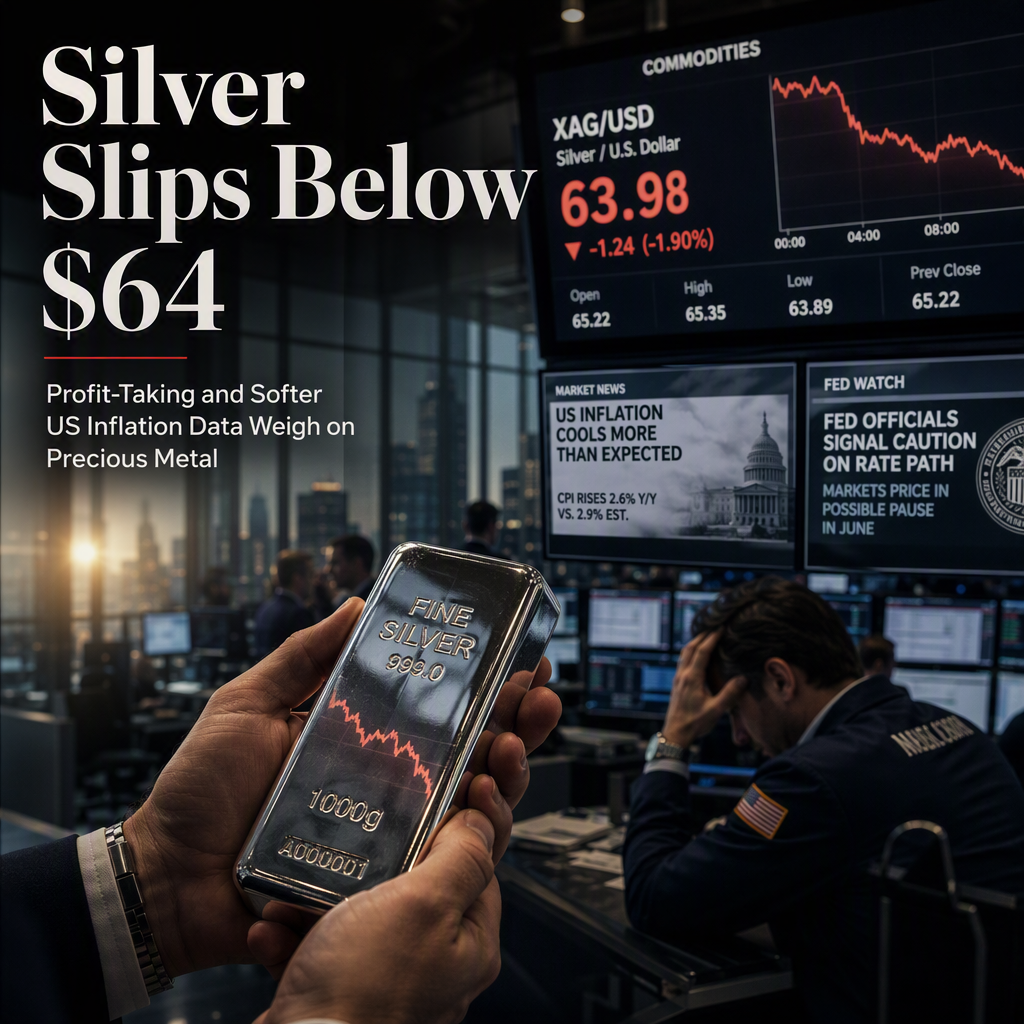
Silver (XAG/USD) extended its losses for the second consecutive day, trading around $63.50 per troy ounce during Asian hours on Friday, June 14, 2024, as investors engaged in profit-taking while assessing the Federal Reserve’s monetary policy outlook and ongoing geopolitical tensions in the Middle East [1]. The decline was influenced by cooling US inflation data: the Bureau of Labor Statistics reported that US wholesale prices for goods and services remained flat in July, softer than the expected 0.2% growth, following a revised 0.1% decline in June. Core Producer Price Index (PPI) figures rose 0.2%, slightly below the consensus estimate of 0.3%. On a year-over-year basis, headline PPI increased 4.7% and core PPI 4.2% [1].
These softer inflation numbers led market participants to adjust their expectations for Federal Reserve interest rate policy. The CME FedWatch Tool showed the implied probability of a rate hike at the Fed’s September meeting dropped to 34.8%, down from 40% immediately after the PPI release [1]. Meanwhile, stalled diplomatic negotiations to reopen the Strait of Hormuz heightened investor concerns about potential escalation and its impact on energy costs and inflation [1].
TD Securities noted strong near-term CTA (Commodity Trading Adviser) flows for silver, stating that prices above $66.80/oz are likely to trigger further buying. Their models suggest CTAs could add 3-4% of historic max length under all pricing scenarios into next week, indicating robust systematic demand for silver if price strength is sustained [1].
Silver’s price movements are influenced by a variety of factors, including geopolitical instability, recession fears, interest rate expectations, and US Dollar strength. As a yieldless asset, silver tends to rise with lower interest rates and is considered a safe-haven, though to a lesser extent than gold [1].
CONCLUSION
Silver’s recent decline below $64 reflects profit-taking and shifting expectations for US monetary policy following softer inflation data. While market sentiment is cautious due to geopolitical risks and recalibrated Fed rate hike probabilities, analyst models indicate potential for renewed buying if prices rebound above key technical levels. The market impact is medium, with investors closely watching both macroeconomic and geopolitical developments.