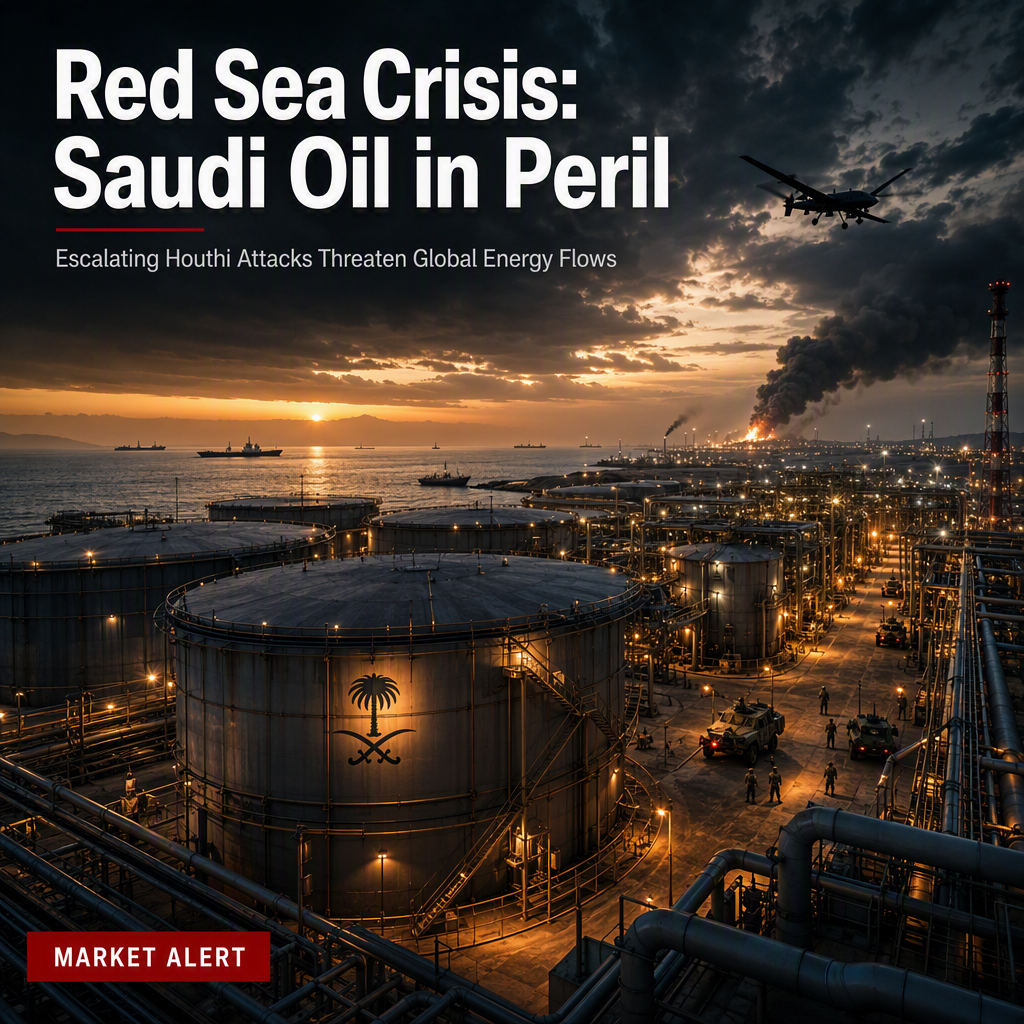
Saudi Arabia is confronting what has been described as 'the biggest threat' ever to its oil production, as Iran-backed Houthi forces in Yemen escalate cross-border attacks and seize territory near the strategic Bab el-Mandeb Strait in the Red Sea, according to Hussain Abdul-Hussain, a research fellow at the Foundation for Defense of Democracies [1]. Abdul-Hussain stated that the current situation is 'almost existential' for Saudi oil production, marking the most significant threat since the kingdom's founding in 1932 [1].
Recent incidents include the temporary closure of Saudi Arabia's East-West oil pipeline following a drone attack launched from Iraq, which President Trump attributed to Iran. Additionally, Saudi forces destroyed a Houthi drone attempting to enter airspace near Mecca, among other provocations [1]. Abdul-Hussain explained that Iran, facing a U.S.-imposed oil export blockade, is attempting to pressure other regional oil exporters by disrupting their supply routes, notably by encouraging Houthi actions to block Saudi exports through the Red Sea after the Strait of Hormuz became less viable for Saudi shipments [1].
Fox News Digital reported that Saudi Crown Prince Mohammed bin Salman urged President Trump to take military action against the Houthis. However, Trump stated that the Houthis communicated they do not want to engage in conflict with the United States, expressing a preference to avoid U.S. involvement [1]. Abdul-Hussain noted that while the U.S. may offer advice and support, direct military intervention appears unlikely at this stage [1].
The expert assessment underscores the precariousness of the situation for Saudi Arabia and highlights the broader regional implications for oil exports and security in the Red Sea and surrounding areas [1].
CONCLUSION
Saudi Arabia's oil production is under severe threat due to escalating Houthi attacks near the Red Sea, with significant implications for regional oil exports. While the Saudis have sought U.S. military support, current indications suggest only advisory assistance is likely, leaving the situation highly uncertain and market-sensitive.