
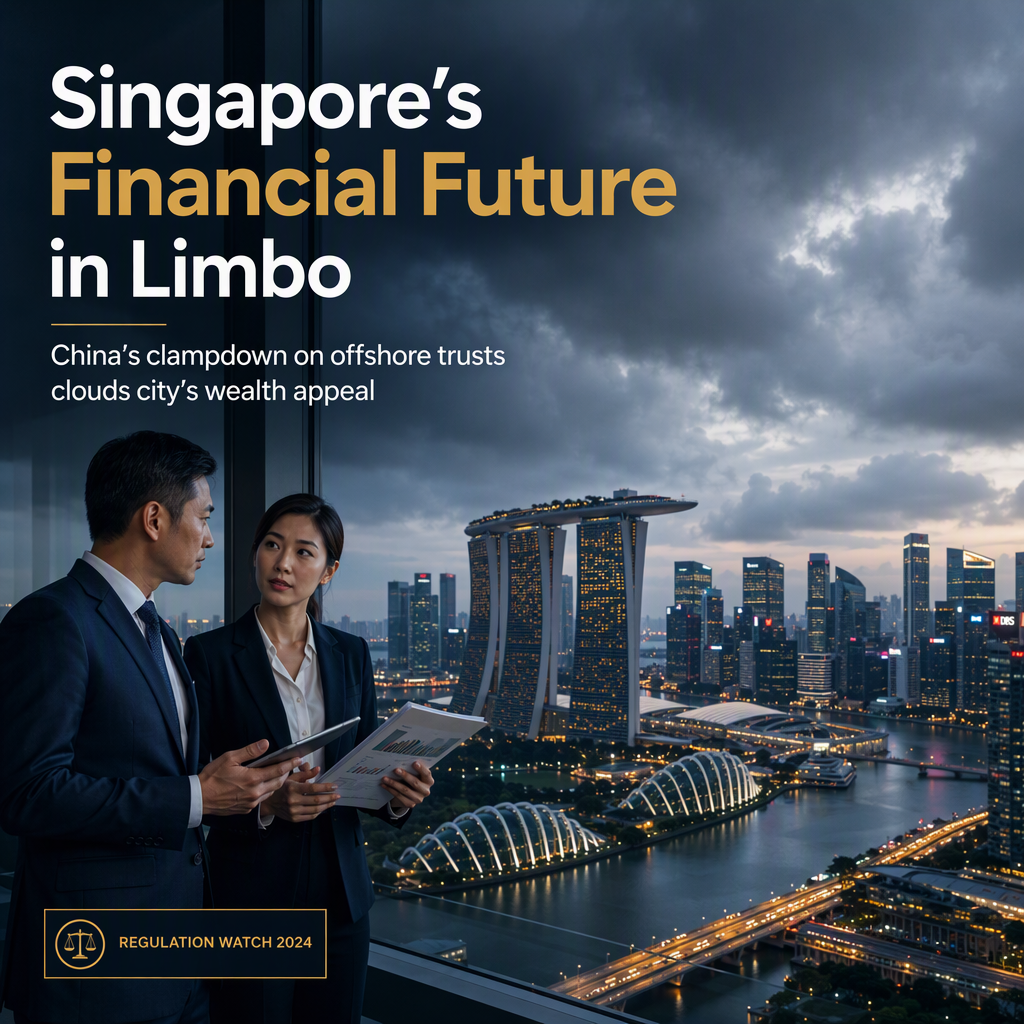
Recent reforms by Beijing have raised concerns in Singapore regarding its continued appeal to wealthy Chinese individuals seeking to establish single family offices, following China's clampdown on assets being moved overseas and an overhaul of tax rules on offshore trusts [1]. Hong Kong experienced a significant increase in the number of such investment entities from 2023 to 2025, highlighting the shifting dynamics in regional wealth management [1].
The new Chinese regulations are reverberating in Singapore, Southeast Asia's financial hub, prompting lawyers and MPs to question whether the city-state can maintain its status as a preferred destination for Chinese capital and family offices [1]. The uncertainty is rooted in Beijing's efforts to tighten control over asset outflows and ensure tax compliance, which could potentially slow the influx of Chinese family offices and wealth management structures that have previously driven private banking growth in Singapore [1].
Industry insiders are concerned that the momentum may slow, affecting not only private banking but also sectors such as real estate and luxury goods [1]. Although no concrete financial data or technical indicators have been published regarding the immediate impact, analysts are closely monitoring how the changes in Chinese offshore trust regulations will influence capital flows, regulatory compliance costs, and market sentiment among high-net-worth individuals considering Singapore as a base [1].
Market participants describe the atmosphere as one of uncertainty, with a Singapore-based wealth manager stating, "The landscape is shifting quickly. We are advising clients to be cautious and to consider alternative structures, but it’s clear that the ease of moving assets out of China is under greater scrutiny than ever before" [1]. Legal professionals suggest that the new rules could lead to greater emphasis on transparency and compliance, which may benefit Singapore in the medium term if it adapts its offerings and maintains its reputation for robust but business-friendly regulation [1]. The situation remains fluid, with further regulatory clarifications from Beijing expected in the coming months, and market participants are monitoring key inflows into Singapore's financial sector while awaiting more definitive guidance [1].
CONCLUSION
China's tightening of offshore trust rules has introduced significant uncertainty for Singapore's financial sector, particularly regarding its attractiveness to wealthy Chinese clients. While the immediate impact remains unclear, market participants are adopting a cautious stance and closely monitoring regulatory developments. The outcome will depend on Singapore's ability to adapt and maintain its competitive edge amid evolving compliance requirements.