
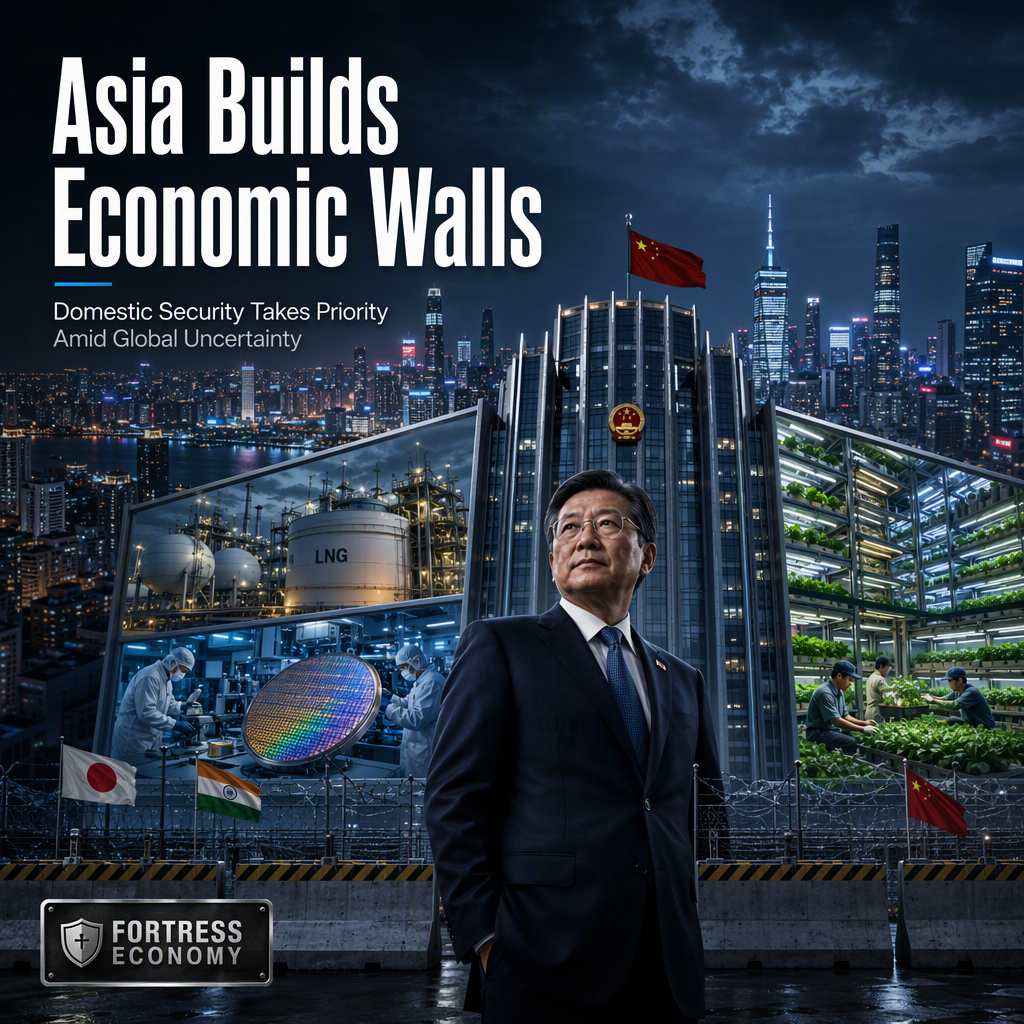
The concept of the 'fortress economy' is gaining traction across Asia, with countries increasingly prioritizing domestic security in energy, technology, and food sectors over global interconnectedness and free trade [1]. According to Abishur Prakash, founder of The Geopolitical Business, this shift is a direct response to recent global disruptions, including the COVID-19 pandemic, escalating U.S.-China tensions, and supply chain interruptions in key commodities [1].
Asian nations such as China, India, and Japan are intensifying efforts to achieve self-sufficiency in critical technologies and raw materials. Governments are implementing measures such as subsidies for domestic semiconductor manufacturers, investments in local food production, and the stockpiling of energy resources [1]. These policies are designed to shield economies from external shocks and reduce reliance on international supply chains.
The move toward fortress economies is already affecting global trade flows and investment patterns, raising concerns about increased economic fragmentation and reduced efficiency worldwide [1]. Prakash cautions that while these strategies may provide short-term stability, they risk undermining long-term growth and innovation by limiting the benefits of global collaboration and specialization [1]. Policymakers face the challenge of balancing the need for resilience with maintaining openness and competitiveness in a volatile global environment [1].
CONCLUSION
Asia's pivot toward fortress economies reflects a strategic response to recent global shocks, emphasizing domestic resilience over international integration. While this approach may offer immediate protection, experts warn it could hinder long-term growth and global economic efficiency if not carefully managed.