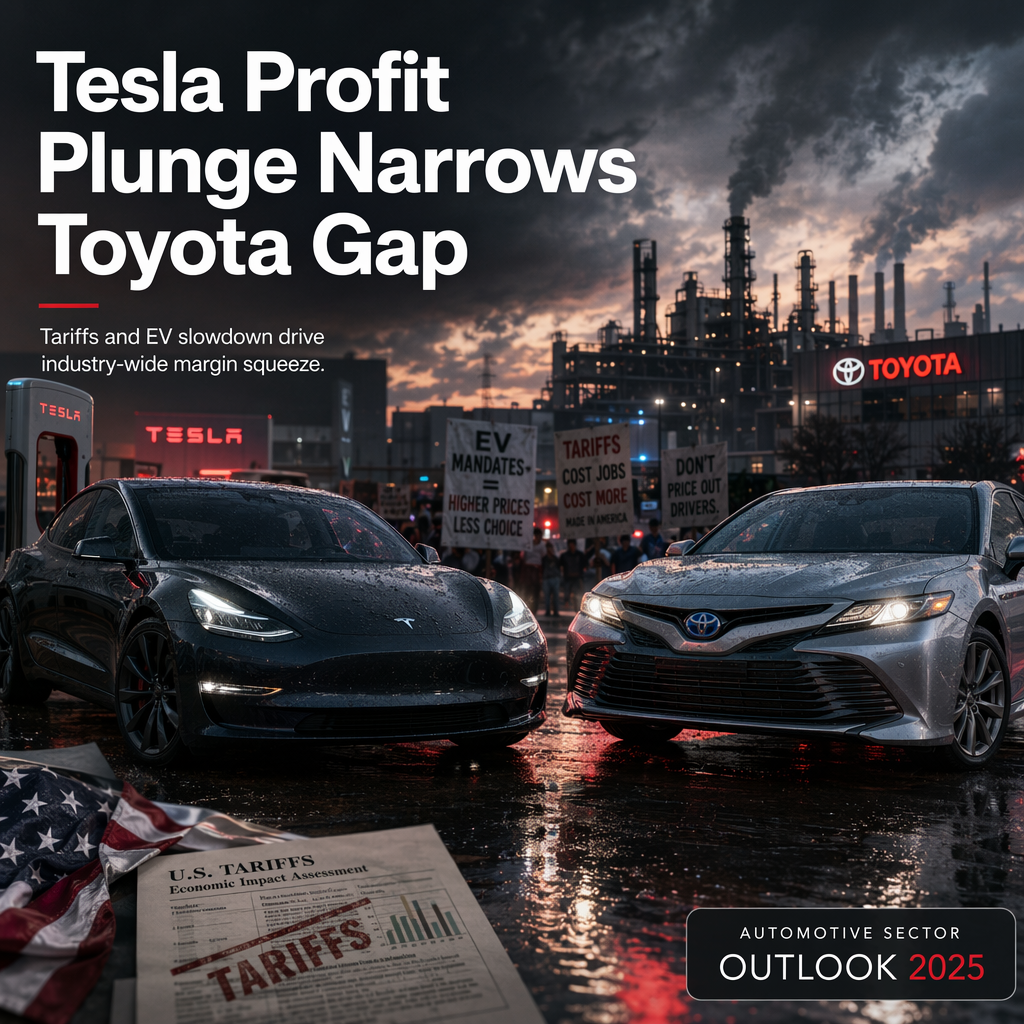
Tesla's profit per vehicle dropped by 40% in fiscal 2025, marking the steepest decline among seven major global automakers and bringing its profitability within striking range of Toyota's [1]. This significant decrease is attributed to U.S. tariffs imposed by the Trump administration and a slowdown in electric vehicle (EV) demand, which have collectively squeezed margins across the industry [1]. Historically, Tesla has maintained a wide lead over Toyota in per-vehicle profitability, largely due to its brand strength and early investments in EV technology. However, the recent market environment has eroded this advantage, with Toyota's renowned efficiency and cost control allowing it to nearly match Tesla's profit per vehicle [1].
The global automotive sector is facing mounting challenges, as automakers contend with regulatory risks and shifting consumer preferences, particularly regarding EVs. The convergence of Tesla and Toyota's profitability underscores a broader trend of declining margins, as companies struggle to adapt to geopolitical tensions and changing market dynamics [1].
This development signals a shift in the competitive landscape, with Tesla's once-dominant position in profitability now threatened by external pressures and Toyota's operational strengths. The industry-wide decline in profits per vehicle highlights the urgent need for automakers to innovate and manage costs effectively in order to sustain their financial performance [1].
CONCLUSION
Tesla's sharp decline in profit per vehicle, driven by tariffs and waning EV demand, has brought its profitability closer to Toyota's, signaling a major shift in industry dynamics. The automotive sector faces heightened challenges as margins shrink and competition intensifies. Market participants should closely monitor how automakers respond to these pressures in the coming fiscal year.