
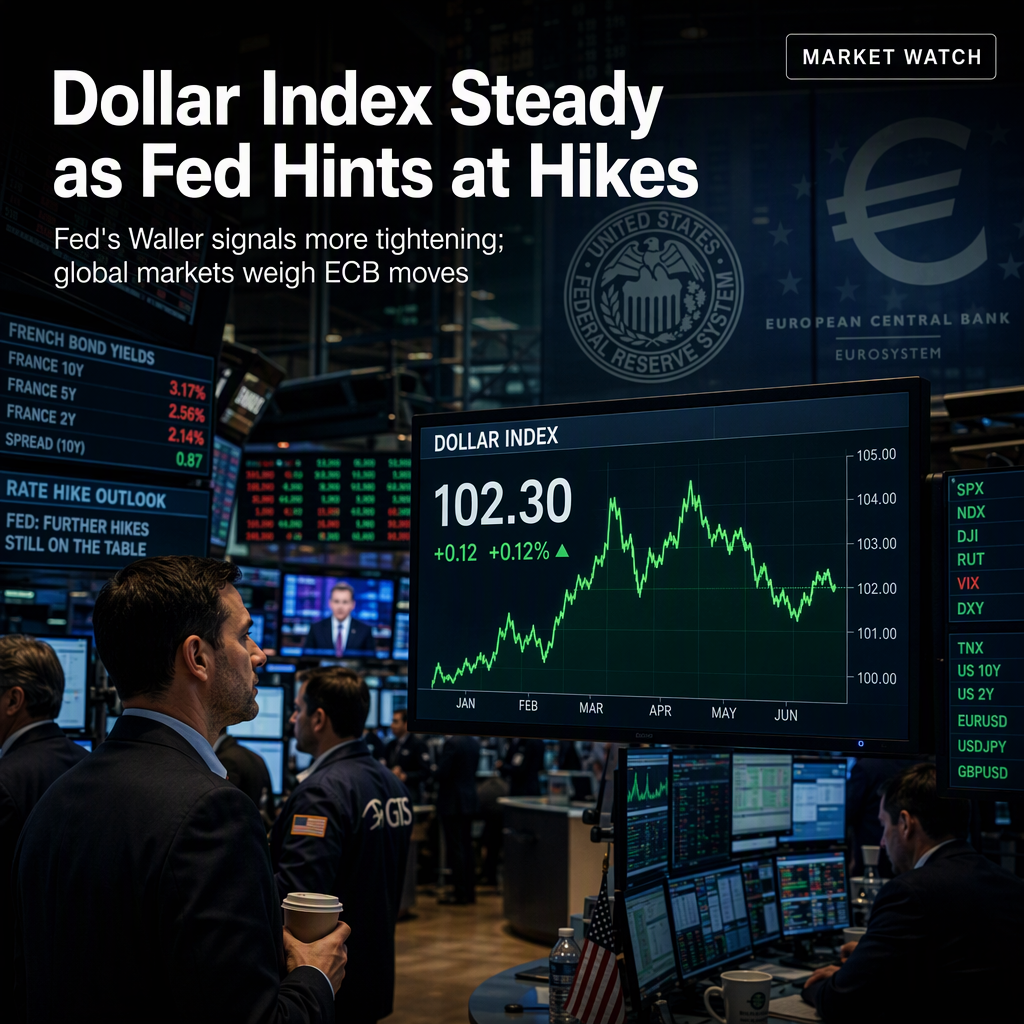
The Dollar Index remained largely unchanged, trading near 102.30 and staying within the range it has held since October 1, despite comments from Federal Reserve Governor Waller suggesting that additional rate hikes are likely needed to bring inflation back to the 2% target sooner. Waller, speaking in Istanbul, emphasized that further hikes do not need to occur at consecutive meetings and refrained from providing a specific timeline for future increases. He noted that inflation has exceeded the Fed's target for nearly five and a half years and expressed limited concern that higher rates would significantly slow the economy. Waller identified rising technology prices, driven by artificial intelligence developments, and the threat of new tariffs as ongoing inflationary pressures [1].
The Federal Reserve previously raised its rate to 3.75%-4.00% on September 16 in a unanimous vote. According to minutes released on Wednesday, most policymakers anticipate another rate increase by year-end, with nearly all viewing inflation risks as tilted higher. Futures markets currently price in about a 20% chance of a hike at the October 27-28 meeting and close to an 80% probability for the December 8-9 meeting, aligning with Waller's outlined path. The two-year Treasury yield, closely tied to expectations for Fed policy, stands near 4.80%, approximately 0.80 percentage points above the top of the Fed's current range. The 10-year Treasury yield is near 5.30% [1].
The Dollar Index's ceiling at 102.50 has coincided with the Euro's floor, with the Euro comprising 57.6% of the index. The Euro's lows against the Dollar, just above 1.1150, have marked the index's highs on multiple occasions this week. This level represents the Euro's weakest since May 2025, and a break below could push the Dollar Index higher. French government debt, with a 10-year yield near 4.90%, has contributed to the Euro's weakness, especially as the yield approaches a two-decade high. The selling pressure has extended to Italian and Greek bonds ahead of France's 2027 presidential election. France's 2027 budget aims to reduce the deficit to 5% of national output, though the country's fiscal watchdog has called the economic assumptions optimistic. Unions have scheduled another strike for October 13, and German Finance Minister Klingbeil has been in contact with French officials regarding bonds [1].
The European Central Bank is now expected to raise rates twice more by March 2027, which could limit the extent to which the gap between US and euro-area rates can widen further [1].
CONCLUSION
The Dollar Index showed little movement despite Fed Governor Waller's comments supporting further rate hikes, as markets had already priced in the likelihood of additional tightening. Ongoing inflation concerns and developments in European government debt markets, particularly in France, continue to influence currency dynamics. The market remains focused on upcoming Fed and ECB policy decisions, with futures indicating expectations for further rate increases.