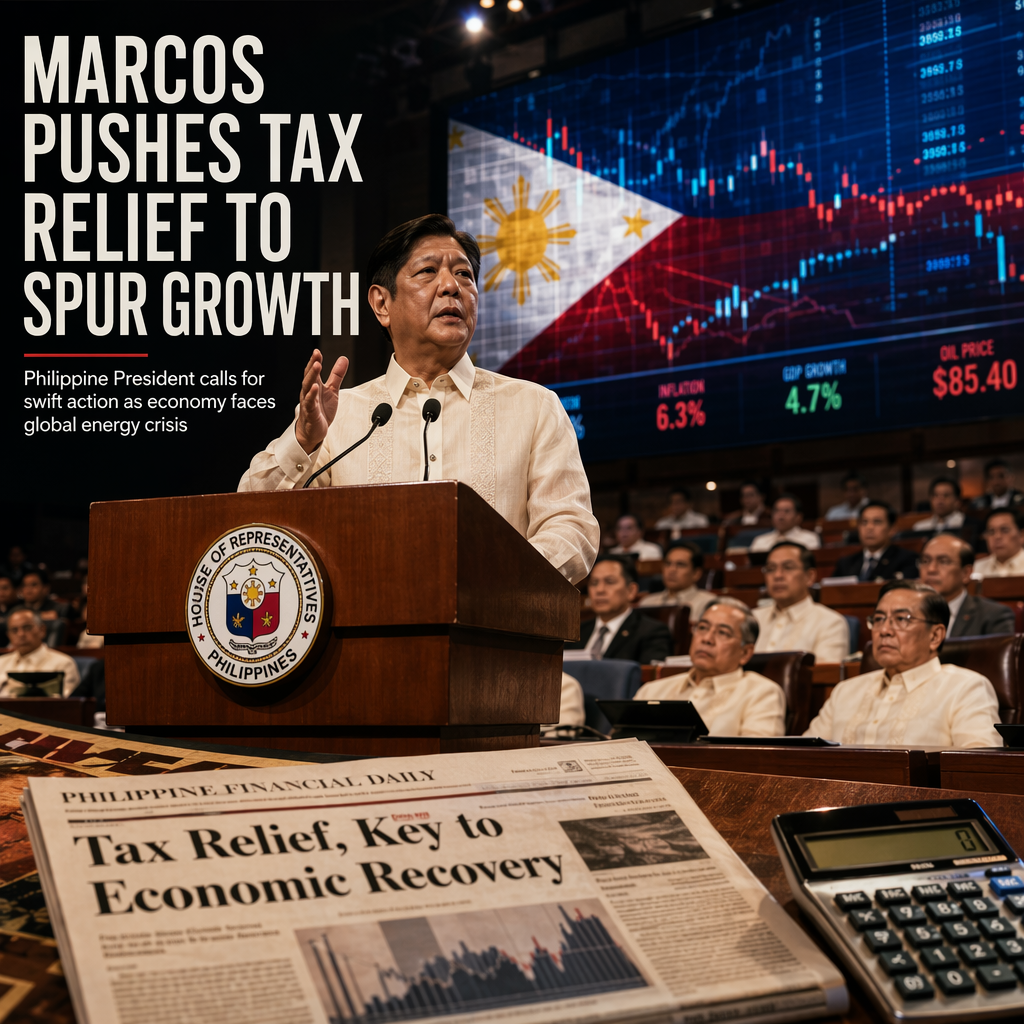
Philippine President Ferdinand Marcos Jr. has proposed raising the income tax threshold by 40% and eliminating certain financial burdens on small businesses in an effort to stimulate growth in the Philippine economy, which has been significantly affected by the ongoing global energy crisis [1]. Marcos delivered his fifth state of the nation address at the House of Representatives in Quezon City, urging lawmakers to act swiftly on these fiscal reforms to provide relief for workers facing rising costs and to boost consumer spending [1].
The president emphasized that the Philippine economy has lagged behind its regional peers, with growth forecasts downgraded by major institutions such as the Asian Development Bank (ADB) [1]. He warned that without fiscal reforms, the country could continue to experience weak GDP numbers and subdued market sentiment [1]. While Marcos did not disclose detailed financial data or technical analysis during his speech, he stressed the importance of raising the tax threshold and removing unnecessary compliance costs for small businesses to free up capital and encourage entrepreneurship [1].
Market analysts have responded with mixed opinions to the proposal. Some view it as a "positive step toward fiscal stimulus," highlighting the importance of consumer spending in the Philippine economy [1]. Others caution that the government must balance tax cuts with fiscal sustainability, especially given rising debt levels and the risk of further rating downgrades [1]. Market observers are closely monitoring the Philippine peso, noting that support levels remain fragile due to persistent inflationary pressures, and resistance is expected at previous highs if investor sentiment improves following the proposed reforms [1].
The president's call for legislative action is expected to influence upcoming debates on fiscal policy, particularly regarding the income tax threshold increase and small business relief measures. Market sentiment remains cautious, with investors awaiting concrete details and passage of reforms before taking bullish trading positions [1].
CONCLUSION
President Marcos' proposal to raise the income tax threshold and ease burdens on small businesses aims to stimulate the Philippine economy amid ongoing challenges. While the initiative is seen as a potential fiscal stimulus, analysts urge caution regarding fiscal sustainability and debt levels. Market sentiment is cautious, with investors awaiting legislative progress and concrete details before reacting decisively.