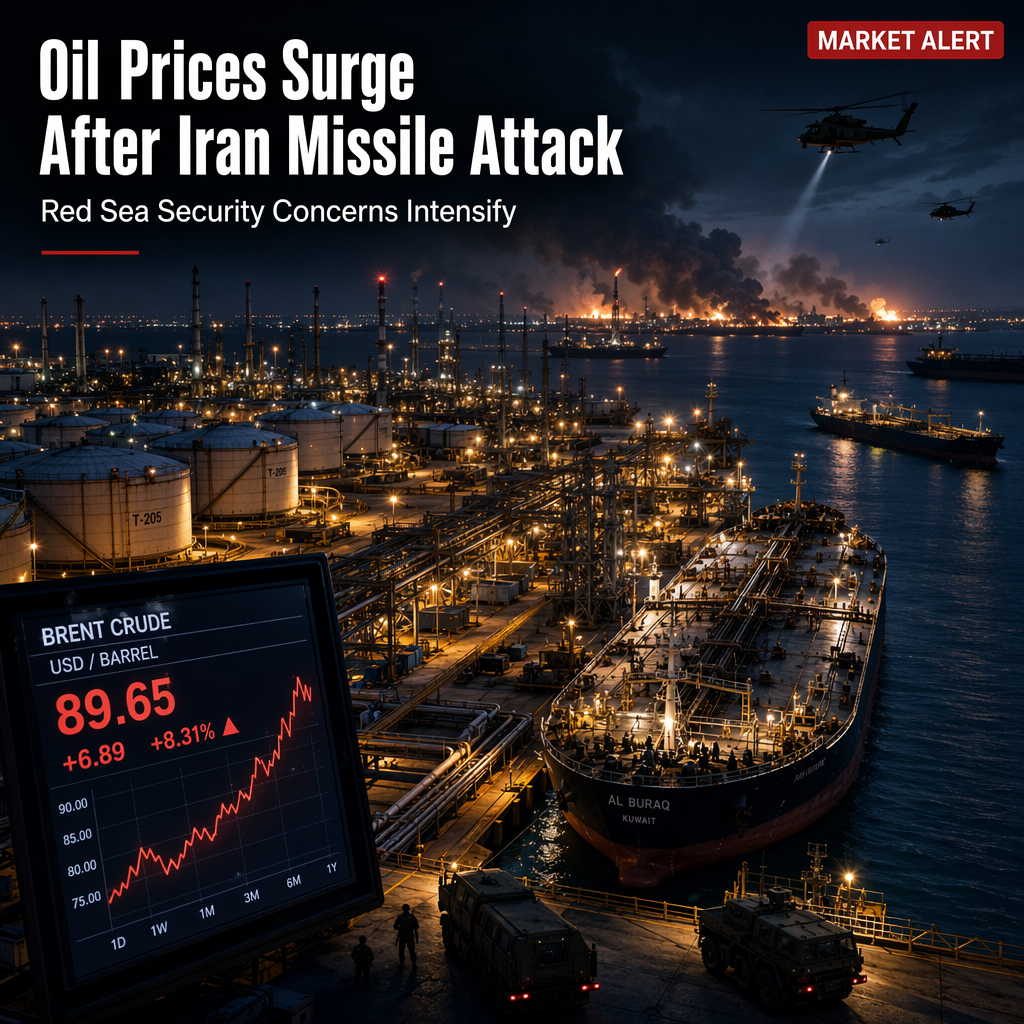
Oil prices experienced a sharp increase in Asian trading following renewed geopolitical tensions in the Middle East, as Iran launched multiple ballistic missiles targeting U.S. forces stationed in the region. According to the U.S. Central Command, the Islamic Revolutionary Guard Corps executed the missile attack in an attempted surprise strike on U.S. military positions. In response, U.S. and Saudi forces conducted retaliatory strikes against 'multiple terrorist logistics and weapons sites' in eastern Iraq, following more than 30 drone attacks over the past three days by 'Iran-aligned terrorists' [1].
The market reaction was immediate, with Brent crude futures for September delivery rising 3.42% to $86.97 per barrel, and U.S. West Texas Intermediate (WTI) futures for June advancing 3.58% to $82.09 per barrel [1]. These price movements reflect heightened concerns over potential supply disruptions stemming from the escalating conflict.
Further compounding market anxiety, the U.K. Maritime Trade Operations Centre reported 'suspicious activity' in the Red Sea, including an explosion heard by a tanker master transiting the southern Red Sea. This incident, reported on Monday and advised on Tuesday, adds to the region's instability [1]. Additionally, Houthi attacks targeting Saudi oil facilities have raised further supply concerns, with strikes on oil production, storage, and port infrastructure threatening to disrupt supply across the region, according to Bjorn Vang Jensen, Executive Industry Advisor at Xeneta [1].
The spike in oil prices has also been influenced by a 'somewhat hawkish tone' from Chairman Kevin Warsh at his first FOMC meeting as Federal Reserve chair, leaving traders divided on the central bank's upcoming decision scheduled for Wednesday, as noted by Kitco [1].
CONCLUSION
The renewed hostilities between Iran and the U.S., coupled with ongoing regional security threats and Houthi attacks on Saudi oil infrastructure, have driven oil prices sharply higher. Market participants are closely monitoring the situation for further escalation and potential supply disruptions, while also awaiting the Federal Reserve's policy decision. The overall market sentiment remains cautious amid heightened geopolitical risks.