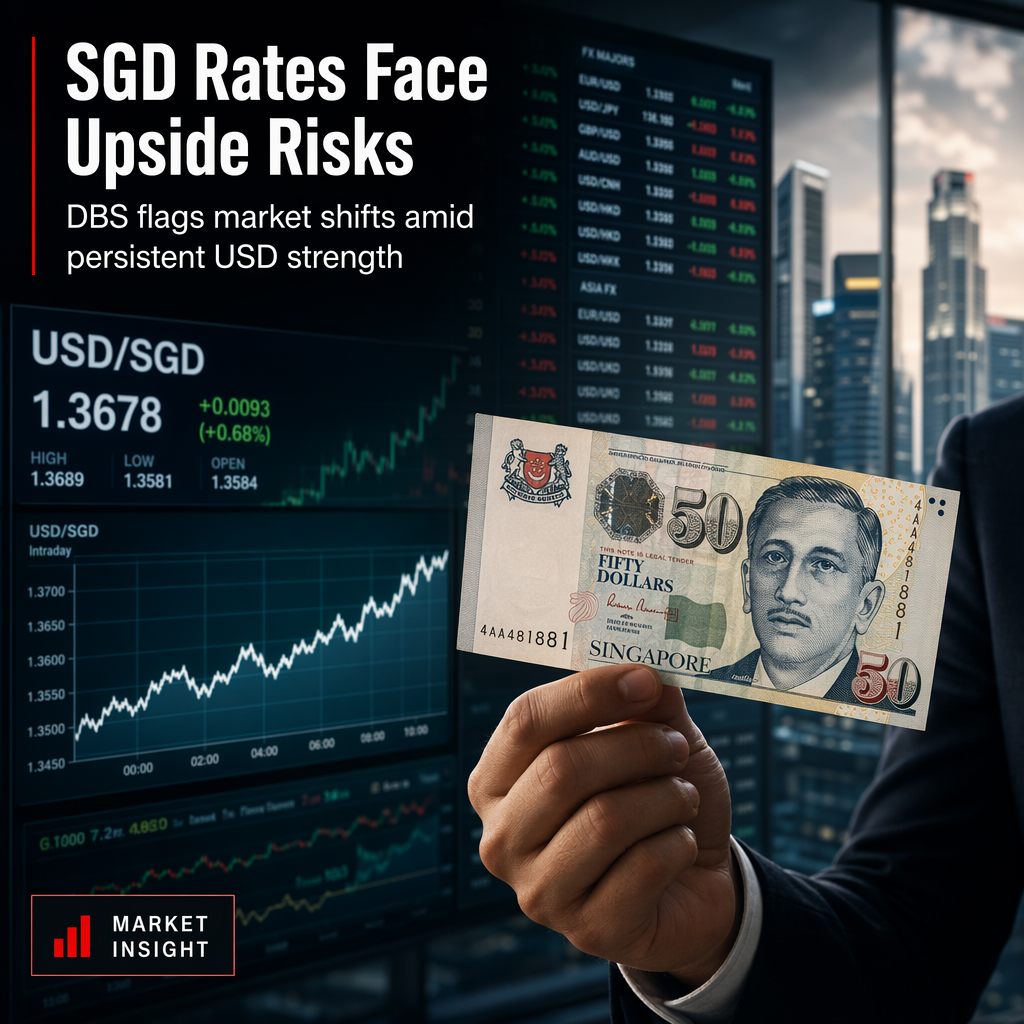
DBS Group Research economist Eugene Leow has highlighted growing upside risks for shorter-term Singapore Dollar (SGD) rates, despite the current environment of flush liquidity in the market [1]. Leow notes that over the past six quarters, market participants have become accustomed to low frontend SGD rates, largely due to persistent beliefs in USD weakness and ample SGD liquidity [1]. However, he points out that SGD rates have recently decoupled from USD rates, with the spread between the two becoming increasingly stretched [1].
Leow identifies several factors contributing to the potential for higher SGD rates. Firstly, expectations for further Federal Reserve rate hikes remain 'sticky' even as oil prices have declined, and renewed US-Iran tensions have caused oil prices to spike overnight [1]. Secondly, the US dollar remains strong, with the de-dollarisation theme losing momentum, which could prompt investors to reconsider the sustainability of low SGD rates, especially if the USD/SGD exchange rate breaches the 1.30 level [1].
Additionally, Leow suggests that if the Monetary Authority of Singapore (MAS) refrains from re-steepening the SGD NEER slope in July, as per DBS's house call, there would be one less reason for SGD rates to remain relatively low [1]. These factors collectively indicate that the risks for SGD rates are now skewed to the upside, potentially leading to a repricing in the market [1].
No specific market reactions or analyst forecasts beyond these observations are provided in the article [1].
CONCLUSION
DBS Research warns that several factors, including persistent USD strength and potential MAS policy decisions, are building upside risks for shorter-term SGD rates. Market participants may need to adjust expectations as the environment for low SGD rates becomes less certain.