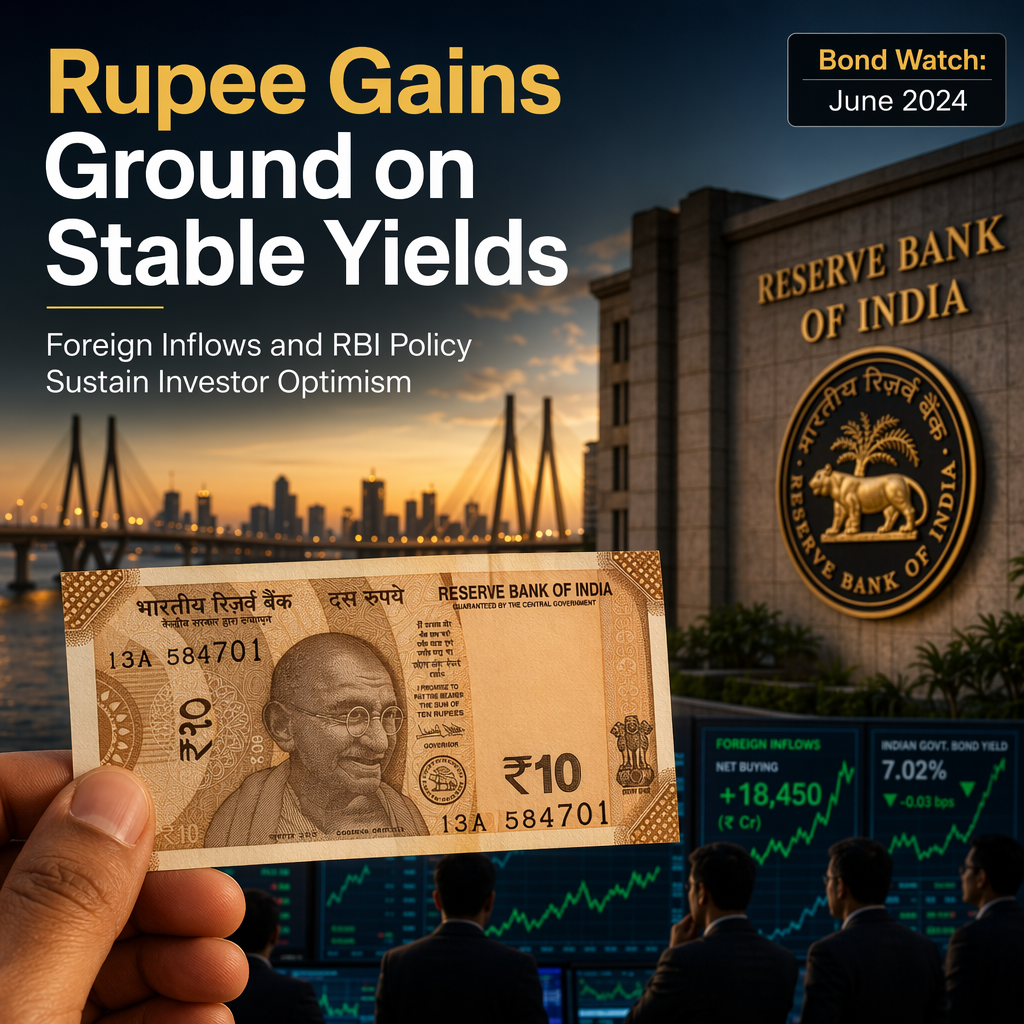
DBS Group Research economist Radhika Rao reports that India's 10-year government bond yield has remained stable, fluctuating between 6.90% and 7.05% in recent sessions. This stability is attributed to a balance between domestic and global factors, including shifting Federal Reserve expectations and the Reserve Bank of India's (RBI) non-hawkish policy stance, which together have prevented yields from rising further [1].
Rao notes that risk rallies have lost momentum as hawkish messaging from the Federal Open Market Committee (FOMC) led markets to anticipate earlier rate hikes. However, the RBI's Monetary Policy Committee (MPC) minutes suggest that policy tightening is not imminent, reinforcing expectations of a steady policy environment [1]. System liquidity has tightened sharply due to advance tax outflows, but conditions are expected to improve with the anticipated inflow of non-resident FCNR(B) deposits [1].
Looking ahead, DBS expects further gains in Indian bonds and the rupee, driven by an increase in non-resident deposits and offshore borrowings, supported by concessional swap facilities. Additionally, sentiment has been buoyed by the possibility of Indian government bonds being included in Bloomberg’s global bond indices [1].
The Indian rupee has maintained its recent gains, and foreign investors have shown renewed interest in INR debt, with inflows exceeding $3 billion since April 2026 [1].
CONCLUSION
India's bond and currency markets are currently supported by a combination of stable yields, constructive foreign investor sentiment, and expectations of further inflows. The prospect of Bloomberg index inclusion and a steady RBI policy backdrop are seen as positive drivers for the rupee and Indian bonds in the near term.