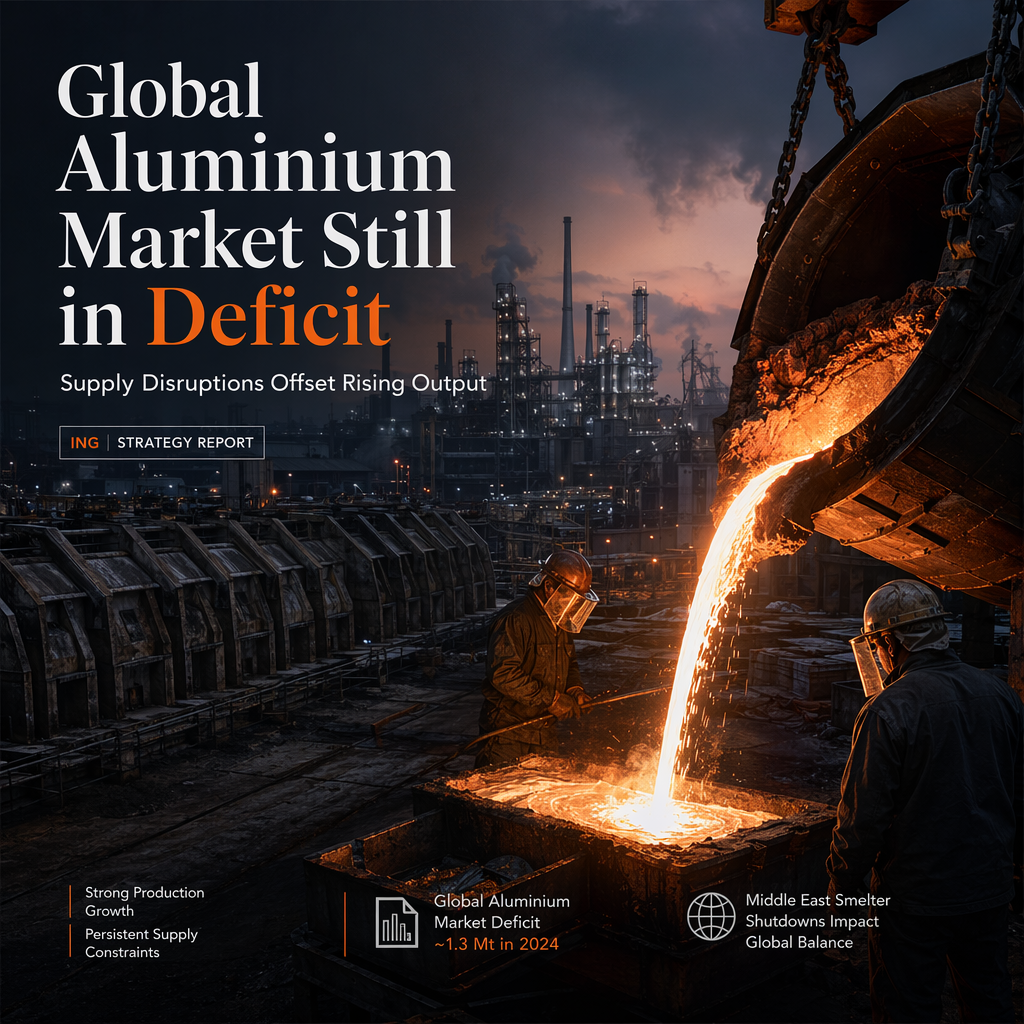
According to ING strategists Warren Patterson and Ewa Manthey, the global aluminium market continues to experience a deficit despite an increase in output across major regions, including China, Europe, and Asia ex-China [1]. Data from the International Aluminium Institute (IAI) indicates that global primary aluminium output rose by 3.5% month-on-month to 6.2 million tonnes in May, reflecting higher production levels in most regions [1].
However, the market remains tight due to ongoing supply disruptions, particularly in the Middle East. ING estimates that approximately 3 million tonnes of capacity have been lost as a result of the Middle East conflict, and this lost capacity is unlikely to return quickly due to the lengthy restart process for smelters [1]. As a result, ING continues to forecast a sizeable global aluminium deficit of around 1.8 million tonnes for the year [1].
China's aluminium production increased by 2% year-on-year to 3.8 million tonnes in May, supported by stronger margins that boosted smelter utilisation rates [1]. Additionally, China's aluminium exports rose by 16% year-on-year in May, driven by stronger international prices [1]. Nevertheless, further production growth in China is constrained by government-imposed capacity caps [1].
Production also increased across Europe and Asia ex-China in May, while output in the Gulf region remained more than 35% below year-ago levels due to ongoing supply disruptions linked to the Iran conflict [1].
CONCLUSION
Despite rising global aluminium output, the market remains in deficit due to significant supply disruptions, particularly in the Middle East. ING forecasts a continued deficit for the year, with lost capacity unlikely to return soon. Market conditions are expected to remain tight, supporting elevated international aluminium prices.