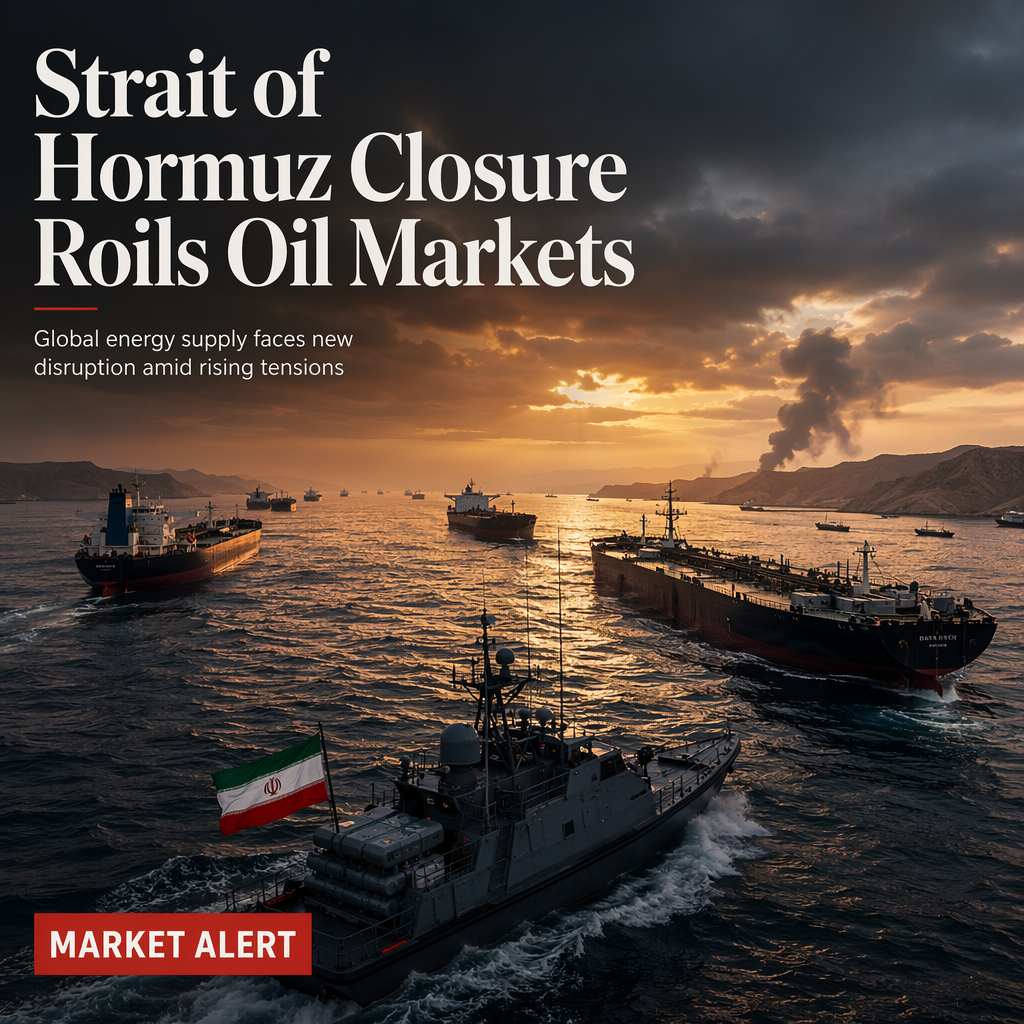
On June 20, 2026, Iran announced the closure of the Strait of Hormuz, citing ceasefire violations stemming from Israeli strikes on southern Lebanon, according to state media reports [1]. The Strait of Hormuz is a critical passage for global energy supplies, and its closure has immediate and significant implications for oil and shipping markets [1]. U.S. Central Command reported that 55 merchant ships transited the strait on Saturday, highlighting the volume of commercial activity affected by the closure [1].
Market analysts are closely monitoring the situation, warning that a prolonged closure could lead to higher oil prices and increased volatility in global energy markets [1]. Traders are watching resistance levels for Brent crude and WTI oil futures, with expectations that prices may test recent highs if the closure persists [1]. Historically, regional tensions have pushed oil prices above $100 per barrel, and technical indicators suggest a bullish trend may continue should the strait remain closed [1].
The closure is also raising concerns about rising insurance rates for shipping and the potential need to reroute maritime traffic, both of which could increase operational costs for global shipping companies [1]. Market sentiment remains cautious, with analysts advising traders to monitor developments closely and consider protective strategies such as stop-loss orders or hedging positions in energy sector assets [1].
CONCLUSION
Iran's closure of the Strait of Hormuz has triggered heightened volatility and caution in global oil and shipping markets, with analysts anticipating potential price surges and increased operational risks. Traders and shipping companies are advised to closely monitor the evolving situation and implement risk management strategies as uncertainty persists.