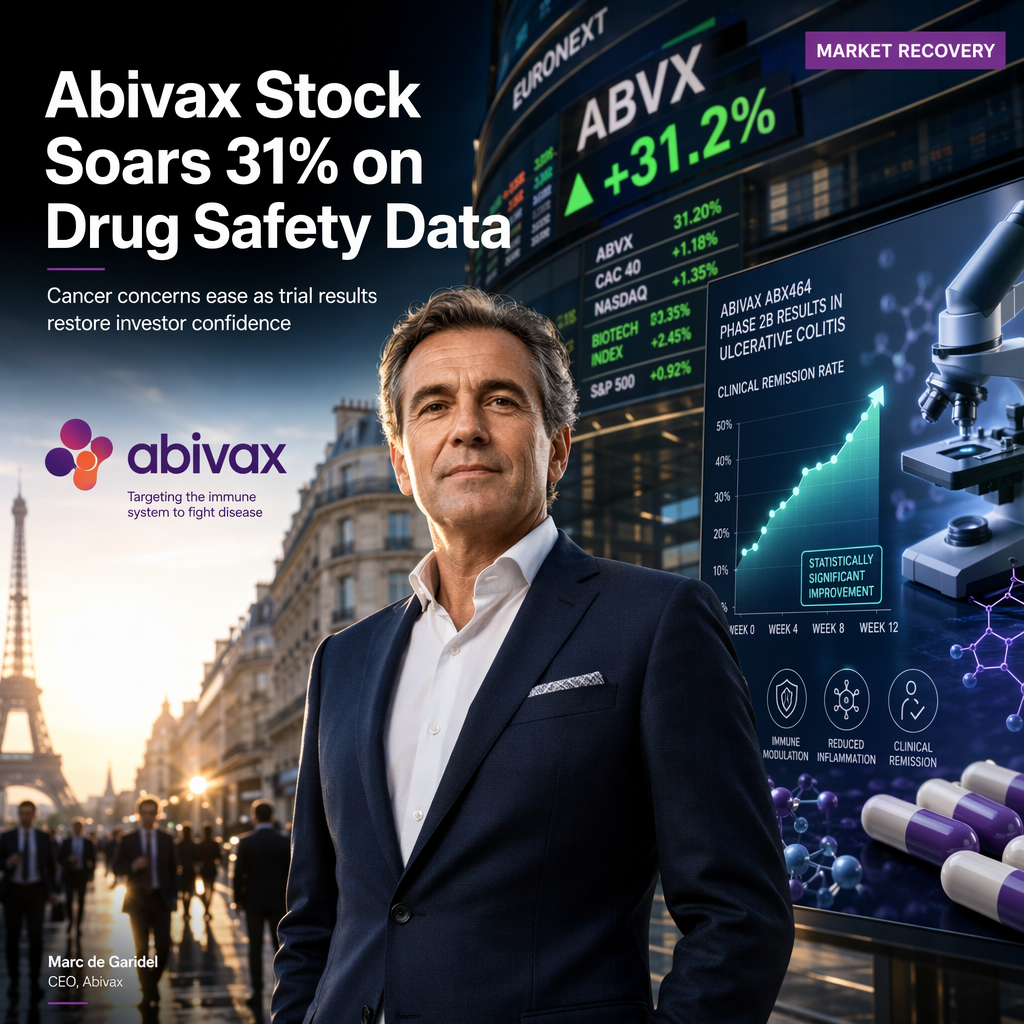
Shares of French biotech company Abivax surged by 31% on Tuesday following the release of new data from its late-stage clinical trial for obefazimod, its lead experimental drug for bowel disease, specifically ulcerative colitis [1]. This rally helped the stock recover from a previous 44% crash on June 2, which was triggered by earlier trial data indicating cancer cases among patients taking the highest dose of the drug [1].
The latest supplemental data, released late Monday, indicated that malignancy rates among trial participants were in line with expected background rates, alleviating some investor concerns about cancer risk [1]. Additionally, over 37% of patients who did not initially respond to treatment achieved clinical remission after receiving a 50 mg dose for about 10 months [1]. The maintenance study tracked remission rates over 44 weeks, and Abivax stated that these findings suggest a meaningful proportion of non-responders may benefit from longer treatment exposure [1].
Jefferies analysts described the update as "supportive" but expressed caution regarding lingering cancer risk concerns, the company's cash needs, and the limited catalyst path outside of potential mergers and acquisitions [1]. While specialist investors and physicians may move past the malignancy issue, generalist investors could remain hesitant [1].
CEO Marc de Garidel emphasized that the expanded safety data strengthens confidence in the long-term safety profile of obefazimod and supports the company's plan to submit a new drug application (NDA) to the U.S. Food and Drug Administration in the fourth quarter of 2026, with a potential launch in 2027 [1]. Abivax has also been the subject of takeover speculation, with rumors of interest from major pharmaceutical companies, though these remain unverified [1].
CONCLUSION
Abivax's stock rebounded sharply after new trial data alleviated cancer concerns related to its lead drug, obefazimod. While the update was seen as supportive by analysts and the company remains on track for a U.S. regulatory submission, some investor caution persists due to prior safety concerns and financial considerations.