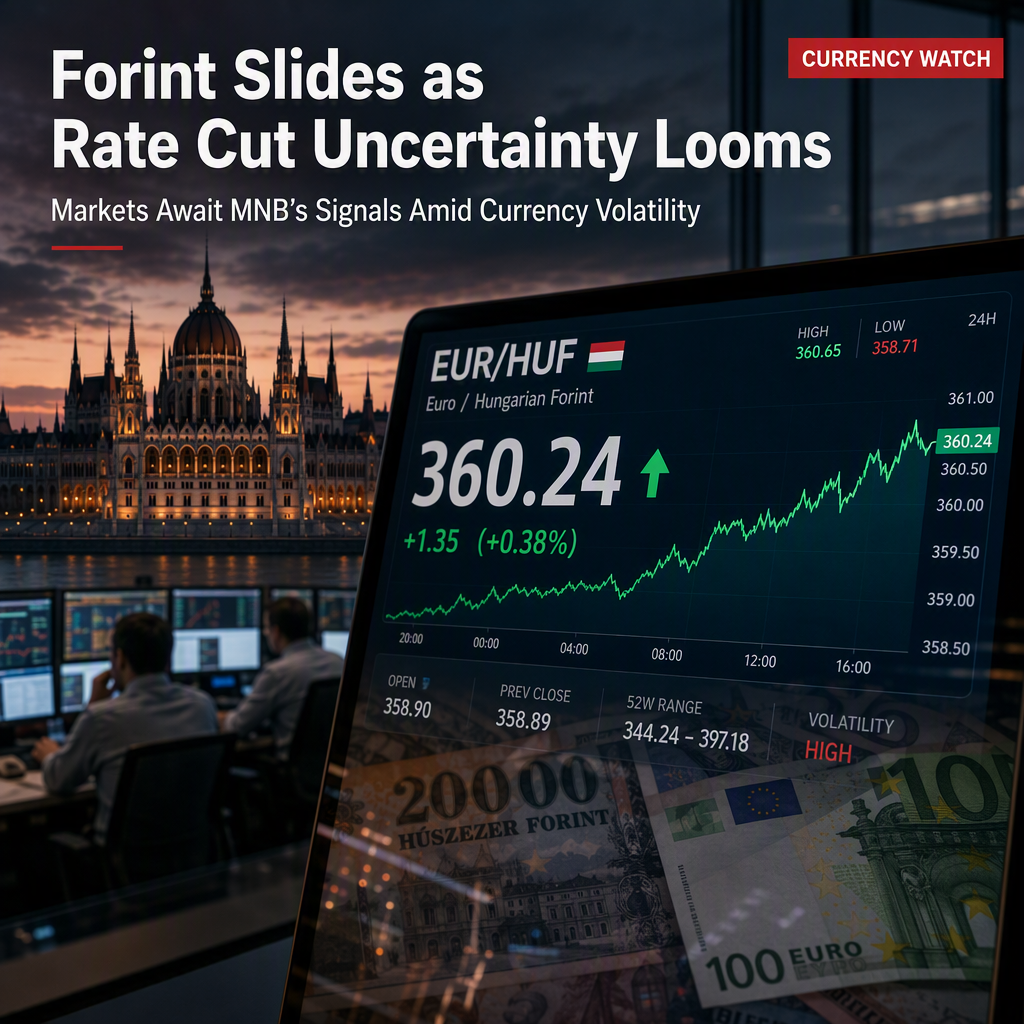
The Hungarian Forint (HUF) has recently lost ground against the Euro (EUR), with the exchange rate moving back above 360, reversing a portion of its earlier gains. According to Commerzbank’s Tatha Ghose, this weakening is attributed to external shocks and the ongoing monetary easing cycle initiated by the Magyar Nemzeti Bank (MNB) [1].
Following its July meeting, the MNB indicated that it sees room for additional rate cuts during the summer, with a plan to reassess the outlook in September. This guidance has been interpreted as a relatively unconditional commitment to further easing, despite a recent shift in the balance of inflation risks. As a result, the Forint’s interest rate support has diminished, contributing to its recent depreciation [1].
Market participants are now closely watching the upcoming Monetary Policy Committee (MPC) minutes for any signs of a more conditional stance on rate cuts. A shift to a more cautious or conditional tone could reassure markets that the MNB may soon pause its rate cutting cycle, which would help limit further downside pressure on the Forint and reinforce foreign exchange stability [1].
The MNB has historically emphasized the importance of maintaining foreign exchange stability, and any indication of a change in its approach could have significant implications for the HUF’s performance in the near term [1].
CONCLUSION
The Hungarian Forint’s recent weakness is closely tied to the MNB’s ongoing easing cycle and market expectations for future rate cuts. Investors are awaiting the MPC minutes for guidance, as a more conditional stance could help stabilize the currency and limit further losses.