
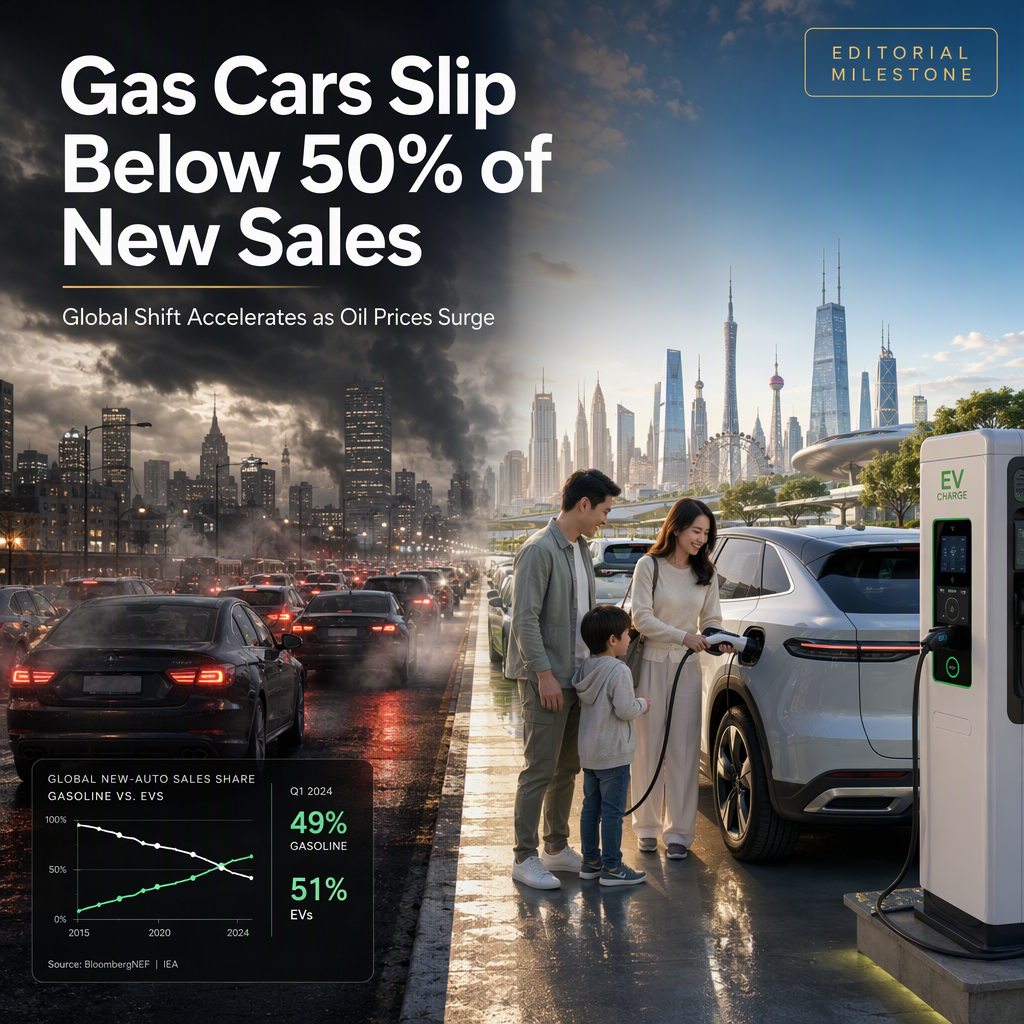
For the first time, gasoline-powered vehicles accounted for less than 50% of global new-vehicle sales during the January to June period, marking a significant shift in the automotive market landscape [1]. This decline in market share for gasoline models comes as high oil prices, driven by conflict in the Middle East, have prompted more consumers to opt for electric vehicles (EVs) [1]. The article notes that the century-long dominance of gasoline engines as the primary vehicle powertrain may be ending [1].
The transition is being accelerated by consumers' desire for vehicles with lower operating costs, a trend that has been amplified by the recent surge in oil prices [1]. While specific sales figures, percentages, or company names are not provided, the article emphasizes the global nature of this shift and its direct connection to macroeconomic and geopolitical factors [1].
No analyst opinions or forward-looking statements are included in the article, nor are there details on market reactions or the performance of specific automakers [1].
CONCLUSION
The drop of gasoline vehicles below 50% of global new-auto sales signals a pivotal moment for the automotive industry, driven by high oil prices and consumer preference for lower-cost EVs. This trend suggests a continued acceleration in the adoption of electric vehicles, potentially reshaping the market landscape.