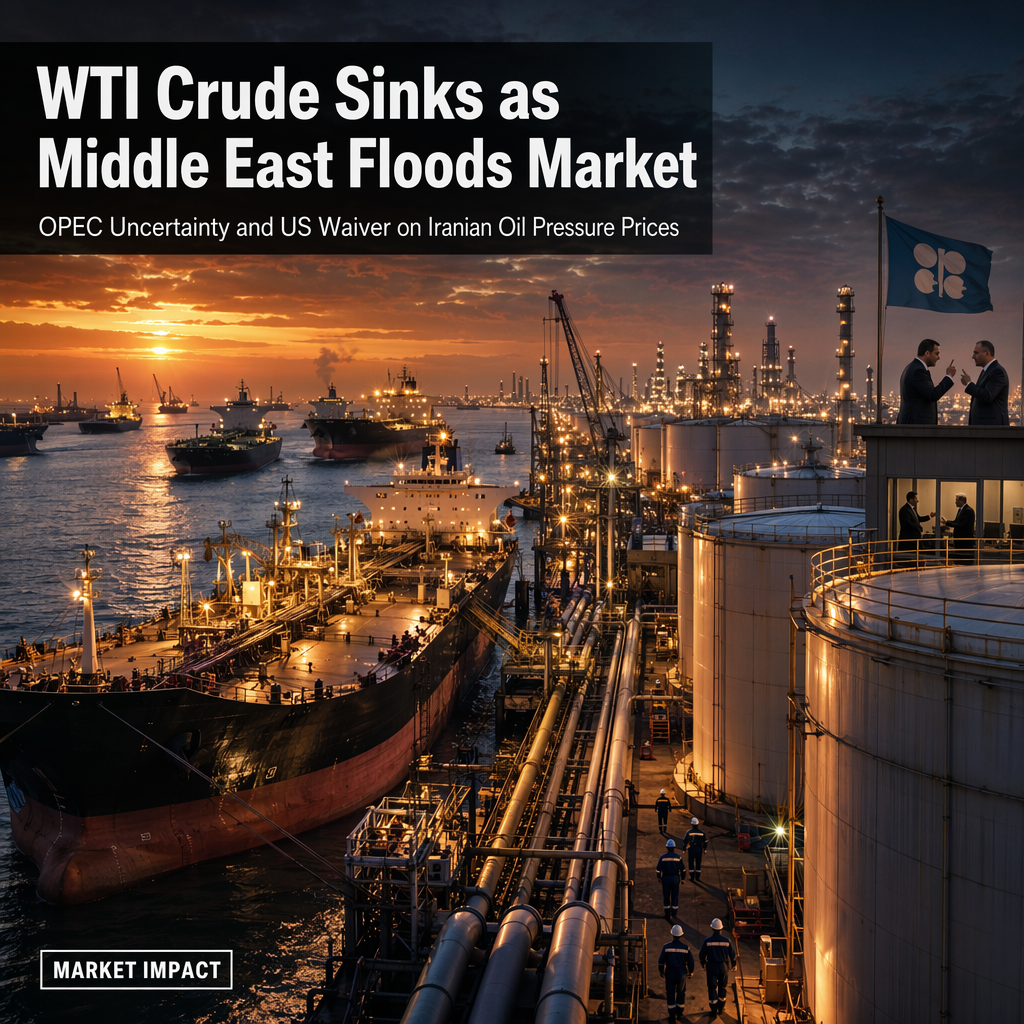
West Texas Intermediate (WTI) crude oil prices declined for the fourth consecutive day, trading around $69.20 per barrel during European hours on Thursday, as market expectations shifted toward a significant increase in oil supply from the Middle East [1]. US Energy Secretary Chris Wright, speaking at the Reuters Global Energy Forum in New York, highlighted that approximately 20 million barrels of oil recently exited the Strait within a single 24-hour period, marking a return to normal operational flows. Shipping data confirms this recovery, with an interim deal on Wednesday enabling three previously stranded tankers carrying 5 million barrels of crude to leave the Gulf [1].
The supply expansion is expected to continue due to a temporary US waiver permitting buyers to purchase already-loaded Iranian oil, further boosting Iranian sales [1]. This surge in supply is compounded by geopolitical tensions and structural friction within OPEC. A senior Iraqi oil ministry official stated that Iraq may consider all options, including potentially leaving OPEC, if its production quota is not significantly increased. This possibility follows the surprise departure of the United Arab Emirates (UAE) from OPEC earlier this year, raising concerns about cartel stability [1].
The combined effect of increased Middle Eastern output and Iran's boost in sales from the temporary US sanctions reprieve has already led to a decline in global physical crude oil cargo prices [1]. Despite these developments, the long-term outlook remains uncertain. Goldman Sachs recently commented that it does not anticipate a massive, sustained increase in Iranian production, even if the US sanctions relief extends beyond its scheduled August 21 expiry date [1].
CONCLUSION
WTI crude prices have fallen sharply as Middle Eastern supply surges and OPEC faces internal tensions, notably with Iraq considering its options and the UAE's earlier exit. The temporary US waiver on Iranian oil has further pressured prices, but analysts remain cautious about the sustainability of increased Iranian output. Market sentiment is negative, and the impact is high as traders react to both immediate supply increases and longer-term cartel instability.