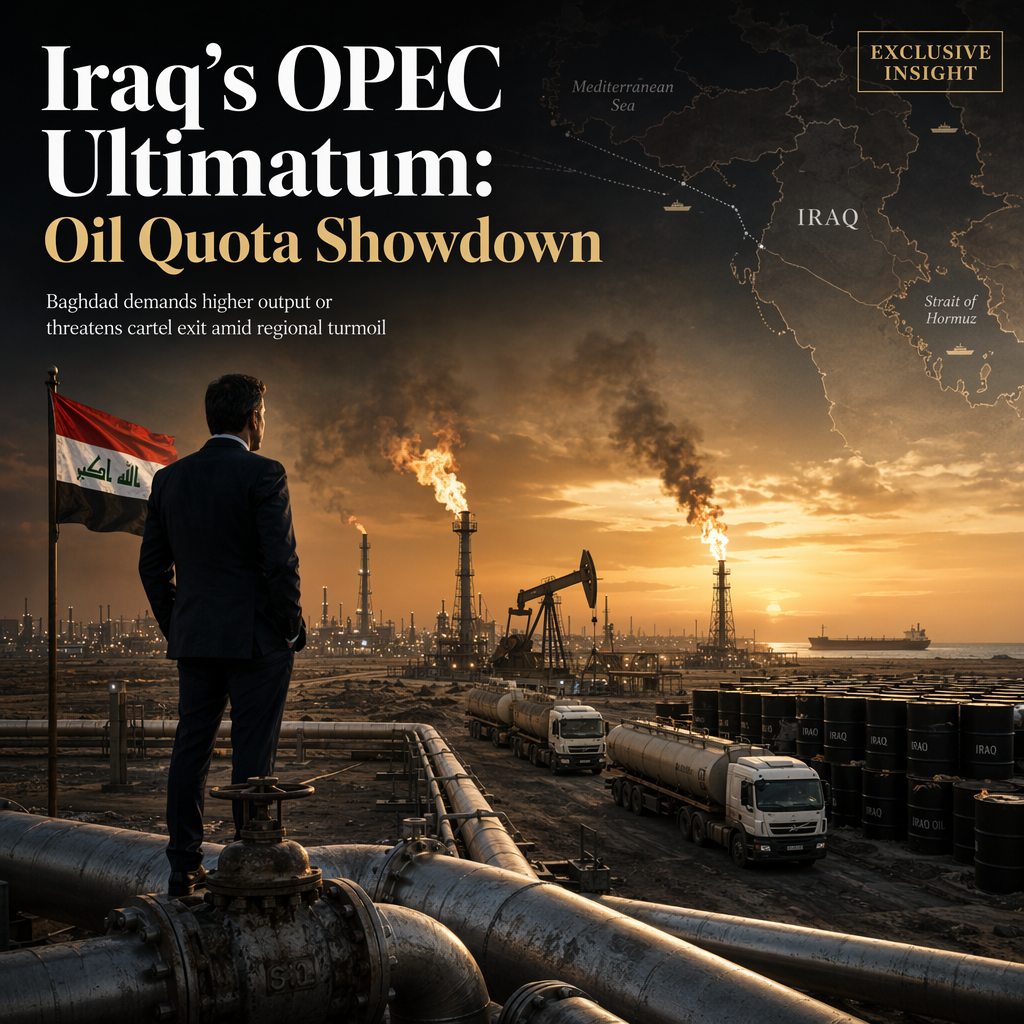
Iraq has intensified its demands for a significant increase in its OPEC oil supply quota, warning that it may consider leaving the cartel if its requests are not met, according to statements from Baghdad on Thursday [1]. This development follows the recent exit of the United Arab Emirates, OPEC's third-largest producer, in April, which has heightened tensions within the group [1]. Iraq, as OPEC's second-largest oil exporter, wields considerable influence and its potential departure would further destabilize the organization [1].
Reports from Reuters indicated that Iraq was contemplating quitting OPEC, while Bloomberg cited an Iraqi oil ministry spokesperson who stated that a "decision will have to be made regarding whether to remain in or withdraw" if oil quotas are not increased [1]. However, the Iraqi oil ministry later clarified that suggestions of an imminent withdrawal did not reflect the government's official position, though it reiterated the need to review production quotas [1].
Iraq's economy is highly dependent on oil, with the sector contributing 53% to its real GDP in 2025, according to the World Bank [1]. The country has faced significant export challenges since the outbreak of war involving the U.S., Israel, and Iran on February 28, which has exposed Iraq's reliance on Persian Gulf export routes [1]. In response, the Iraqi cabinet approved plans in June to accelerate crude exports through the Kurdistan-Turkey pipeline, aiming to increase shipments from 220,000 barrels per day to 770,000, providing an alternative route to Turkey's Mediterranean port of Ceyhan [1].
Exclusive data from QuantCube Technology shared with CNBC indicates that Iraq's overall exports have nearly ceased since the war began, due to its geographical dependence on the Strait of Hormuz [1]. QuantCube's indicator, which tracks deadweight tonnage leaving Iraqi and UAE ports, shows a dramatic decline in cargo volumes, underscoring the urgency behind Iraq's push for higher OPEC quotas and alternative export routes [1].
CONCLUSION
Iraq's push for a higher OPEC oil quota and warnings of a potential exit underscore mounting tensions within the cartel following the UAE's departure. With its oil exports severely disrupted by regional conflict, Iraq is seeking both increased production allowances and alternative export routes to stabilize its economy. The situation presents significant risks for OPEC's cohesion and the broader oil market.