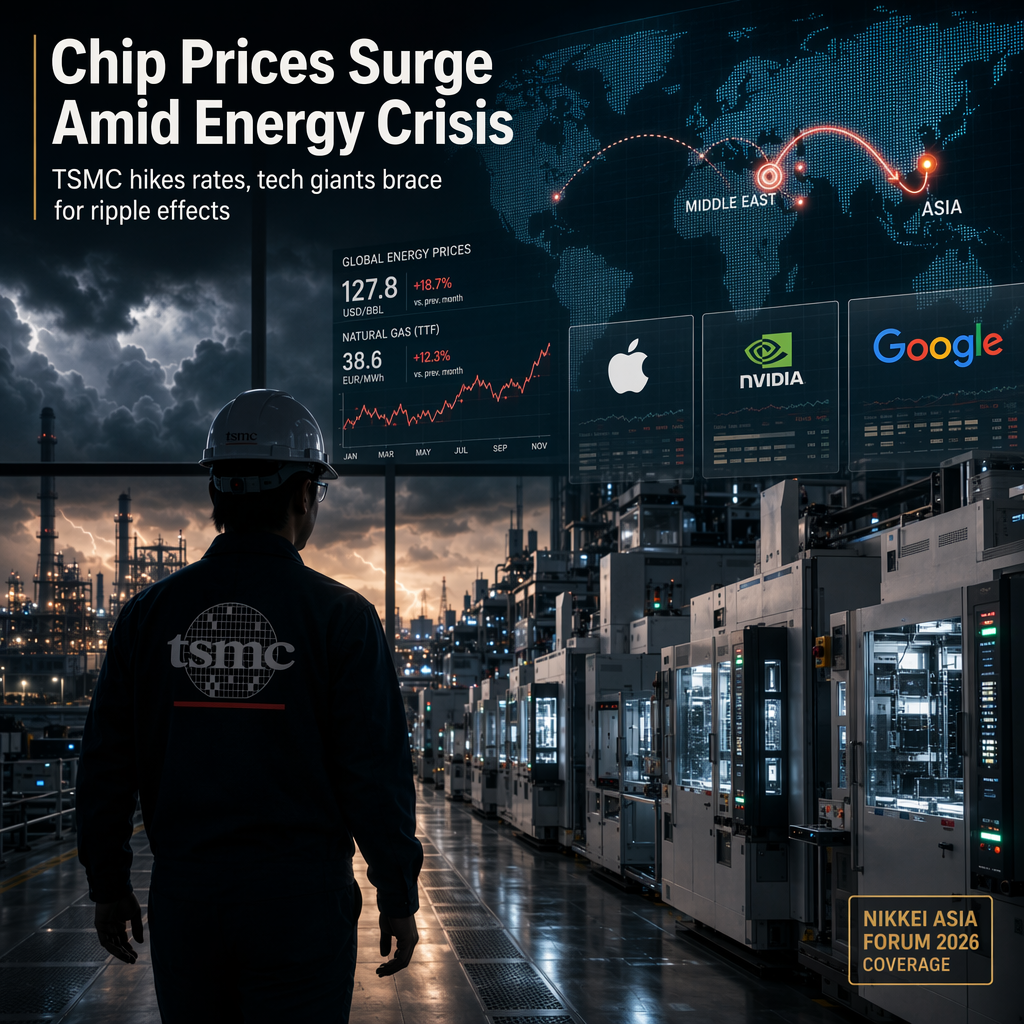
At the Nikkei Asia Forum APAC 2026, Thammasak Sethaudom, president and CEO of SCG, emphasized that the current energy crisis is not a temporary disruption but a structural shift requiring long-term strategic responses from Asian companies. He highlighted the ongoing tensions between Iran and the United States, which have prolonged instability in the Strait of Hormuz—a critical route for energy exports to Asia. Thammasak asserted that a swift return to pre-crisis conditions is unlikely, urging companies to diversify energy sources and invest for the long term [1].
Rising global energy prices are fueling inflationary pressures, with significant implications for industries reliant on energy and raw materials. In this context, Nikkei Asia reported that TSMC, the world's largest contract chipmaker, plans to increase its chip production service prices by up to 10% starting in 2027. This decision is driven by higher costs for raw materials and manufacturing equipment. TSMC's major clients include Nvidia, Apple, Google, and Amazon, all of whom could be affected by these price hikes [1].
The anticipated increase in semiconductor prices is expected to have broad ripple effects across the technology sector, particularly impacting the development and operation of AI services, which depend heavily on advanced chips. The article suggests that these higher costs are unlikely to be temporary, reinforcing the need for businesses to adapt to a more volatile and expensive operating environment [1].
The overall sentiment from the forum and reporting is one of caution, with a consensus that optimism about a quick resolution to energy market instability is misplaced. Instead, Asian economies and businesses are being urged to prepare for a prolonged period of uncertainty and elevated costs [1].
CONCLUSION
TSMC's planned price increases for chip production, driven by persistent energy shocks and rising input costs, signal a challenging environment for the global technology sector. With no quick resolution in sight for Middle East tensions and energy market instability, companies and investors should brace for sustained inflationary pressures and higher costs across the supply chain.