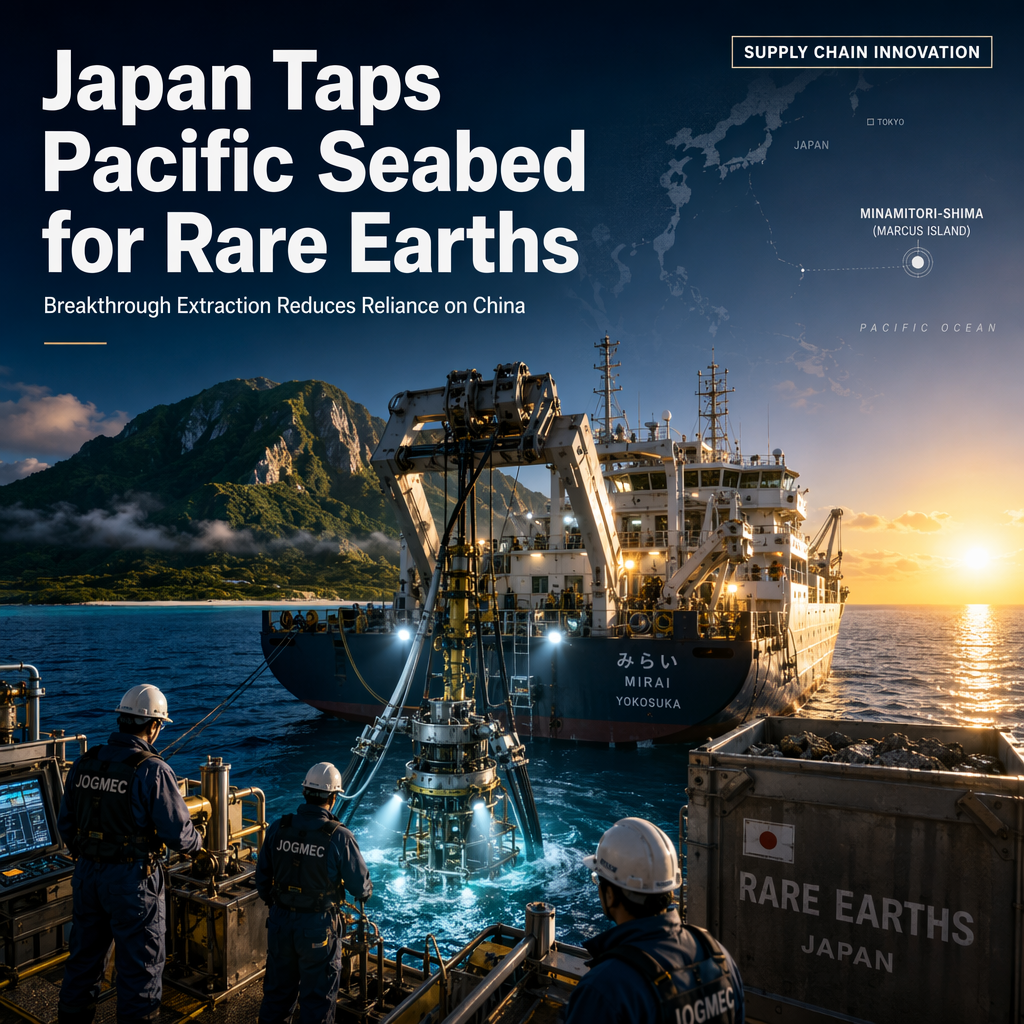
Japan has successfully recovered rare earth elements from a deep-sea drilling test near Minamitori-shima, a remote Pacific island, marking a significant step toward securing critical materials for semiconductors, electric vehicles, and defense applications [1]. This development is viewed as a potential move to reduce Japan's reliance on China-dominated supply chains for rare earths, which are essential for high-tech industries including electronics, green energy, and defense [1].
Industry experts cited in the article suggest that Japan's ability to extract rare earths from the Pacific seabed could position the country as a future supplier of these minerals, potentially impacting global market dynamics and influencing pricing and trading strategies for companies dependent on rare earths [1]. Japanese firms have recently faced rare-earth cost increases of over 20%, and domestic sourcing from the seabed may help alleviate these pressures and stabilize pricing for local industries [1].
Market sentiment is positive, with the development seen as a strategic hedge against supply disruptions and a boost for Japanese manufacturers [1]. Analysts are closely monitoring for further technical milestones and extraction volume data to assess Japan's capacity for rare earth production, though no specific trading advice or price levels were provided [1].
No forward-looking statements or analyst opinions were provided in the second article, which focuses on a different topic related to Japanese satellite operator Sky Perfect JSAT and its expansion in Southeast Asia amid China tensions [2].
CONCLUSION
Japan's successful extraction of rare earths from the Pacific seabed is a major step toward diversifying its supply chain and reducing dependence on China. The development is expected to positively impact Japanese manufacturers and could influence global rare earth markets if further technical progress is achieved.