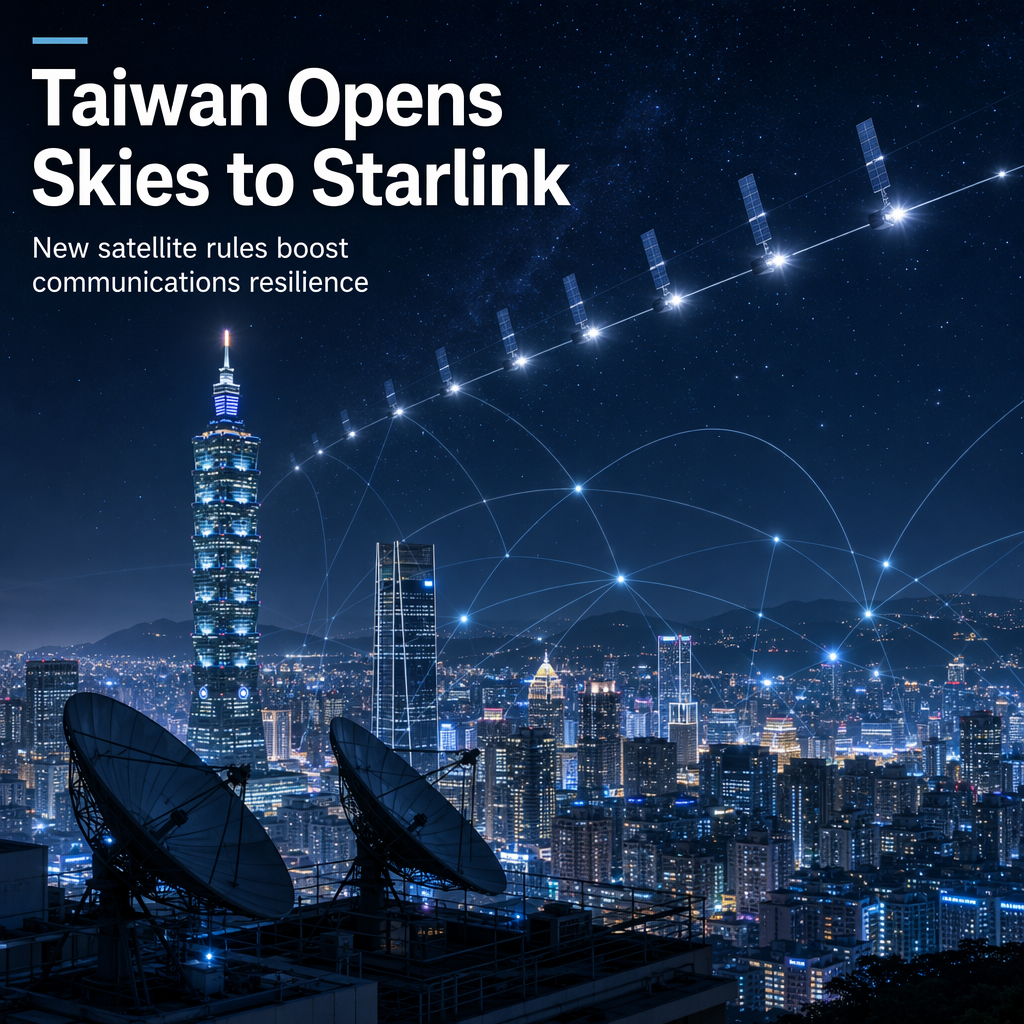
Taiwan has announced a relaxation of its regulations on foreign ownership of satellite operators, a move that could allow companies such as Elon Musk's Starlink to provide internet services in the country [1]. This policy shift comes as Taiwan seeks to bolster its communications infrastructure, particularly in light of concerns that connectivity could be disrupted during a crisis with China [1].
Currently, Taiwan does not possess any low-Earth orbit satellites of its own, highlighting a strategic vulnerability that the government is eager to address [1]. The new regulatory environment is intended to facilitate partnerships with foreign satellite providers and, in the longer term, support the development of a domestic satellite network [1]. Security considerations are central to this initiative, as Taipei aims to ensure resilient communications amid rising tensions with Beijing [1].
While the article does not specify immediate market reactions or provide analyst commentary, the regulatory change signals a significant opening for foreign satellite operators and could reshape the competitive landscape for telecommunications in Taiwan [1].
CONCLUSION
Taiwan's decision to ease foreign ownership rules for satellite operators marks a strategic step toward strengthening its communications resilience. The move could enable entry for major players like Starlink, with potential implications for the country's telecom sector and national security.