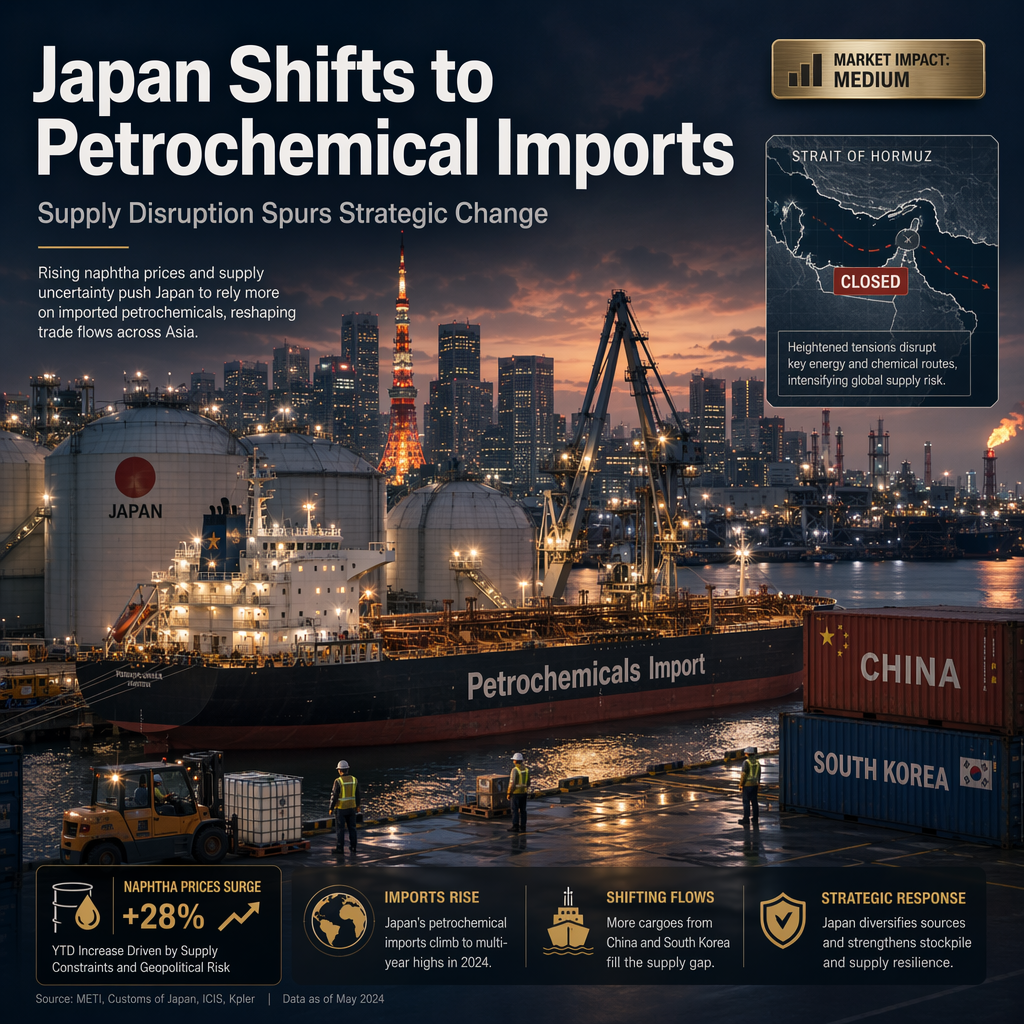
Japan has shifted from being a net exporter to a net importer of basic petrochemicals, a change driven by a surge in naphtha prices following the closure of the Strait of Hormuz, a critical chokepoint for global crude oil flows [1]. The disruption caused by the Iran war has made domestic production of petrochemicals less competitive for Japanese manufacturers, prompting them to increase imports from China and South Korea, where prices and availability remain relatively stable compared to the Middle East [1].
This strategic move allows Japanese companies to adjust procurement more easily to meet downstream demand for products such as plastics, providing greater flexibility in response to market changes [1]. Industry analysts cited in the article suggest that this trend may continue as long as geopolitical tensions persist and continue to impact crude oil and naphtha supply chains [1].
Market participants note that the shift to importing petrochemicals is seen as a risk mitigation strategy, helping Japanese firms navigate volatile naphtha prices and uncertain supply routes through the Middle East [1]. No specific figures, percentages, or company names are mentioned in the article, and there is no discussion of immediate market reactions or ticker symbols [1].
CONCLUSION
Japan's transition to net petrochemical imports reflects a strategic response to elevated naphtha prices and supply disruptions caused by geopolitical tensions. The move is expected to provide Japanese manufacturers with greater flexibility and risk mitigation, with analysts indicating the trend may persist if instability in the Middle East continues. Market impact is medium, as the shift could influence supply chains and procurement strategies in the region.