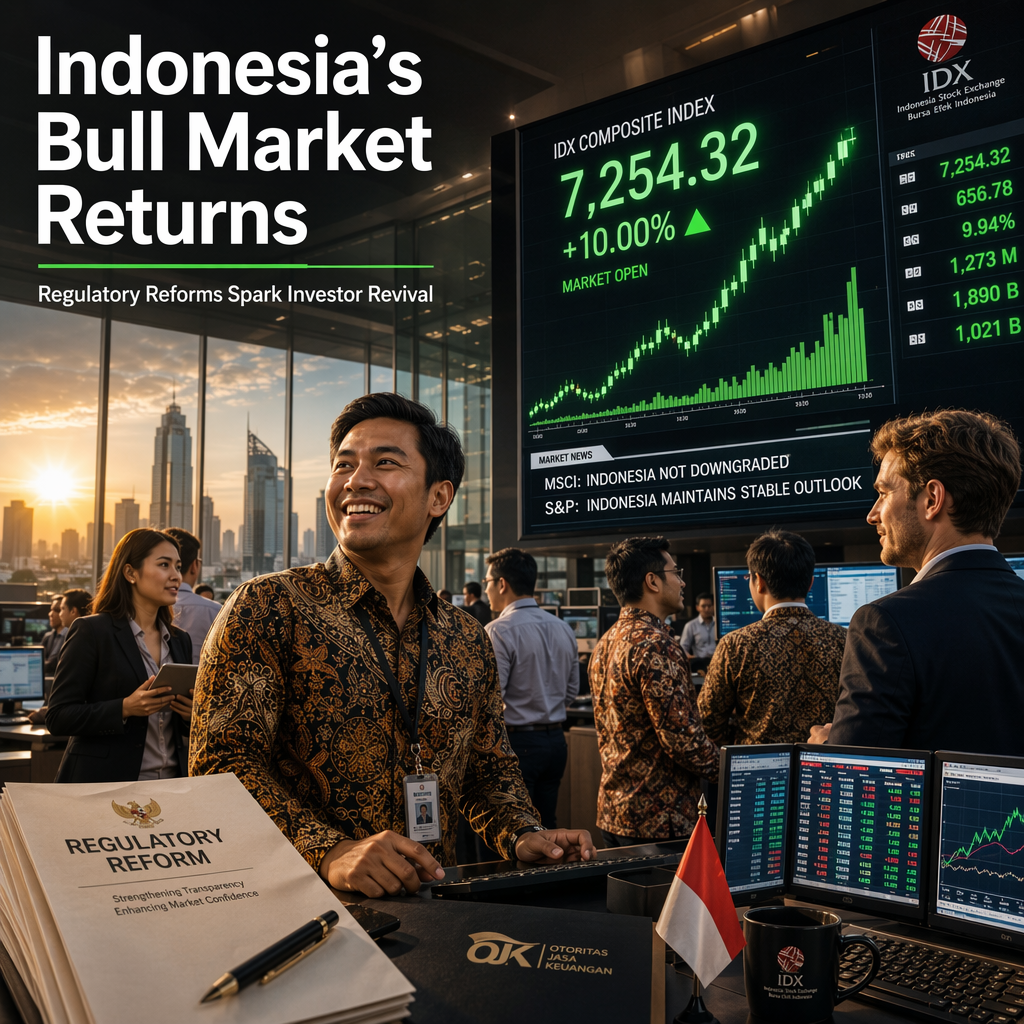
Indonesian stocks have staged a significant turnaround, officially entering bull market territory after reaching a five-year low in early June 2026. The Jakarta Stock Exchange Composite Index, while still down approximately 29% year-to-date, has climbed more than 10% from its recent trough, according to LSEG data [1]. This recovery has been attributed to several factors, including attractive valuations, swift intervention by local financial regulators, and a gradual return of foreign investors [1].
A key boost to market sentiment came when S&P Global reaffirmed Indonesia's BBB sovereign rating with a stable outlook a few weeks prior, which removed a major macroeconomic overhang. Mohit Mirpuri, senior partner at SGMC Capital, noted that the market shifted from pricing in deterioration to stabilization following this announcement [1]. The market had been volatile throughout 2026, especially after MSCI questioned governance standards and considered downgrading Indonesia from emerging to frontier market status due to issues like low free floats and concentrated ownership. However, MSCI ultimately decided against the downgrade, which Gareth Leather of Capital Economics described as 'a big relief' that helped halt panic selling [1].
The rebound was further supported by investors rotating out of expensive AI and tech stocks into safer, undervalued markets like Indonesia. Liza Camelia, head of research at Kiwoom Sekuritas Indonesia, stated that Indonesian equities had become 'too cheap to ignore' after months of heavy selling [1]. Fiscal concerns also eased as government revenue, particularly tax collections, recovered strongly in the first half of the year, surprising on the upside [1].
Regulatory measures played a crucial role in restoring confidence. The Indonesian regulator introduced higher minimum free float requirements and tighter ownership disclosure rules to address liquidity, transparency, and concentration issues that had previously driven investors away. Jeemin Bang, associate economist at Moody's Analytics, highlighted these reforms as instrumental in improving market conditions [1].
CONCLUSION
Indonesian equities have rebounded sharply from a five-year low, driven by regulatory reforms, improved fiscal outlook, and renewed investor confidence. The market's bull run signals a shift in sentiment, with Indonesia now seen as an attractive destination for value-seeking investors. Ongoing regulatory vigilance and stable sovereign ratings are expected to support continued market stability.