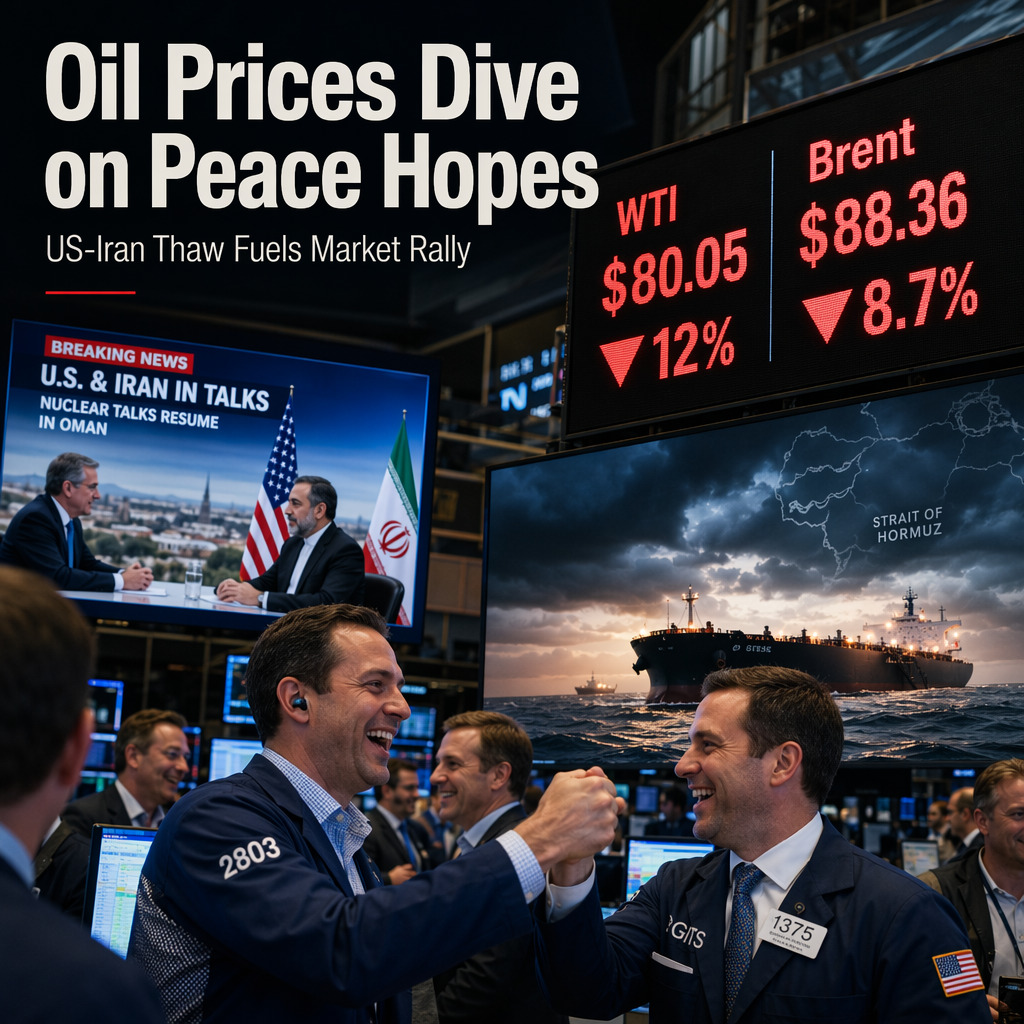
Oil prices experienced a significant decline as hopes for de-escalation between the US and Iran grew, following a pause in hostilities that has now extended into its third day [1][2][3]. West Texas Intermediate (WTI) crude traded just above $80 per barrel, marking a drop of about 12% from last week’s peak [1]. Brent crude saw an even sharper fall, plunging 8.7% to $88.36, which Commerzbank strategist Charlie Lay described as the largest one-day decline in more than three months and a reversal of much of last week's 9.9% surge [2].
The market optimism was fueled by statements from US President Donald Trump, who affirmed that "there are very friendly negotiations going on" with Iran and expressed confidence that "there is a very good chance that something could happen" [1][3]. However, Iran has denied any direct negotiations with the US, though it acknowledged ongoing talks with Saudi Arabia and Oman aimed at stabilizing the region and addressing insecurity in the Strait of Hormuz [1][3]. According to Iran's Foreign Ministry, these discussions emphasized strengthening cooperation and advancing joint diplomatic efforts to establish regional stability [3].
Despite the diplomatic overtures, tensions remain, as Saudi Arabia reported intercepting drones allegedly launched by Iran-backed militias targeting its oil facilities, though responsibility for these attacks remains unclear [3]. Meanwhile, Oman has proposed a voluntary fee for vessels crossing the Strait of Hormuz to fund navigation, environmental protection, and search and rescue services, a plan reportedly backed by regional actors [1].
Market reactions have been pronounced: equities rallied and oil prices fell as investors responded positively to the pause in US-Iran fighting and the prospect of a lasting peace agreement [3]. Commerzbank's Lay noted that the sharp decline in oil prices reflects expectations of de-escalation rather than an actual restoration of global oil and LNG flows, as shipping through the Strait of Hormuz remains negligible [2]. The easing of oil prices has also reduced some immediate pressure on the US Federal Reserve [2].
President Trump warned that US strikes would resume if talks fail to deliver progress, stating at a campaign rally, "You can't bribe them. You've got to beat them, and we'll beat the hell out of them. But we'll see how it turns out. Right now, there are very friendly negotiations going on" [3].
CONCLUSION
The pause in US-Iran hostilities and ongoing diplomatic efforts have led to a sharp drop in oil prices and a rally in equities, reflecting market optimism for de-escalation. However, the situation remains fluid, with regional tensions persisting and the potential for renewed conflict if talks stall. Investors are closely monitoring developments around the Strait of Hormuz, given its critical role in global oil exports.