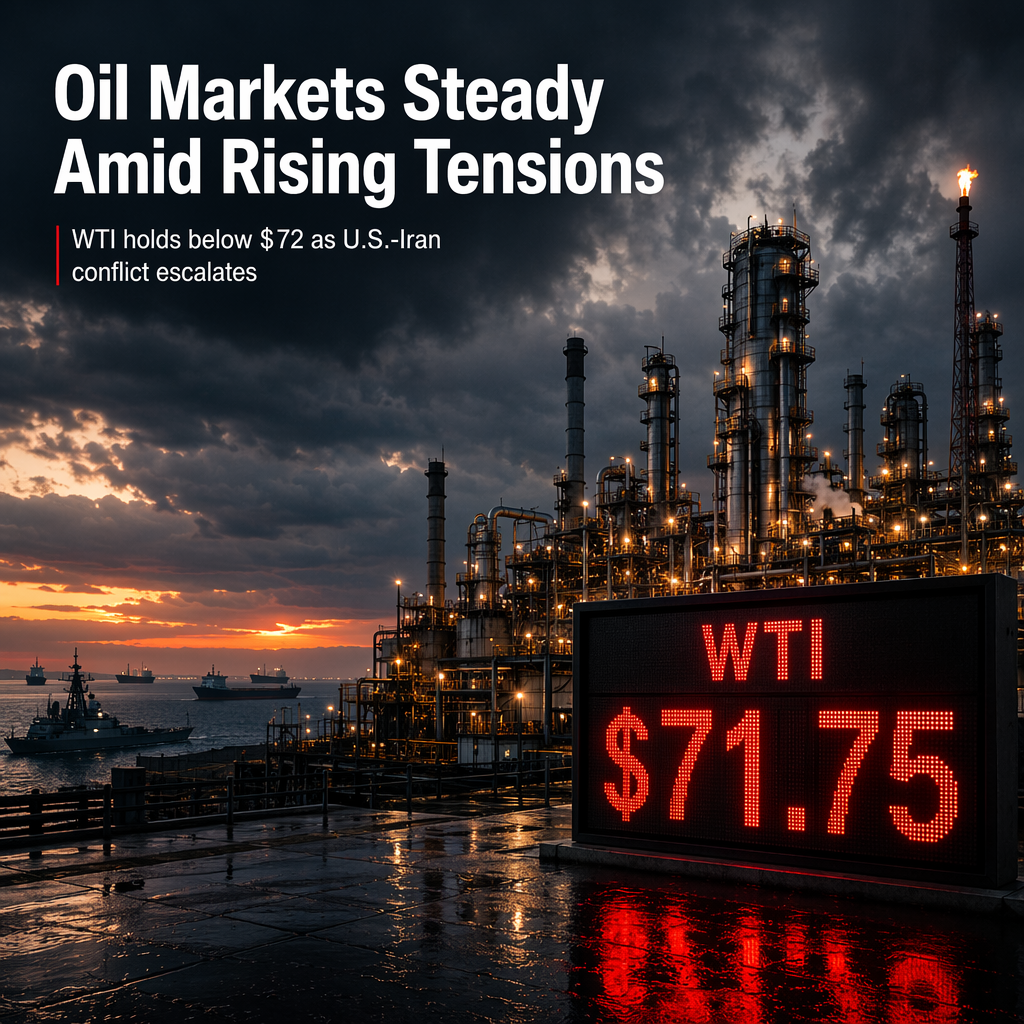
West Texas Intermediate (WTI) crude oil prices stabilized around $71.75 during Asian trading on Friday, following a volatile week marked by escalating tensions between the United States and Iran [1][2]. The geopolitical risk premium resurfaced after the U.S. military launched new strikes against Iran in retaliation for attacks on commercial ships in the Strait of Hormuz, prompting Iran to target American allies and bomb U.S. military installations in Bahrain and Kuwait [1][2]. President Donald Trump declared the ceasefire with Iran 'over' at the NATO summit in Ankara, labeling Iran's attacks as 'acts of terrorism' and expressing skepticism about Iran's willingness to honor any new deal [2].
Despite the heightened conflict, both U.S. and Iranian officials indicated ongoing 'technical talks' and a continued commitment to the memorandum of understanding (MOU), though the U.S. described Iran's recent actions as 'failed performance at an unacceptable level' [1][2]. Iranian officials, meanwhile, accused the U.S. of violating the MOU and reinstating oil sanctions, including the withdrawal of a waiver that had allowed Iran to sell its oil [2].
Oil prices reflected the uncertainty, with WTI trading nearly unchanged for the day at $71.75 and Brent crude futures for September delivery easing to $76.3 per barrel [1][2]. The market's anxiety was tempered after Trump stated that Iran had called to make a deal to de-escalate hostilities, and a White House official reiterated U.S. commitment to the MOU [1][2]. However, the OPEC+ decision to increase production targets and a larger-than-expected U.S. crude inventory build—commercial stocks rose by 2.998 million barrels for the week ending July 3, the first rise in 11 weeks—could act as headwinds for oil prices [1].
Overall, WTI appears poised to register modest weekly gains, potentially snapping a four-week losing streak, but traders remain cautious amid ongoing geopolitical developments and mixed signals from both sides [1].
CONCLUSION
WTI oil prices have steadied below $72 as U.S.-Iran tensions escalate, but ongoing talks and mixed official statements have kept market reactions muted. While geopolitical risks persist, increased inventories and OPEC+ production targets may limit further price gains in the near term.