
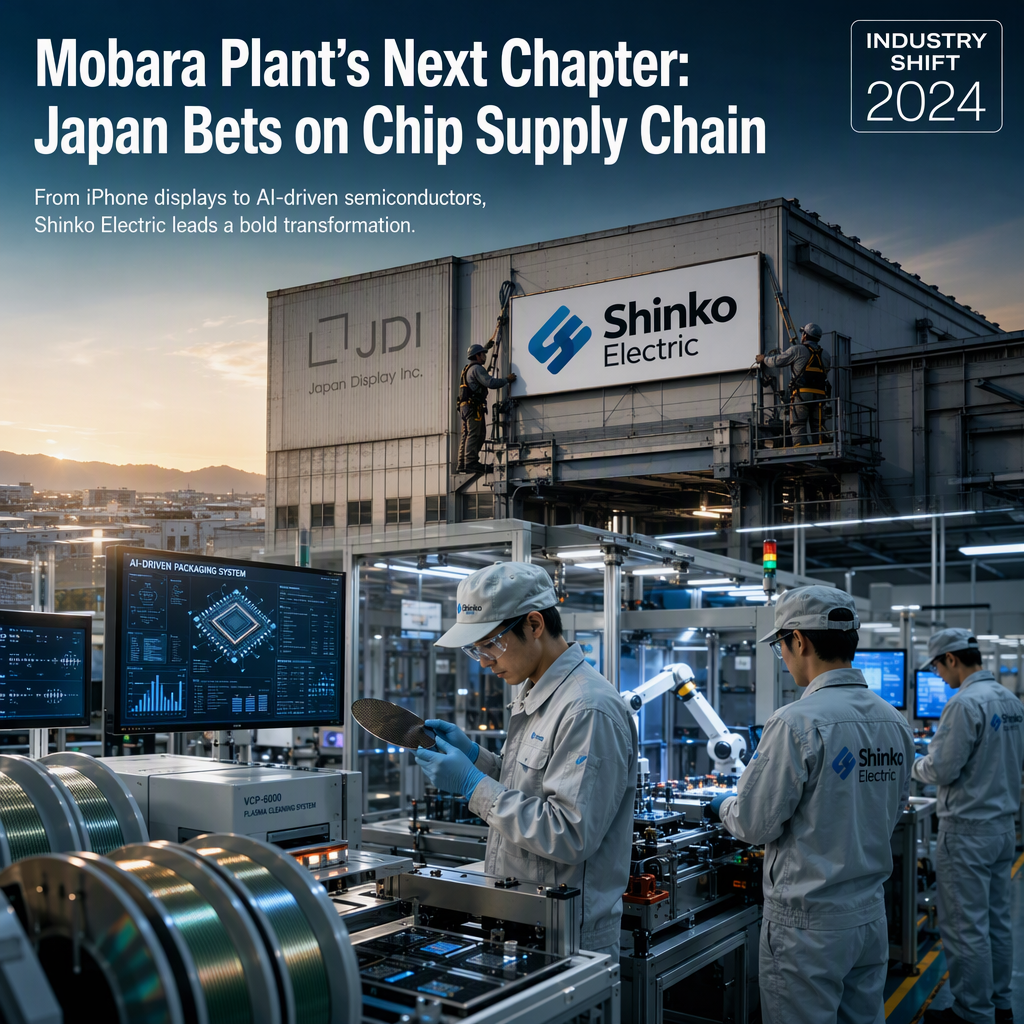
The Mobara plant in Japan, once operated by Japan Display Inc. (JDI) and previously dedicated to producing LCDs for iPhones, is set to begin a new chapter as it transitions to manufacturing package substrates under the ownership of Shinko Electric. This marks the fifth change in ownership for the facility, highlighting the volatility and ongoing transformation within Japan's electronics and supply chain industries [1]. The plant lost its pivotal role in the global display market after Apple switched to a different display technology, ending Mobara's involvement as a supplier for iPhone screens [1].
Shinko Electric's acquisition and repurposing of the Mobara plant positions it within the chip supply chain, which is experiencing robust demand driven by the proliferation of artificial intelligence and advanced computing applications [1]. Industry analysts cited in the article emphasize that this move demonstrates Japan's adaptability in response to shifting global supply chain dynamics and technological advancements [1]. The renewed focus on chip-related manufacturing aligns with broader industry trends, including increased investment in semiconductor infrastructure and efforts to diversify supply chains [1].
While no specific financial details regarding the acquisition price or Shinko Electric's investment plans for the Mobara facility were disclosed, the transition is viewed as a strategic step to integrate the plant into the expanding chip supply chain. This could potentially strengthen Japan's position in the high-value semiconductor market [1]. The plant's new role is expected to support Japanese electronics manufacturers in meeting the surging demand for AI and addressing supply shortages in advanced packaging materials [1].
The development underscores the importance of supply chain resilience and the ongoing evolution of Japan's electronics sector, as companies seek to capitalize on technological shifts and market opportunities [1].
CONCLUSION
The Mobara plant's transformation under Shinko Electric signals Japan's strategic shift toward semiconductor manufacturing amid rising AI-driven demand. Although financial specifics remain undisclosed, the move is expected to enhance supply chain resilience and support Japan's electronics sector in adapting to global market changes. The repurposing reflects broader industry trends and positions Japan to better compete in the high-value chip market.