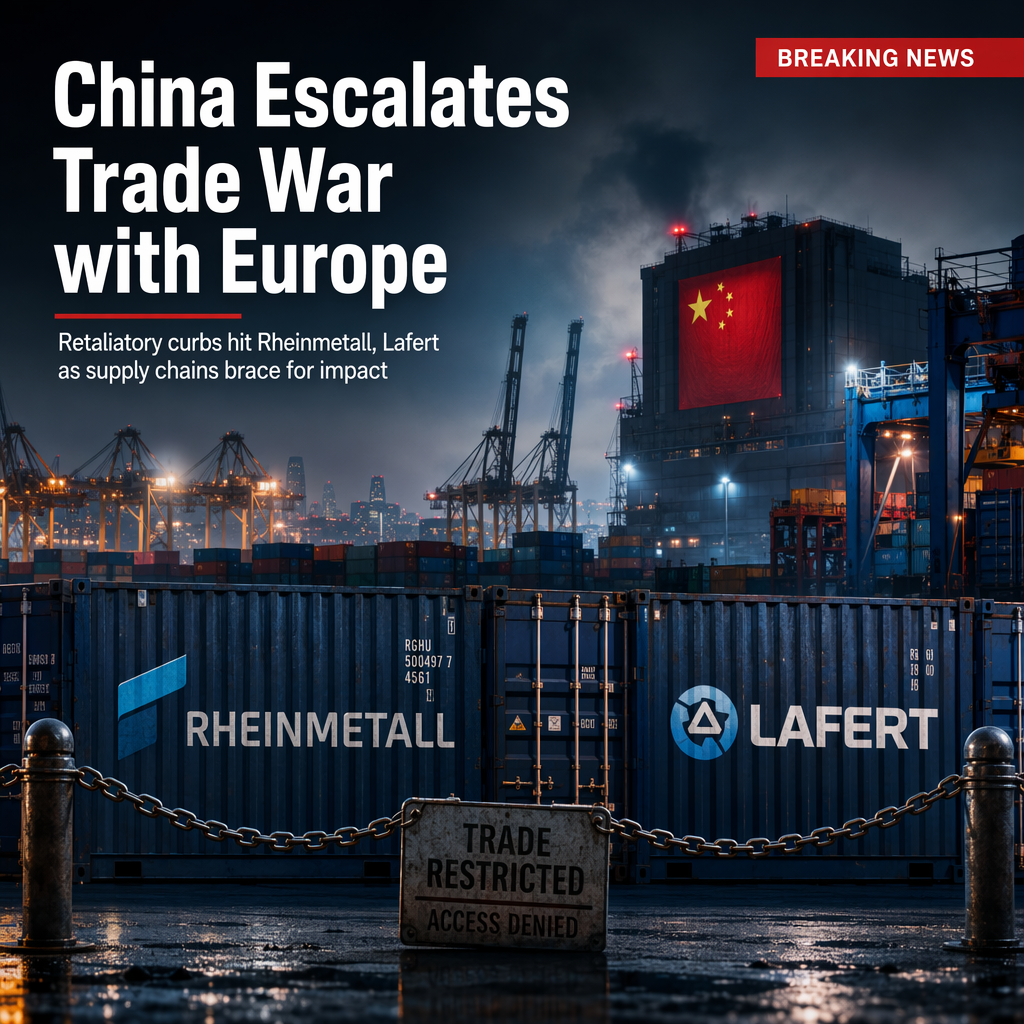
China has announced new trade restrictions targeting more than a dozen European industrial companies, including Germany's Rheinmetall and Italy's Lafert, as a direct response to the European Union's recent sanctions on Chinese firms accused of supporting Russia's war effort [1]. The move, revealed on Friday, marks an escalation in the ongoing trade tensions between China and the EU, with China specifically retaliating against what it perceives as Western pressure related to the conflict in Ukraine [1].
The retaliatory measures are expected to disrupt supply chains and increase operational costs for European industrial firms, especially those with significant business exposure to the Chinese market [1]. Although no specific financial figures or detailed lists of affected companies have been disclosed, market analysts cited in the article warn that these developments could negatively impact share prices and investor sentiment toward the targeted firms in the near term [1].
In response to the heightened uncertainty, European companies are anticipated to reassess their strategies and risk management policies regarding their operations in China [1]. The article notes that industry sources believe the situation could have a material effect on the market outlook for the affected companies, though no concrete forward-looking statements or analyst forecasts are provided [1].
CONCLUSION
China's retaliatory trade curbs against European firms signal a significant escalation in the trade dispute with the EU, raising concerns about supply chain disruptions and increased costs for impacted companies. While the immediate financial impact remains undisclosed, market sentiment and share prices for the targeted firms are expected to come under pressure in the short term.