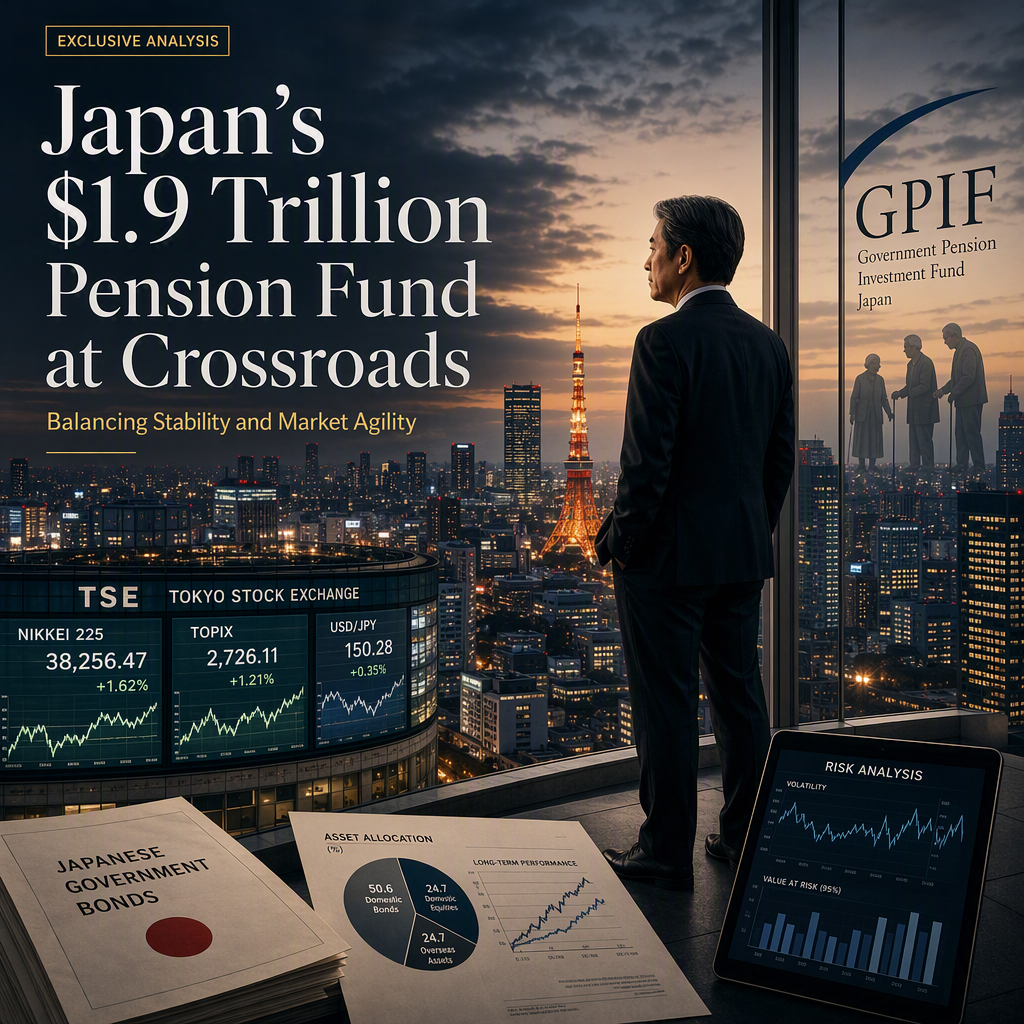
The Government Pension Investment Fund (GPIF) of Japan, which manages approximately $1.9 trillion in assets, is under increased scrutiny regarding its ability to outperform market benchmarks two decades after its establishment [1]. Market participants have raised concerns that the fund’s massive size may be hindering its agility, as its portfolio movements can influence market prices and make it challenging to adjust positions without impacting valuations [1].
Finance Minister Satsuki Katayama has publicly suggested that the GPIF should increase its investment in Japanese government bonds (JGBs), emphasizing the importance of stability and domestic support [1]. However, some market observers remain skeptical, arguing that a higher allocation to JGBs could restrict potential returns, especially given the current low-yield environment [1].
GPIF President Kazuto Uchida has indicated a desire to make the fund more agile and responsive to changing market conditions [1]. There have also been calls for the GPIF to further diversify into alternative investments in pursuit of higher yields, mirroring a broader trend among large institutional investors globally [1].
The ongoing debate underscores the challenges the GPIF faces in balancing its mandate to provide stable pension returns for Japan’s rapidly aging population with the complexities of managing such a large portfolio in a dynamic financial landscape [1].
CONCLUSION
Japan’s GPIF is at a crossroads as it weighs the trade-offs between stability and higher returns amid concerns about its market influence and agility. The outcome of this strategic debate will be closely watched by market participants and could have significant implications for both domestic and global financial markets.