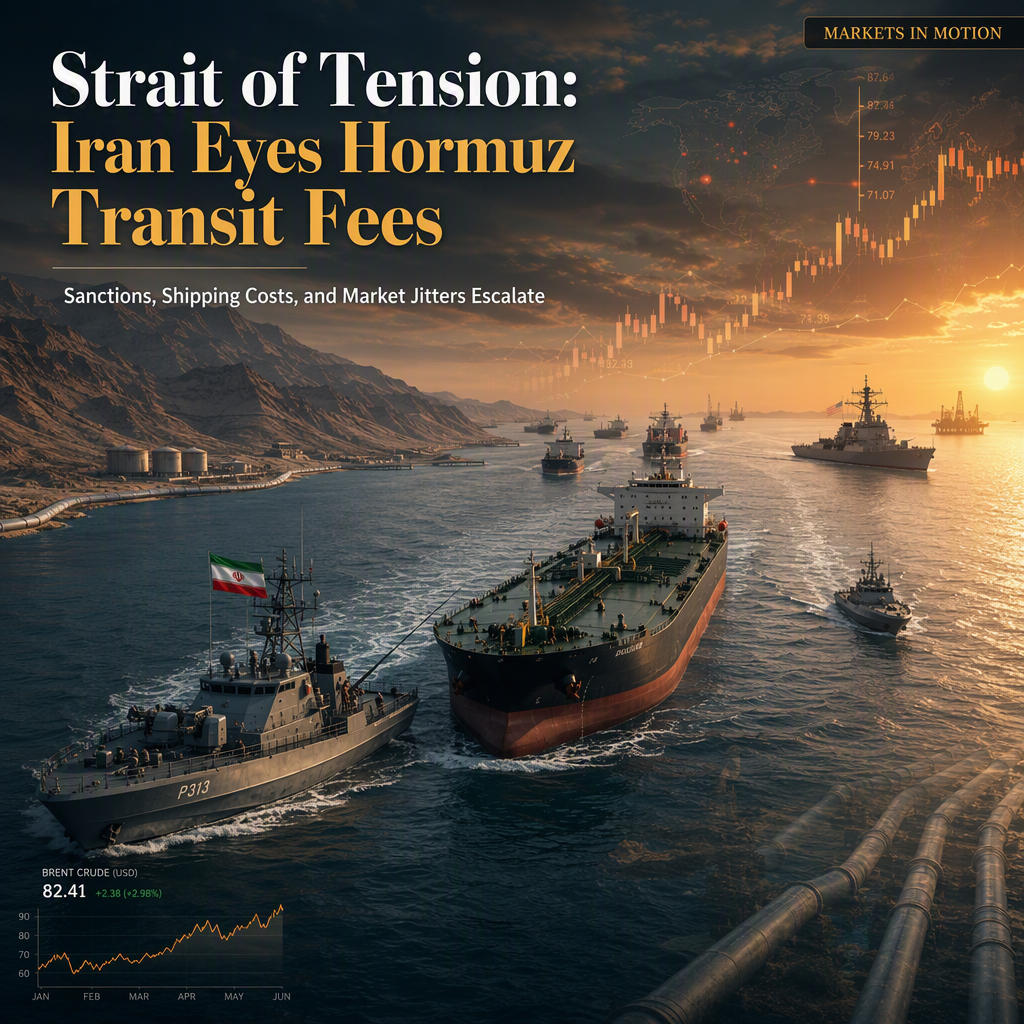
Iran is moving toward implementing a framework to charge fees on vessels passing through the Strait of Hormuz, drawing inspiration from Turkey's model, which has resulted in an eightfold increase in strait fees over four years and generated $259 million in revenue for Ankara in the past year [1]. This development comes as global oil inventories are declining and the region faces a stalemate, making the Hormuz passage—a critical chokepoint for international energy flows—especially significant for global shipping and oil markets [1]. The potential imposition of fees by Iran has raised concerns among shipping companies about increased operating costs and supply chain disruptions, with energy market analysts and technical analysts closely monitoring the situation [1].
Simultaneously, the U.S. Treasury Department has launched 'Operation Economic Outcast,' described as an 'Economic D-Day,' under President Donald Trump. The initiative aims to cut off every potential source of revenue for the Iranian regime and the Islamic Revolutionary Guard Corps (IRGC) through aggressive sanctions, including secondary sanctions and the blacklisting of nearly 60 individuals, businesses, and vessels involved in illicit trade [2]. Treasury Secretary Scott Bessent announced these measures on August 24, 2026, emphasizing the U.S. strategy to pressure other nations to sever ties with Tehran [2].
Experts cited in the sources note that these economic measures could push public anger in Iran to a 'boiling point,' referencing mass protests earlier in the year and highlighting the regime's fear of domestic unrest coinciding with U.S. military presence in the region [2]. The Iranian regime is reported to be 'panicking' and scrambling for alternative revenue avenues, as the U.S. military blockade has reduced Iran's oil exports to 'next to none,' severely impacting its ability to fund the military [2].
The market response has been cautious, with traders and analysts advising close monitoring of geopolitical developments and adjusting positions in oil and shipping stocks due to the volatility stemming from the Hormuz fee proposal and the new round of U.S. sanctions [1]. Japan is noted to be supporting oil pipelines that bypass the Strait of Hormuz to mitigate potential disruptions [1]. The broader context includes heightened U.S.-China tensions, with China denouncing the U.S. economic campaign against Iran [1].
CONCLUSION
Iran's move to consider fees for Hormuz passage, combined with the U.S. Treasury's aggressive new sanctions, has heightened uncertainty in global energy and shipping markets. The situation is being closely watched by industry participants and analysts, with the potential for significant market volatility as geopolitical tensions escalate. The effectiveness and repercussions of these measures remain to be seen as both sides brace for further economic and political fallout.