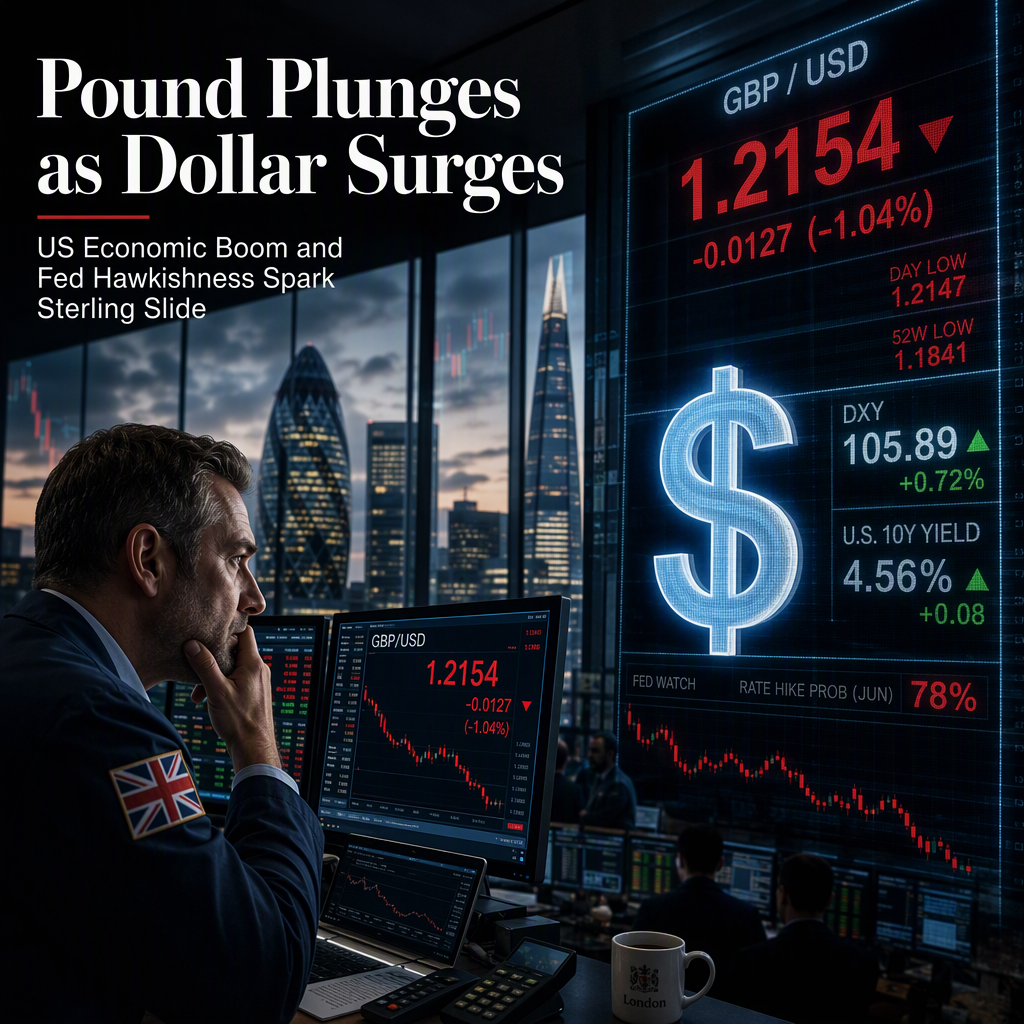
The British Pound Sterling fell sharply, dropping more than 0.70% against the US Dollar on Wednesday, following strong US economic data and hawkish signals from the Federal Reserve. GBP/USD traded at 1.3253 after reaching a peak of 1.3347 earlier in the session, marking a significant decline as the US Dollar strengthened [1]. The US Dollar Index (DXY) rose 0.52%, breaking above the 101.00 level for the first time since July 30, buoyed by rising oil prices and robust US business activity [1].
S&P Global reported that the US Flash Manufacturing PMI for September surged to 57, beating estimates of 53.5 and the previous month's 53.9. The Services PMI also exceeded expectations, rising from 56.5 to 58.2, while the Composite PMI climbed from 56 to 58.4. Chris Williamson, chief business economist at S&P Global Market Intelligence, commented that "Business is clearly booming now in both manufacturing and services," but noted severe supply chain bottlenecks and staffing challenges [1].
Fed Governor Michael Barr added to the hawkish tone, stating that additional rate hikes are likely needed to achieve the 2% inflation target. Following Barr's remarks, money markets increased the probability of a Fed rate hike at the October meeting to 70%, up from 52% the previous day, according to Prime Terminal [1].
In contrast, UK business activity continued to expand but at a slower pace in September compared to the previous month, according to S&P Global's business activity index. The GBP/USD technical outlook remains bearish, with the pair trading below all major structural levels and key moving averages. The Relative Strength Index (RSI) at 26 indicates oversold conditions, but multiple broken upward trend lines now act as resistance, suggesting any recovery will face selling pressure [1].
Looking ahead, the UK economic calendar includes speeches by Bank of England officials and the GfK Consumer Confidence report for September. In the US, traders are watching speeches by Fed officials Beth Hammack and Anna Paulson, as well as jobless claims data [1].
CONCLUSION
The British Pound's sharp decline against the US Dollar reflects strong US economic momentum and increased expectations for further Fed rate hikes. With the GBP/USD pair in a bearish technical phase and market sentiment favoring the Dollar, traders are likely to remain cautious ahead of upcoming central bank speeches and economic data releases. The market takeaway is a clear shift toward US Dollar strength amid robust US growth and persistent inflation concerns.