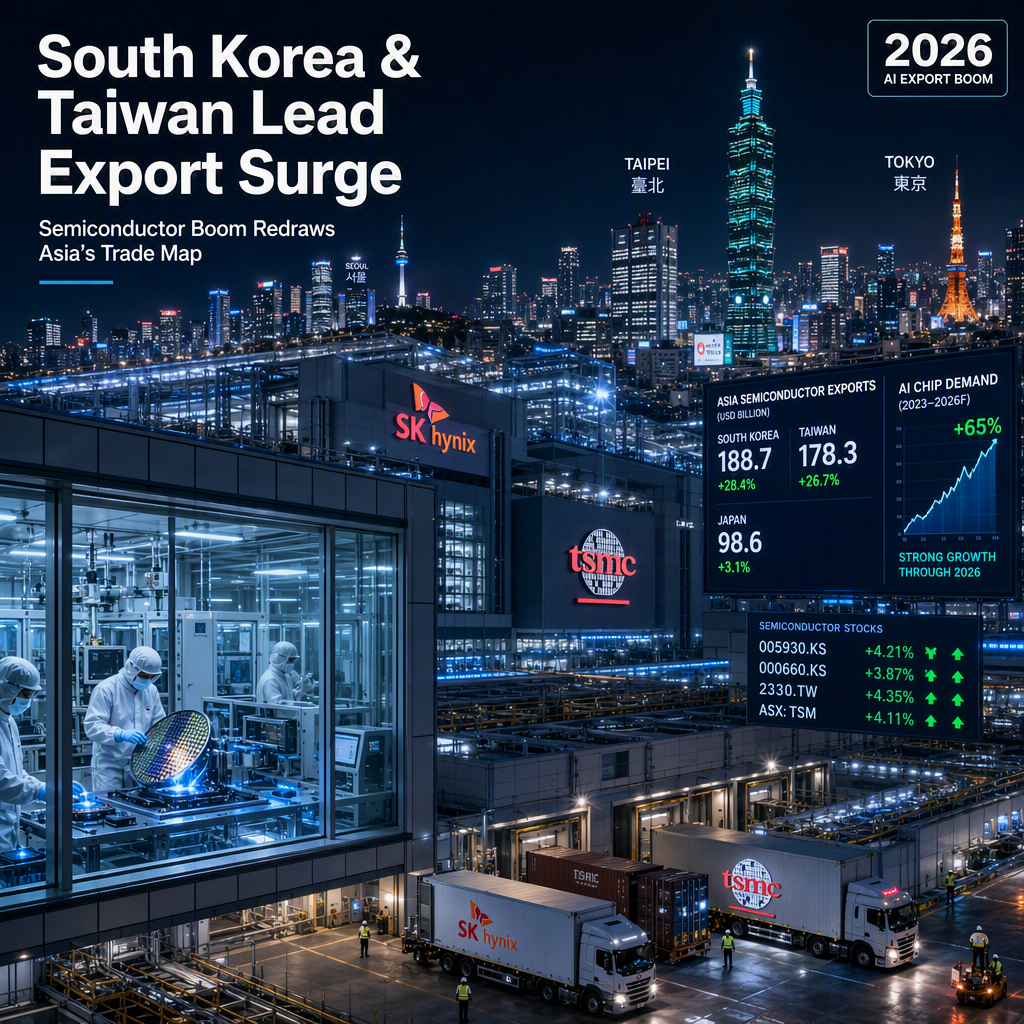
In the first half of 2026, South Korea and Taiwan each surpassed Japan in total exports for the first time, a milestone attributed to the surging global demand for semiconductors fueled by the artificial intelligence (AI) boom [1]. Both economies have solidified their dominant positions in the semiconductor supply chain, with companies like South Korea's SK Hynix and Taiwan's TSMC playing pivotal roles in meeting the demand for advanced chips [1].
Taiwan's economic performance has been particularly robust, with its GDP growing nearly 13% in the second quarter of 2026, driven by strong chip exports and close ties with the United States [1]. Samsung Electronics reported record-breaking profits, propelled by device and memory sales, while TSMC announced plans to raise chipmaking prices by up to 10% starting in 2027, reflecting tightening supply and escalating demand for advanced semiconductors [1]. SK Hynix also experienced a surge in Q2 profit, though it fell short of market forecasts, resulting in a decline in its share price [1]. Meanwhile, Japan's Kioxia projected a 31-fold increase in profit, highlighting the sector's volatility and the shifting competitive landscape [1].
The AI-driven 'chipflation' phenomenon has led to higher semiconductor prices, influencing electronics purchasing decisions and creating new market dynamics [1]. Memory makers have generated $90 billion in cash flow amid the AI gold rush, underscoring the sector's financial strength and liquidity [1]. Trading sentiment remains bullish for South Korean and Taiwanese semiconductor companies, with SK Hynix and TSMC shares showing strong support levels, although volatility is expected due to earnings misses and anticipated price hikes [1].
Technical analysis indicates that major semiconductor stocks are trading at all-time highs, with Samsung Electronics leading the rally [1]. Resistance is anticipated at the price hike thresholds for TSMC and SK Hynix, but robust earnings and cash flow are expected to maintain strong support [1]. The AI-driven semiconductor cycle is projected to continue, with further profitability anticipated for leading memory and chip producers [1].
CONCLUSION
South Korea and Taiwan's export leadership in the first half of 2026 highlights their growing dominance in the AI-driven semiconductor market. Strong earnings, bullish trading sentiment, and ongoing demand suggest continued profitability and market leadership for key players like SK Hynix, TSMC, and Samsung Electronics.