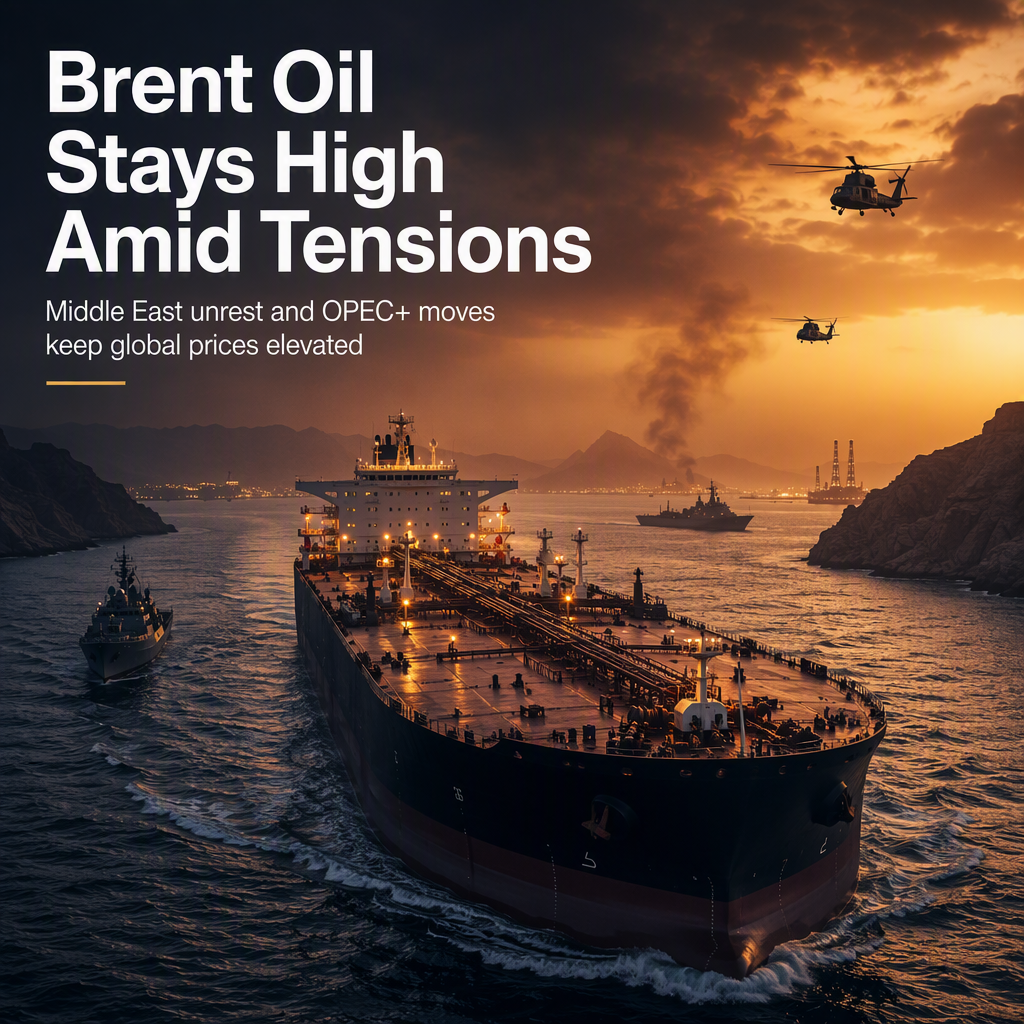
Brent crude oil prices continue to experience volatility, primarily driven by ongoing tensions in the Middle East and disruptions to shipping through critical chokepoints, according to Commerzbank analysts led by Norman Liebke [1]. The analysts emphasize that the regional escalation of the Middle East conflict is exerting additional pressure on the global oil market, making developments in the region a key factor influencing commodity market sentiment and oil prices in the coming weeks [1].
Commerzbank notes that OPEC+ is expected to modestly raise its production targets for September by approximately 188,000 barrels per day at a meeting scheduled for Sunday. However, the bank stresses that the implementation of these production hikes is contingent upon the Strait of Hormuz remaining open and Gulf producers being able to restore export flows [1].
The report also highlights that the increasingly tight inventory situation in the United States is likely to limit the scope for crude oil exports, further supporting elevated price levels [1]. While the absence of clear de-escalation signals suggests oil prices will remain high for the time being, Commerzbank points out that even tentative progress in US-Iran relations has the potential to exert substantial downward pressure on prices, as seen in recent weeks [1].
CONCLUSION
Brent oil prices are expected to stay elevated due to persistent Middle East tensions, supply constraints, and tight US inventories. OPEC+'s planned output increase hinges on the stability of key shipping routes, particularly the Strait of Hormuz. Market sentiment remains sensitive to geopolitical developments and any signs of de-escalation.