
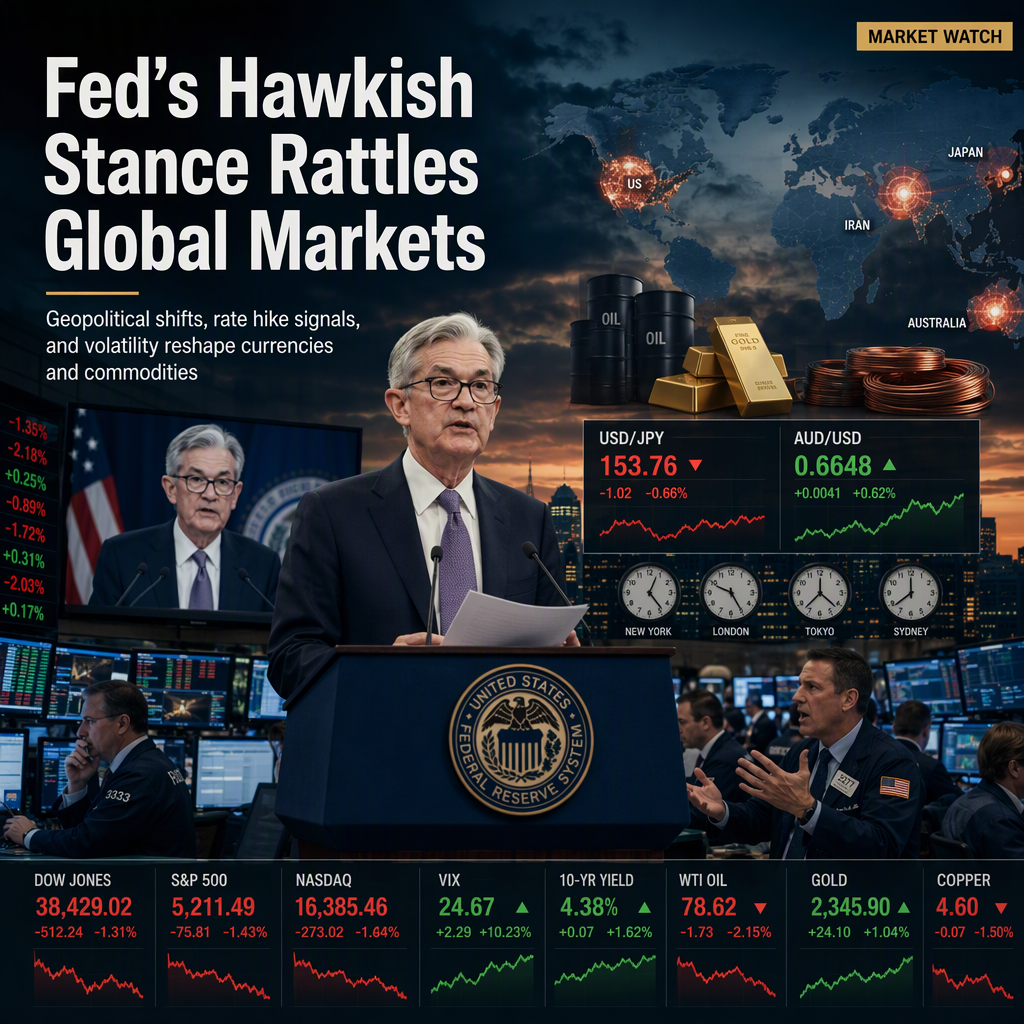
Federal Reserve officials delivered a hawkish tone regarding US monetary policy, with both Fed Governor Christopher Waller and St. Louis Fed President Alberto Musalem indicating that further rate hikes are likely, though not necessarily at consecutive meetings [1][3]. Minutes from the latest Fed meeting showed policymakers were united in supporting the September rate hike, and most assessed that another increase would be appropriate by year-end [1]. According to the CME FedWatch tool, traders are pricing in a 17.7% probability of an October rate hike and an 81.3% chance of a December increase [1].
Geopolitical developments also influenced markets, as US President Donald Trump stated that the US would not attack Iran before the midterm elections and described ongoing talks with Tehran as 'productive,' though he provided no further details [1][2]. This announcement led to a decline in Brent crude oil prices within minutes, which could potentially ease US inflation pressures and reduce the impetus for additional Fed rate hikes [2].
In the currency markets, the Japanese Yen gained as safe-haven flows shifted away from the US Dollar following Trump's comments and a retreat in US Treasury yields, with the 10-year yield ending near 5.22% after touching its highest level since 2002 earlier in the week [2][3]. The USD/JPY pair experienced volatility, dipping close to 157.50 on Thursday amid speculation of Japanese intervention and then recovering to close just under 158.00 [2]. The gap between US and Japanese rates remains a key driver for the pair, with the Fed's rate at 3.75%-4.00% compared to the Bank of Japan's 1.25% [2].
Meanwhile, the Australian Dollar fell 0.11% against the US Dollar as Wall Street was rattled by a sell-off in AI-related stocks and US yields declined [3]. The AUD/USD traded at 0.6960, underperforming its G8 peers despite the softer Dollar and lower Treasury yields [3]. US Initial Jobless Claims fell to 197K for the week ending October 3, below expectations, indicating a resilient labor market [3]. Looking ahead, market participants are focused on upcoming US inflation data, retail sales, and further Fed commentary, as well as the Reserve Bank of Australia's meeting minutes and employment data, which are expected to influence the direction of the Aussie Dollar [3].
Analysts at Scotiabank noted a divergence in metals, with copper holding near record highs while gold remains vulnerable after breaking below $4,100/oz, reaching levels last seen in early August [1]. The FXS Fed Sentiment Index rose, reflecting the market's perception of a firmly hawkish Fed stance [1].
CONCLUSION
The combination of hawkish Fed signals, easing geopolitical tensions, and shifting safe-haven flows has led to heightened volatility across gold, currency, and commodity markets. While the Fed's bias toward further tightening remains clear, upcoming inflation data and global developments will be critical in shaping market expectations and asset prices in the near term.