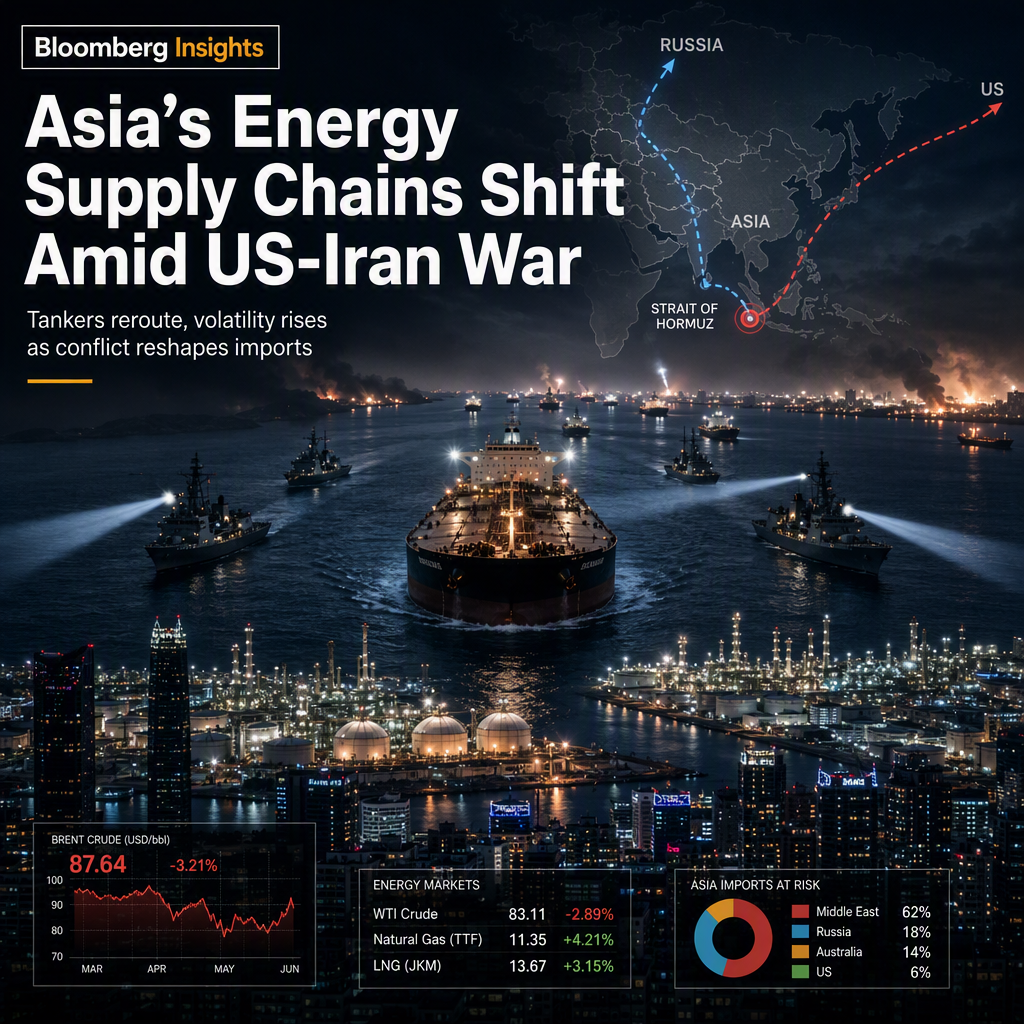
The ongoing war between the US, Israel, and Iran has significantly altered Asia's energy landscape, particularly in the five months since the conflict began. In February, nearly 85% of Asia's oil imports and about 28% of its LNG imports passed through the Strait of Hormuz, a critical chokepoint now threatened by military actions and transit disruptions [1]. As a result, Asian countries have shifted their sourcing strategies, increasing oil imports from Russia and the US to partially compensate for reduced shipments through the Strait [1]. This realignment has benefited Washington and Moscow, while raising concerns about the durability of these new supply chains if the conflict persists [1].
The market has experienced heightened volatility, with benchmark oil prices swinging sharply in response to news about transit disruptions and military developments [1]. Technical analysts note that support levels for benchmark crude have moved higher, and resistance levels are likely to be tested as buyers adjust their strategies and inventories [1]. Japanese trading houses have reported improved earnings outlooks due to higher oil prices, but downstream sectors such as airlines have seen profits squeezed despite record sales, as elevated fuel costs erode margins [1].
India's fuel retailers have absorbed nearly $2 billion in losses by shielding consumers from energy price shocks, choosing not to pass on the full extent of increased costs [1]. Meanwhile, US oil exports have declined due to stretched inventories and flat production, adding further pressure to global supply and price stability [1]. The Bank of Japan's chief has highlighted upside inflation risks, indicating that faster interest rate hikes may be considered if energy price pressures persist [1].
Market participants and local brokers advise caution amid ongoing volatility, recommending close monitoring of price levels and consideration of hedging strategies [1]. A senior energy analyst in Tokyo emphasized that the market has adapted quickly, but a durable realignment in demand and supply chains is underway, potentially lasting beyond the immediate conflict, especially if the Strait of Hormuz remains at risk [1].
CONCLUSION
The US-Iran war has triggered a rapid and potentially lasting shift in Asia's energy sourcing, with increased reliance on Russia and the US amid ongoing volatility and supply risks. While some sectors have benefited from higher prices, others face significant cost pressures, and inflation risks remain elevated. Market participants are urged to remain cautious as the situation continues to evolve.