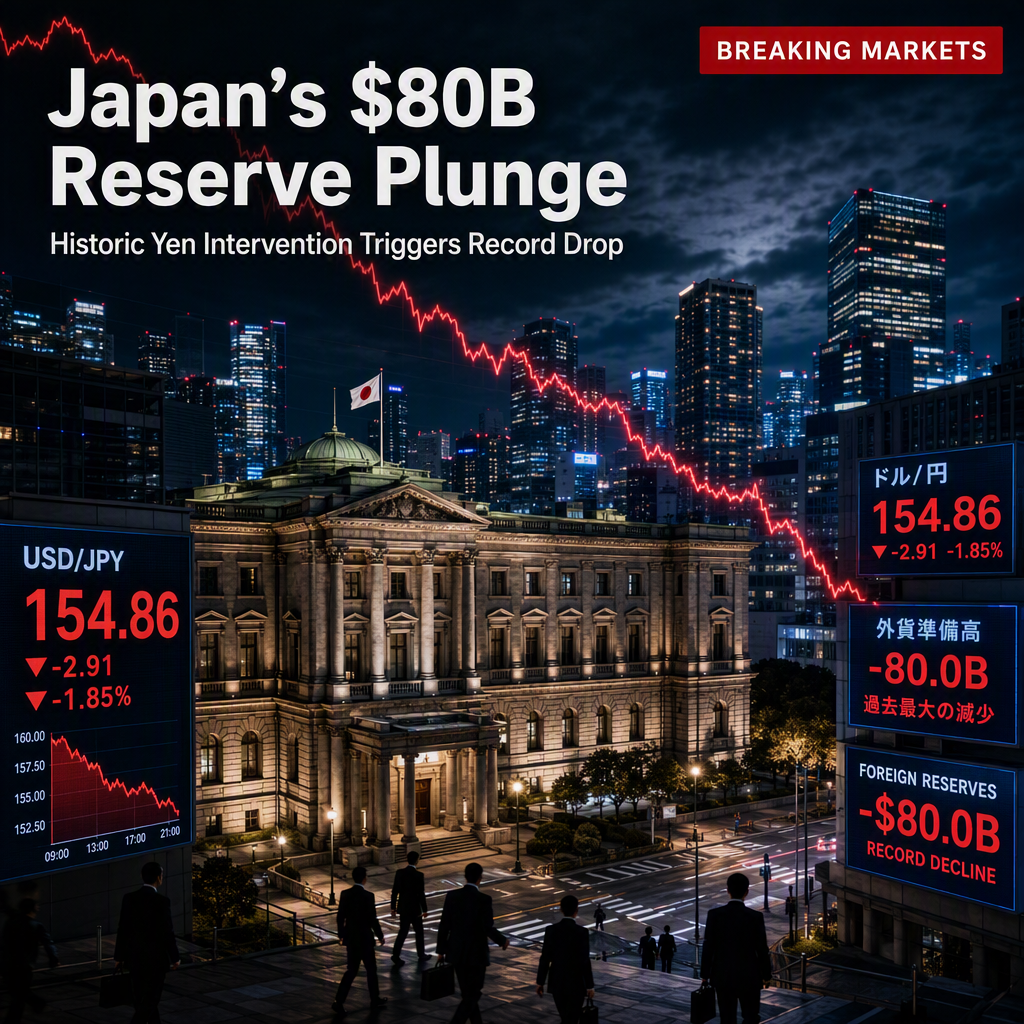
Japan's foreign reserves experienced their steepest monthly decline on record in August, falling by $80 billion, or 6.18%, to $1.207 trillion from July's $1.287 trillion, according to finance ministry data [1]. This marks the fourth consecutive month of reserve declines and surpasses the previous record drop of 5.58% in May [1]. The finance ministry did not officially attribute the decline to any specific cause, but Kyodo News cited an unnamed ministry official who pointed to aggressive interventions to support the yen and a decrease in the value of government bonds amid rising global yields [1].
Masahiko Loo, senior fixed income strategist at State Street Investment Management, stated that the primary driver of the reserve decline was Japan's recent dollar-selling, yen-buying foreign exchange interventions [1]. Tokyo has spent a combined 27.1 trillion yen so far this year on interventions, including 11.73 trillion yen ($75.26 billion) in April and May, and a larger 15.4 trillion yen intervention at the end of July, which was coordinated with the U.S. selling euros to support the yen [1]. This represents the largest annual intervention amount in history, surpassing the previous record of 20.4 trillion yen in 2003, and marks the first coordinated action with Washington since 1998 [1].
The yen, which reached a 40-year low of 163.98 against the dollar on July 23, has since strengthened to 155.98 following these interventions [1]. Global bond yields, including those in Germany, the UK, and U.S. Treasuries, have also risen to multiyear highs, contributing to the decline in the value of government bonds held in reserves [1].
When asked about investor concerns, State Street's Loo emphasized that the reserve drop reflects deliberate policy action rather than underlying financial stress [1].
CONCLUSION
Japan's record-setting drop in foreign reserves is directly linked to unprecedented yen-support interventions and declining bond values amid rising global yields. Despite the sharp decline, analysts suggest the move is a result of policy decisions rather than financial instability. The scale and coordination of intervention signal significant market impact and ongoing government commitment to stabilizing the yen.