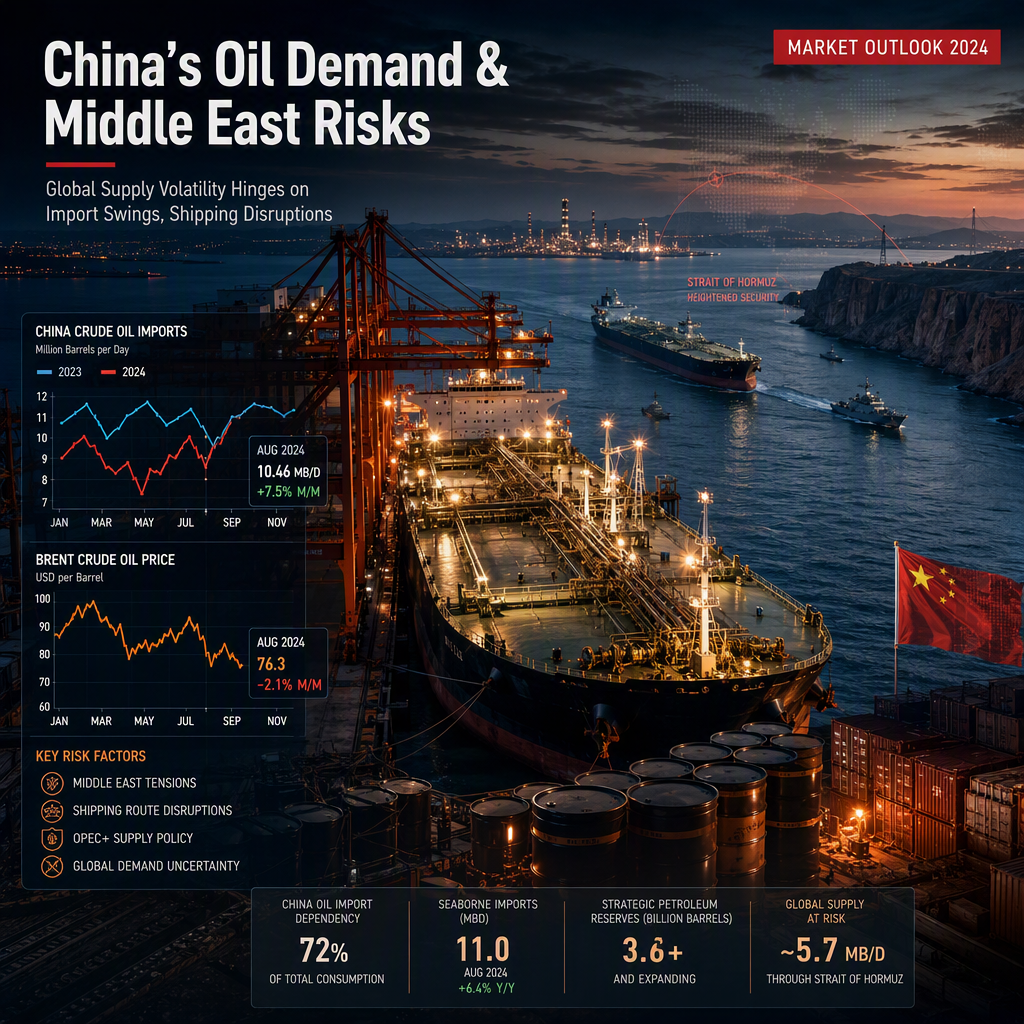
Recent analyses from the National Bank of Canada (NBC) and the International Energy Agency (IEA) highlight significant shifts in global oil supply and demand, driven by both Chinese import trends and ongoing disruptions in the Middle East. NBC's Jocelyn Paquet notes that China's sharp reduction in petroleum oil imports—down by 5 million barrels per day or 41.4% between March and June—was a major factor in offsetting the supply shock from the Middle East, helping to keep global oil prices under control. This reduction, combined with the release of strategic reserves, minimized shortages in other countries. However, a notable rebound occurred in July, with Chinese imports rising by 1.2 million barrels per day, or 22.1%, marking a historically large increase in percentage terms. Paquet emphasizes that future trends in Chinese demand will be as crucial as Middle East developments in determining global energy prices, though it remains uncertain whether this rebound will persist, as China could continue drawing on reserves and keep import levels low for several more months [1].
The IEA, in its August Oil Market Report, has revised its global oil supply and demand forecasts for 2026 due to persistent shipping disruptions in the Middle East. The agency now expects global oil supply to fall by an average of 4.3 million barrels per day in 2026, reaching around 102 million bpd. However, supply is projected to rebound by 8.3 million bpd in 2027, climbing to 110.3 million bpd. World oil demand is forecast to decline by 1.6 million bpd in 2026, which is 510,000 bpd larger than previously estimated. Elevated fuel prices are cited as a factor putting further downward pressure on oil use. The annual decline in demand is expected to ease from 4.9 million bpd in the second quarter to 2.8 million bpd in the third quarter, before returning to growth in the final quarter. Global oil demand is forecast to rise by 2.4 million bpd in 2027. The IEA warns that, although the market is projected to return to surplus towards the end of this year, risks remain substantial, and the urgency of reopening the Strait has increased as inventory buffers are rapidly depleting [2].
Both sources underscore the importance of Chinese demand and Middle East supply disruptions in shaping the global oil market. While NBC highlights the immediate impact of Chinese import reductions and rebounds, the IEA provides a broader outlook, noting significant supply and demand shifts and the critical need for resolving shipping bottlenecks in the region. The interplay between these factors is expected to continue influencing oil prices and market stability in the near future [1][2].
CONCLUSION
The global oil market is experiencing heightened volatility due to fluctuating Chinese import levels and unresolved Middle East shipping disruptions. Both NBC and IEA stress that future trends in Chinese demand and the reopening of key shipping routes will be pivotal for supply, demand, and price stability. Market participants should remain alert to these developments, as risks and uncertainties persist.